
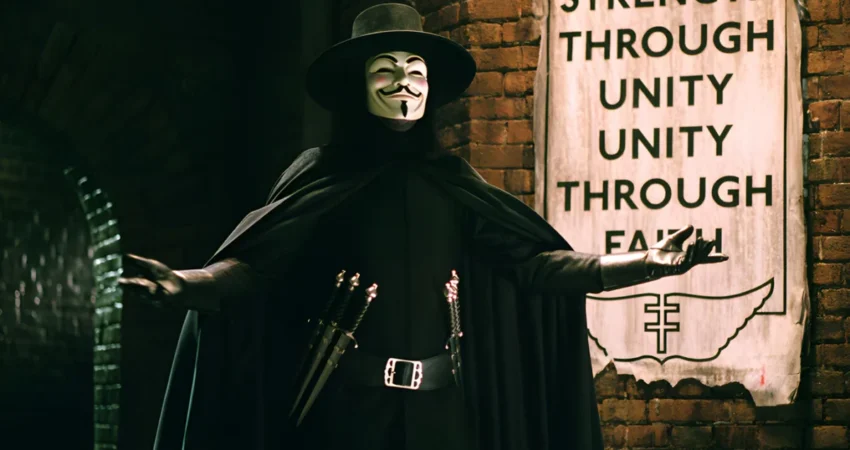
The 2005 cinematic adaptation of the graphic novel V for Vendetta has officially returned to the Netflix streaming library, sparking a renewed interest in its complex themes of state surveillance, individual liberty, and the ethics of political resistance. Directed by James McTeigue and written by the Wachowskis, the film stars Natalie Portman and Hugo Weaving in a narrative that has transcended its medium to become a cornerstone of modern political iconography. Originally released to critical acclaim and moderate box office success, the film currently maintains a significant presence in the cultural zeitgeist, evidenced by its 90% audience approval rating on review aggregators such as Rotten Tomatoes. This resurgence on digital platforms offers an opportunity to examine the film’s historical foundations, its production history, and its enduring relevance in a global political landscape increasingly concerned with the balance between security and freedom.
Narrative Overview and Production Context
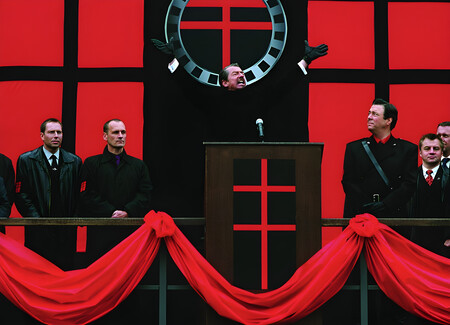
Set in a futuristic, totalitarian Britain, V for Vendetta follows the story of Evey Hammond (Natalie Portman), a young woman who becomes the unlikely ally of a masked vigilante known only as "V" (Hugo Weaving). The setting is a society governed by the Norsefire party, a neo-fascist regime that rose to power following a period of global instability and a devastating pandemic. Under the leadership of High Chancellor Adam Sutler, the state maintains control through the use of state-run media, a pervasive secret police force known as "The Fingermen," and the systematic suppression of dissent.
The production of the film was a significant undertaking for Warner Bros. and Silver Pictures. Filmed primarily in Berlin at Babelsberg Studio and on location in London, the project sought to modernize the source material—a 1980s graphic novel by Alan Moore and David Lloyd. While Moore famously distanced himself from the adaptation, as he has with all cinematic versions of his work, the film retained the core philosophical conflict between anarchy and fascism, albeit with updates that reflected the geopolitical anxieties of the mid-2000s. The film’s release was notably delayed from its original November 2005 date to March 2006, a move officially attributed to post-production requirements, though some analysts suggested the delay was intended to distance the film’s imagery of London Underground bombings from the real-world tragedy of the July 7, 2005, London bombings.

The Historical Foundation: The Gunpowder Plot of 1605
The central motif of V for Vendetta is inextricably linked to the "Gunpowder Plot" of 1605, a failed assassination attempt against King James I of England. The film utilizes the nursery rhyme "Remember, remember, the fifth of November" as a rhythmic anchor for its plot, referencing the date on which Guy Fawkes was discovered guarding barrels of gunpowder beneath the House of Lords.
The historical chronology of the Gunpowder Plot provides essential context for V’s motivations. In the early 17th century, a group of English Catholics, led by Robert Catesby, sought to overthrow the Protestant monarchy in hopes of restoring a Catholic head of state. Guy Fawkes, a soldier with expertise in explosives, was tasked with the execution of the plan. On the night of November 4-5, authorities discovered Fawkes following an anonymous tip-off. He was subsequently tortured and executed for treason. Since then, the failure of the plot has been commemorated in the United Kingdom as Guy Fawkes Night or Bonfire Night, traditionally celebrated with fireworks and the burning of effigies.
V for Vendetta subverts this tradition. Rather than celebrating the failure of the conspirator, the film’s protagonist adopts the mask of Guy Fawkes as a symbol of unfinished business. By framing the destruction of Parliament not as an act of religious extremism but as a symbolic strike against tyranny, the film recontextualizes 17th-century history for a 21st-century audience.
Cinematic Execution and Performance Analysis
A significant portion of the film’s lasting appeal is attributed to the performances of its lead actors. Natalie Portman’s portrayal of Evey Hammond required a rigorous emotional arc, transitioning from a fearful citizen to a hardened revolutionary. The scene in which Evey’s head is shaved—performed in a single take—remains one of the most iconic moments in modern cinema, symbolizing the character’s loss of identity and her subsequent rebirth.

Hugo Weaving’s performance as V is equally notable for its technical difficulty. Weaving remained behind a rigid, non-articulating porcelain mask for the entirety of the film, necessitating a performance based entirely on vocal cadence and physical presence. This stylistic choice emphasizes the idea that V is not a man, but an "idea," as he famously asserts during the film’s climax. The decision to keep V’s face hidden served to universalize the character, allowing him to represent the collective grievances of the oppressed rather than the personal vendetta of a single individual.
Supporting performances by Stephen Rea, as Inspector Eric Finch, and John Hurt, as the tyrannical Chancellor Sutler, provide the necessary grounding for the film’s ideological conflict. Interestingly, John Hurt’s casting was a deliberate nod to his role in the 1984 film adaptation of George Orwell’s Nineteen Eighty-Four, where he played the victim of a totalitarian state. In V for Vendetta, he occupies the opposite role, portraying the architect of the oppression.
Data and Critical Reception
Upon its theatrical release, V for Vendetta earned approximately $132.5 million globally against a production budget of $54 million. While it was not a record-breaking blockbuster in the vein of contemporary superhero films, its financial performance was considered a success for an R-rated political thriller.
Critical reception was generally positive, with reviewers praising its visual style and thought-provoking themes. According to data from Rotten Tomatoes, the film holds a 73% critical approval rating alongside its much higher 90% audience score. This discrepancy suggests that while critics were occasionally divided on the film’s pacing or its deviation from the source material, the general public embraced its message of empowerment. Academic analysis of the film has frequently categorized it alongside other mid-2000s dystopian works, such as Children of Men (2006), noting a trend in cinema that critiqued the erosion of civil liberties in the post-9/11 era.
Impact on Modern Activism and Iconography
Perhaps the most significant legacy of V for Vendetta is its impact on real-world political movements. The Guy Fawkes mask, as designed by David Lloyd for the original comic and refined for the film, has become the global shorthand for anti-establishment activism.
In 2008, the activist collective known as "Anonymous" began wearing the mask during protests against the Church of Scientology, a movement dubbed Project Chanology. Since then, the mask has appeared in diverse political contexts, from the Occupy Wall Street movement in the United States to the Arab Spring uprisings and anti-corruption protests in Brazil and Hong Kong. Time Magazine once noted that the mask had become one of the most recognizable symbols of the 21st century, rivaling the "Che" Guevara image of the 20th century.
The commercialization of the mask has also been a point of analytical interest. Because Warner Bros. owns the rights to the film’s imagery, the company receives a royalty for every official Guy Fawkes mask sold. This creates a paradox where activists buy a product from a multinational corporation to protest against corporate and state power—a dynamic that underscores the complex intersection of capitalism and rebellion in the digital age.
Broader Implications and Contemporary Relevance
The return of V for Vendetta to streaming services coincides with a period of heightened political polarization and renewed debates over state authority. Recent journalistic analysis has frequently drawn parallels between the film’s fictional "Norsefire" regime and contemporary political trends. For instance, reports in publications like the Milwaukee Independent have argued that the film’s depiction of a society controlled by fear, media manipulation, and the marginalization of minorities mirrors certain authoritarian shifts in modern governance.

Furthermore, the film’s exploration of "the architecture of fear"—how governments may use crises to justify the suspension of rights—remains a pertinent topic of discussion. The film’s dialogue, particularly V’s speech to the nation via the British Television Network (BTN), serves as a critique of public apathy. V argues that while the government is responsible for the oppression, the citizens are complicit for allowing it to happen in exchange for a false sense of security.
As viewers revisit the film on Netflix, the core message remains unchanged: the power of ideas to outlast their creators. V for Vendetta functions not just as a piece of science fiction, but as a cautionary tale and a philosophical inquiry into the nature of justice. Whether viewed as a historical action film or a political manifesto, its presence in the streaming landscape ensures that its central question—"Who is V?"—continues to provoke thought and discussion nearly two decades after its initial release. The film concludes with the destruction of the Old Bailey and Parliament, not as an end, but as a beginning for a society that must learn to govern itself without the crutch of tyranny. In an era of rapid technological change and shifting political norms, the film’s reminder that "the people should not be afraid of their governments; governments should be afraid of their people" continues to resonate with audiences worldwide.

0 Comments