
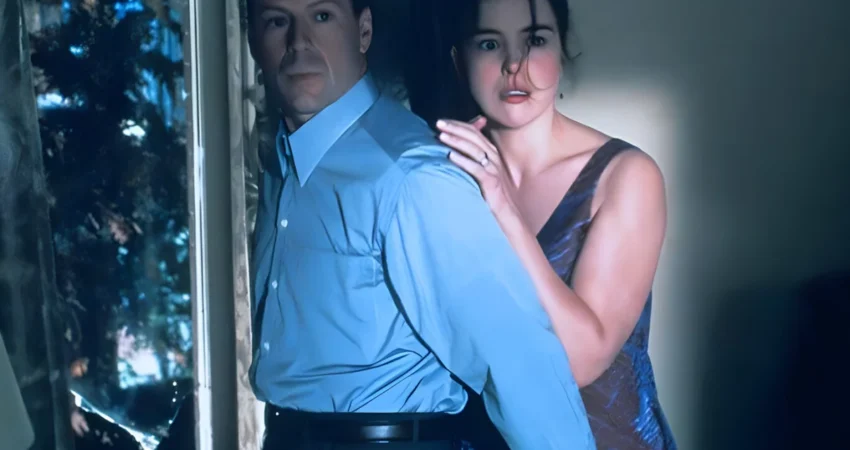
The addition of M. Night Shyamalan’s 1999 supernatural thriller, The Sixth Sense, to the Netflix library marks a significant moment for both the streaming giant and cinema enthusiasts. Nearly three decades after its initial theatrical release, the film remains a cornerstone of the horror and psychological thriller genres, continuing to captivate audiences with its meticulous pacing, profound performances, and one of the most celebrated plot twists in cinematic history. Its arrival on Netflix, while it simultaneously remains available on Disney+, highlights the enduring commercial value of high-quality catalog titles in an increasingly competitive streaming landscape.
The Genesis and Production of a Modern Classic
The Sixth Sense was not an immediate certainty in the late 1990s. M. Night Shyamalan, a relatively unknown filmmaker at the time with only two minor features to his name—Praying with Anger and Wide Awake—penned the script with a specific vision of blending a somber character study with a supernatural ghost story. The screenplay was eventually sold to Hollywood Pictures, a subsidiary of the Walt Disney Studios, for a then-staggering $2.25 million, under the condition that Shyamalan would be permitted to direct.
Produced by industry veterans Frank Marshall and Kathleen Kennedy, the production was characterized by a commitment to atmosphere over "jump scares." Shyamalan and cinematographer Tak Fujimoto utilized a muted color palette, intentionally using the color red only to signify a crossover between the world of the living and the world of the dead. This visual discipline, combined with James Newton Howard’s haunting and minimalist score, created an environment of sustained dread that differed significantly from the "slasher" trends of the late 90s.
Narrative Architecture and the Power of Performance
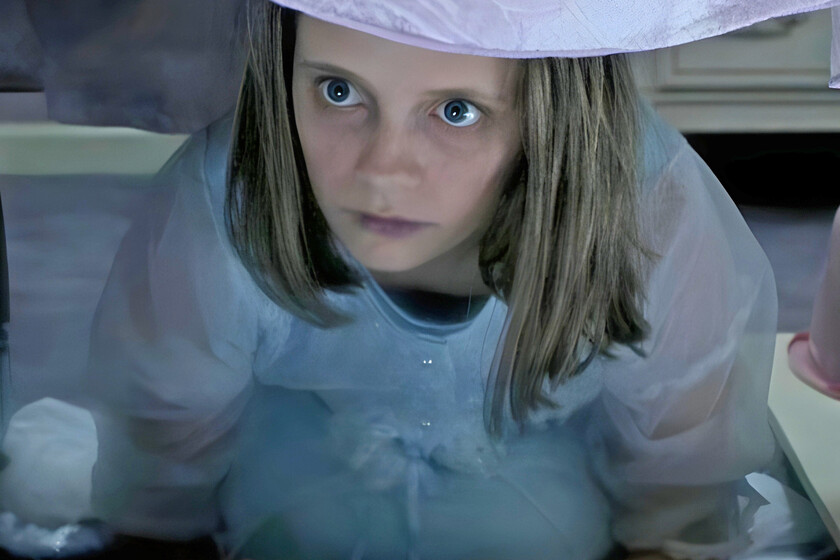
At its core, The Sixth Sense follows Dr. Malcolm Crowe (Bruce Willis), a dedicated child psychologist in Philadelphia who is haunted by his failure to help a former patient. His path to redemption arrives in the form of Cole Sear (Haley Joel Osment), a social outcast who is terrified by a secret he cannot share with his mother, Lynn Sear (Toni Collette). Cole’s revelation—"I see dead people"—became an instant cultural touchstone, but the film’s strength lies in how it treats this supernatural premise as a metaphor for trauma and the difficulty of communication.
Bruce Willis, known primarily as an action star through the Die Hard franchise, delivered what many critics consider the most nuanced performance of his career. However, it was the eleven-year-old Haley Joel Osment who became the film’s emotional center. Osment’s ability to convey profound sorrow and terror earned him an Academy Award nomination for Best Supporting Actor, making him one of the youngest nominees in the category’s history. The chemistry between the two leads, grounded in a father-son dynamic, provided the emotional stakes necessary for the film’s climax to resonate.
A Box Office Phenomenon: Data and Market Impact
Upon its release on August 6, 1999, The Sixth Sense defied all industry expectations. It opened at number one with $26.6 million, but unlike most summer blockbusters that see a sharp decline in their second week, Shyamalan’s film experienced a rare "legs" phenomenon. Driven by intense word-of-mouth regarding its ending, the film remained at the top of the North American box office for five consecutive weeks.
By the end of its theatrical run, The Sixth Sense had grossed approximately $293.5 million in the United States and Canada and $379.3 million in international markets, totaling a global box office of $672.8 million. It ended 1999 as the second-highest-grossing film of the year, surpassed only by Star Wars: Episode I – The Phantom Menace. Adjusted for inflation, its performance remains a benchmark for R-rated and PG-13 supernatural thrillers, demonstrating that audiences were hungry for sophisticated, adult-oriented storytelling within the horror framework.

Critical Reception and the Academy Recognition
While horror films are frequently overlooked by major award bodies, The Sixth Sense achieved a rare level of critical and institutional prestige. On the review aggregator Rotten Tomatoes, the film maintains an 86% approval rating from critics and a 90% score from audiences. Critics praised Shyamalan’s "Hitchcockian" direction and the film’s ability to reward multiple viewings.
The film’s success culminated in six Academy Award nominations at the 72nd Oscars, including:
- Best Picture
- Best Director (M. Night Shyamalan)
- Best Supporting Actor (Haley Joel Osment)
- Best Supporting Actress (Toni Collette)
- Best Original Screenplay
- Best Film Editing
Although it did not win in these categories, the nominations themselves served as a formal validation of the genre, placing The Sixth Sense in the same prestigious company as The Exorcist and The Silence of the Lambs.
The "Shyamalan Twist" and the Evolution of the Genre
The Sixth Sense is perhaps most famous for its "twist ending," a narrative device that redefined audience expectations for the thriller genre. Shyamalan’s mastery lay not just in the surprise itself, but in the "fair play" of the script. Upon a second viewing, audiences realized that every clue was hidden in plain sight—from Malcolm’s lack of interaction with other characters to the specific cues in the dialogue.
This success birthed the "Shyamalan brand," characterized by high-concept premises and late-stage narrative shifts. While this eventually became a trope that the director struggled to maintain in later projects like The Village or Lady in the Water, The Sixth Sense remains the purest execution of this style. It influenced a decade of "puzzle films," encouraging audiences to look for subtext and hidden meanings in every frame.
Comparative Analysis: The Sixth Sense vs. The Others
The film’s legacy is often compared to Alejandro Amenábar’s 2001 film, The Others, starring Nicole Kidman. Both films eschewed gore in favor of atmosphere and featured protagonists grappling with a reality that was not what it seemed. While The Others focused on a gothic, claustrophobic setting, The Sixth Sense brought the ghost story into the modern, urban landscape of Philadelphia. Both films are credited with a "renaissance" of the psychological ghost story, proving that tension and emotional depth could be more terrifying than physical violence.
Chronology of Influence and Legacy
- August 1999: The film premieres and dominates the summer box office.
- March 2000: Receives six Oscar nominations, cementing its place in film history.
- 2000s-2010s: The film’s "twist" becomes a standard by which all subsequent thrillers are measured. M. Night Shyamalan becomes a household name.
- 2020s: The film enters the "classic" canon, frequently cited in "Best Horror Movies of All Time" lists by publications like Empire and Variety.
- 2024: The film’s arrival on Netflix introduces the story to Gen Z and Alpha audiences, many of whom may know the "spoiler" but have never experienced the full narrative context.
Broader Implications for the Streaming Era
The licensing of The Sixth Sense to Netflix, despite it being a Disney-owned property through the Hollywood Pictures/Touchstone labels, suggests a shift in streaming strategy. While platforms previously sought exclusivity to build their brands, the current "Arms Race" has shifted toward profitability through licensing. By placing a high-demand classic like The Sixth Sense on Netflix, the parent company generates significant licensing revenue while the film reaches a broader, global audience that might not subscribe to Disney+.
For Netflix, the acquisition is a strategic move to bolster its "Prestige Horror" category. As the platform prepares for upcoming original horror content and the final season of Stranger Things, having foundational films like The Sixth Sense provides a "halo effect," elevating the perceived quality of its library.

Final Analysis: Why It Still Matters
The Sixth Sense remains relevant because it is, at its heart, a story about grief and the need for closure. The ghosts in Cole Sear’s world are not monsters in the traditional sense; they are individuals with "unfinished business," seeking a witness to their pain. This humanistic approach to horror ensures that the film transcends the era of its production.
As viewers revisit the film on Netflix, they are likely to find that it holds up remarkably well. The technical craft—the lack of rapid-fire editing, the focus on the actors’ faces, and the deliberate use of silence—stands in stark contrast to the frenetic pace of contemporary cinema. Whether it is a first-time viewing or a nostalgic return, The Sixth Sense continues to prove that the most enduring scares are those that touch the heart as much as the nerves. For those seeking a double feature of psychological dread, the film pairs excellently with Nicole Kidman’s The Others or Shyamalan’s own follow-up, Unbreakable, both of which explore the boundaries of human perception and the extraordinary hidden within the ordinary.

0 Comments