
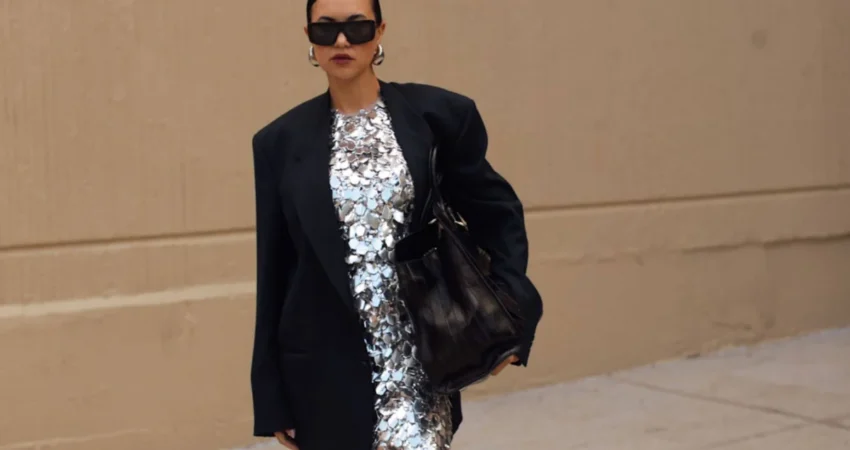
The streets of Madrid have undergone a luminous transformation as the autumn 2026 season takes hold, signaling a decisive departure from the understated minimalism that dominated the early part of the decade. Fashion analysts and street-style observers have documented a significant uptick in the use of sequins, metallic textiles, and 1980s-inspired "disco" aesthetics across the city’s most prominent nightlife hubs, from the upscale lounges of the Salamanca district to the avant-garde clubs of Malasaña. This trend, colloquially termed "Disco Fever en versión castiza," blends international high-glamour standards with the distinct, spirited energy of the Spanish capital’s social scene.

Industry experts suggest that this shift represents a broader cultural pivot toward "maximalist joy" following years of "quiet luxury" and neutral palettes. As Madrid’s evening economy continues to expand—characterized by late-night terrace dining, extended cocktail hours, and a resurgence of high-concept nightclubs—the demand for high-impact partywear has reached its highest level since the pre-pandemic era. The current movement is defined not just by shine, but by a specific "castiza" audacity: a blend of traditional elegance and unapologetic 80s-inspired excess.
The Evolution of the Disco Aesthetic: From Studio 54 to La Movida
To understand the current dominance of sequins in Madrid, one must look at the dual influences of global fashion history and local cultural movements. The 1970s and 80s served as the foundational era for light-reflecting fabrics, popularized by the disco scenes in New York and London. However, in Spain, this aesthetic was inextricably linked to "La Movida Madrileña," the countercultural movement that exploded in the late 1970s and early 80s following the transition to democracy.

The 2026 revival draws heavily from this heritage. While the modern silhouette is more refined, the spirit of "descaro" (impudence) remains central. Market reports from major European fashion houses indicate that the "festive wear" category has seen a 22% increase in sales compared to the same period in 2025. Designers have responded by reintroducing heavy paillettes, lurex threading, and liquid-metallic finishes into their autumn collections, catering to a demographic that views dressing up as an essential component of the social experience.
Technical Analysis of the Autumn 2026 Styling Formulas
The current trend is not a monolithic application of glitter; rather, it is categorized by three distinct styling formulas that have emerged as the "blueprints" for the season. These combinations demonstrate how the industry is balancing high-octane shine with contemporary sophistication.

1. The Sophisticated Contrast: Black and Klein Blue
The most prominent formula observed in Madrid’s nightlife involves the integration of deep black sequins with accents of "Klein Blue." This color palette serves as a bridge for those transitioning from minimalist wardrobes to more expressive attire. By utilizing black as a grounding element, the vibrancy of the blue creates a sophisticated visual depth. Analysts note that this combination is particularly popular in professional-to-social settings, where a sequined blazer or skirt can be moderated with matte fabrics for a balanced aesthetic.
2. The Metallic Bimetalism: Gold and Silver
Historically, the mixing of gold and silver was considered a stylistic faux pas. However, the 2026 season has fully embraced "bimetalism." This approach treats different metallic finishes as neutrals that can be layered to create a high-contrast, "cool-toned" look. This trend has been bolstered by innovations in textile manufacturing, allowing for "chameleon" fabrics that reflect different metallic hues depending on the light source—a feature highly sought after in the digitally-integrated environments of modern clubs.

3. The Earthy Opulence: Aubergine and Platinum
A newer development in the autumn palette is the pairing of "brownish-aubergine" sequins with platinum details. This combination reflects a more organic approach to glamour, moving away from traditional primary colors toward "jewel-toned earthiness." This specific formula has seen high adoption rates among Madrid’s "Old Money" fashion circles, where the goal is to achieve a look that is both opulent and grounded.
Market Drivers and Consumer Behavior
The resurgence of sequins is supported by robust economic data within the textile sector. According to data from the Spanish Fashion Confederation (Confederación ModaEspaña), the "premium evening wear" segment has outperformed "casual basics" for three consecutive quarters. Several factors contribute to this phenomenon:

- The "Roaring 2020s" Effect: Much like the decade following the 1918 pandemic, the mid-2020s have seen a sustained desire for public visibility and celebratory attire.
- The Experience Economy: Consumers are increasingly spending on "event-based" fashion. A sequined dress is no longer seen as a niche purchase for New Year’s Eve but as a recurring staple for a city that lives at night.
- Social Media Visibility: Light-reflecting fabrics perform exceptionally well in short-form video content and low-light photography, making them a strategic choice for a digitally-active consumer base.
Retailers in Madrid, including flagship stores on the Gran Vía and Calle de Serrano, have reported that sequined items are being purchased not just as standalone pieces, but as part of modular outfits. This indicates a shift in how consumers perceive formalwear; it is increasingly viewed as versatile.
Sustainability and Innovation in Light-Reflecting Textiles
A significant challenge to the sequin trend has historically been its environmental impact, as traditional sequins are made from petroleum-based plastics that contribute to microplastic pollution. However, the 2026 "Disco Fever" is distinguished by a technological leap in sustainable manufacturing.

Leading textile labs in Europe have introduced "Bio-Paillettes"—sequins derived from cellulose or recycled PET (polyethylene terephthalate) harvested from ocean waste. Furthermore, many of the metallic finishes seen this season are achieved through "dry dyeing" processes that significantly reduce water consumption. Statements from sustainability consultants within the industry suggest that approximately 35% of the sequined garments in premium collections now feature some form of eco-certified material. This shift has allowed luxury brands to market "guilt-free glamour," appealing to the environmentally conscious Gen Z and Millennial demographics in Madrid.
Chronology of the Trend’s Ascent
The timeline of this trend’s return can be traced through key milestones over the past twelve months:

- January 2026: European fashion weeks in Paris and Milan feature heavy metallic themes, signaling a move away from the "beige-core" of 2024-2025.
- May 2026: Madrid’s spring festivals see a grassroots adoption of metallic accessories among street-style influencers.
- August 2026: Major retailers begin "early drop" autumn collections dominated by sequins, which sell out 40% faster than anticipated.
- September 2026: The trend reaches "critical mass" in Madrid, coinciding with the reopening of the city’s major cultural and social venues after the summer break.
Broader Implications for the Fashion Industry
The move toward "Disco Fever" suggests a long-term recalibration of the fashion cycle. For several years, the industry focused on durability and "timelessness" through minimalism. The return of the sequin indicates that the market is once again ready for "cyclical excitement."
This has significant implications for supply chains. The production of embellished garments requires more specialized labor and longer lead times than basic apparel. Consequently, there has been a resurgence in demand for skilled artisanal work within Spain’s domestic garment industry, particularly in regions like Galicia and Catalonia, which have a history of high-end textile production.

Furthermore, the "castiza" version of this trend emphasizes a specific type of local pride. By blending global trends with Madrid’s unique social rhythm, the city is positioning itself as a legitimate fashion capital that does not merely follow trends but adapts them to fit a specific cultural context.
Future Outlook: Winter 2026 and Beyond
As Madrid moves toward the winter season, analysts predict that the sequin trend will not fade but will instead evolve. The "lightweight" sequined dresses of autumn are expected to be layered with heavy faux-fur coats and structured wool overcoats, maintaining the "high-low" contrast that defines the current aesthetic.

The "Disco Fever" of 2026 is more than a fleeting fascination with sparkle; it is a reflection of a city that has reclaimed its nightlife with vigor. In a world that often feels increasingly digitized and remote, the physical act of dressing in light-reflecting fabrics serves as a tangible assertion of presence. For the Madrid fashion scene, the message is clear: the era of hiding in the shadows of minimalism has ended, and the time to shine—quite literally—has returned.

0 Comments