
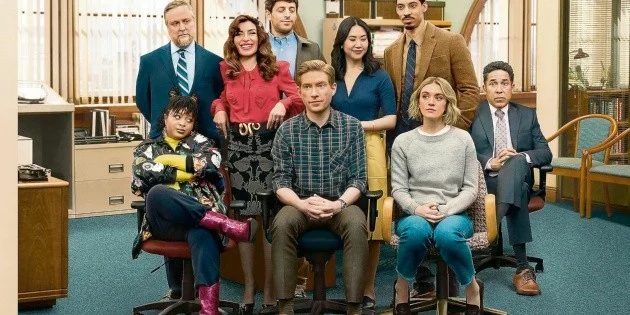
The second season of "The Paper," a critically acclaimed series from creators Greg Daniels and Michael Koman, plunges the staff of the Toledo Truth Teller into the complex aftermath of unexpected triumph. After a tumultuous inaugural season where the fledgling, improvised newsroom miraculously managed to produce a newspaper, the team now grapples with a new, more insidious challenge: the belief that they have mastered their craft. This shift in internal perception follows significant recognition at the prestigious Ohio Journalism Awards, an accolade that, while celebrated, simultaneously introduces the uncomfortable question of how to sustain excellence when success arrives before true preparedness. The series, which recently premiered its ten episodes on HBO Max, continues its unique blend of mockumentary style, reminiscent of its shared universe predecessor "The Office," offering a nuanced exploration of growth, ambition, and the relentless demands of local journalism.
From Improvised Efforts to Award-Winning Acclaim: A Season One Recap
The inaugural season of "The Paper" introduced audiences to the Toledo Truth Teller, a historical newspaper on the brink of collapse, revived by an eclectic, largely inexperienced group of individuals. Their initial foray into journalism was characterized by a charming blend of incompetence, raw enthusiasm, and accidental brilliance. The humor primarily stemmed from observing these amateur journalists fumbling through the basics of reporting, interviewing, and editing, often stumbling into compelling stories through sheer luck or persistence. Despite numerous missteps and internal squabbles, the team, under the hesitant leadership of editor-in-chief Ned Sampson (Domhnall Gleeson), managed to produce editions that resonated with the Toledo community, culminating in an unforeseen triumph at the Ohio Journalism Awards. This recognition, while a powerful morale booster, also subtly sowed the seeds for the challenges that define the second season. The Truth Teller garnered accolades in categories such as ‘Best Local Reporting’ and ‘Investigative Journalism,’ a testament to their unexpected breakout success, even if some within the newsroom privately questioned the extent to which they had truly earned such high praise. The recognition brought not only a surge in local readership, reportedly a 15% increase in online engagement post-awards, but also an inflated sense of capability among the staff.
The Peril of Premature Acclaim: A Core Theme
Daniels and Koman emphasize that allowing their characters to evolve was a fundamental decision. "Maintaining them permanently incompetent would have eventually turned them into caricatures of themselves," Koman explained in a recent interview. He elaborated, "Our characters are becoming better journalists. They’re not great journalists, necessarily. Not all of them. It’s good to see people make mistakes, learn, and just gradually improve." This philosophy underpins the central conflict of the second season: the psychological impact of early success.
Koman articulates this directly: "I think there’s a question in the series about how much they earned that success and how good it is to have success early, before you’re prepared for it." A simple pat on the back, he suggests, can be enough for someone to believe they’ve mastered a craft they are still very much learning. "It’s very easy to get a pat on the back and convince yourself that you know what you’re doing. For me, the fun is watching a person discover that’s not the case, and they really have to actually do it," Koman noted. This theme resonates deeply within the newsroom, where the initial elation of the awards gives way to a simmering overconfidence that often clashes with the harsh realities of daily journalism. Characters, having tasted success, now aspire to bigger stories, but lack the refined skills or ethical frameworks to consistently deliver them without new challenges.
Evolving Humor: Beyond Incompetence
The professional maturation of the characters presented a unique challenge for the writing team. A significant portion of the first season’s humor derived from the staff’s lack of experience. The concern was that too much learning might diminish their comedic appeal. However, Daniels dismisses the notion that incompetence was the sole wellspring of comedy. "There are many different ways a character can be funny. They can be funny for being incompetent, as many of our characters have been, but they can also be funny through their romantic entanglements, through the way they deal with the frustration of people who don’t want to talk to them."
Indeed, the second season pivots towards a richer tapestry of humor. The growing familiarity among colleagues leads to more nuanced interpersonal conflicts. "The relationships are a bit richer now because everyone has had experiences together and knows what each other is like. There are more conflicts between people," Daniels explained, also hinting at an increased presence of physical comedy. Koman points out that the learning process itself can be a source of humor and narrative progression. "The pleasure is in seeing all the things they had to learn along the way just to get to the point of being… I won’t say credible, but competent." This shift allows the series to explore character dynamics and the inherent absurdities of human interaction in a professional setting, rather than solely relying on slapstick errors in reporting.
The Toledo Truth Teller’s Cast and Universe Expansion
The ensemble cast returns for the second season, bringing back familiar faces and introducing new dimensions to their roles. Domhnall Gleeson reprises his role as Ned Sampson, the earnest but often overwhelmed editor-in-chief. He is joined by Sabrina Impacciatore, Chelsea Frei, Melvin Gregg, Gbemisola Ikumelo, Tim Key, Ramona Young, and Alex Edelman. A particularly noteworthy return is Oscar Nuñez as Oscar Martinez, maintaining one of the direct links to "The Office" universe. His presence not only provides a nostalgic connection for fans but also grounds "The Paper" within a broader comedic framework established by Daniels. Martinez, known for his dry wit and methodical nature, offers a contrasting presence to the often chaotic environment of the Truth Teller, subtly highlighting the ongoing professional development (or lack thereof) within the newspaper’s ranks. The shared universe premise allows for subtle nods and thematic continuity, suggesting that the documentarians who once chronicled Dunder Mifflin’s Scranton branch have now turned their lenses to the struggling Toledo paper, implying a thematic interest in the mundane yet profound struggles of the American workforce.
Ned Sampson’s Crusades: Ethical Dilemmas in Journalism
A significant plot development in the new season revolves around Ned Sampson’s realization that major stories might not simply land on the newspaper’s doorstep. This leads him to a pivotal conclusion: the newsroom must actively seek out its own crusades. "They decide this season that they can’t guarantee that big stories are just going to walk in the door, and that they should have a crusade. They should embark on a crusade around which they can generate stories," Daniels revealed.
This decision propels Ned towards an investigation into a local private club, a narrative arc that quickly escalates, placing the entire newspaper at risk. The storyline forces the journalists to confront complex ethical decisions that extend far beyond simply gathering quotes or drafting a news report. Daniels draws a parallel to a less innocent period of American journalism history: "There’s some concern about whether that resembles the yellow journalism of William Randolph Hearst. There are ethical traps there. They rush into it, and that becomes a problem for them halfway through the season. It’s that pressure to outdo themselves that motivates them."
This "crusade" storyline is a sophisticated addition, allowing the comedy to delve into serious journalistic questions: What happens when a media outlet pre-determines its "big story"? How far can an investigation be pushed? What are the consequences when the pressure to produce results begins to dictate the journalistic pursuit itself? The show intelligently uses humor to explore these weighty topics, depicting the characters’ often clumsy attempts to navigate moral gray areas while still striving for impact. The implications are clear: even with good intentions, the pursuit of a pre-determined narrative can lead to significant ethical compromises, a relevant commentary on contemporary media practices.
The Unyielding Cycle: Daily Pressures of Print Media
The satisfaction derived from winning awards is fleeting, as the Toledo Truth Teller remains a daily newspaper. This fundamental reality introduces a relentless pressure that the series expertly exploits in its second season. As Daniels points out, "Regardless of what happened yesterday, tomorrow, something new has to be published." This constant demand means there is no time to rest on laurels; every day presents a fresh challenge to find, report, and publish compelling stories.
The journalists’ increasing aspirations clash with the practical difficulties of consistently finding stories capable of satisfying them. The daily grind of producing a newspaper, a struggle familiar to countless local newsrooms across the globe, forms a powerful backdrop. The show captures the unique stress of this cycle: the pressure to innovate, to maintain relevance, and to compete for attention in an ever-crowded information landscape, all while adhering to tight deadlines. This aspect of the narrative serves as a subtle, yet potent, commentary on the real-world challenges faced by print media in the digital age, where the need for fresh content is insatiable.
Navigating Personal and Professional Growth
Beyond the newsroom’s professional evolution, the second season also explores significant personal transformations among the characters. Ned Sampson and Mare Pritti grapple with their undeniable mutual attraction, adding a layer of romantic comedy to the series. Esmeralda Grand seeks to define her place within the evolving newsroom, reflecting the challenges of finding one’s identity and voice in a dynamic professional environment. The team’s extended time working together has also led to a deeper understanding of each other’s strengths and weaknesses, fostering more complex relationships where conflicts increasingly replace simple incompetence as a source of humor.
Daniels and Koman are careful to ensure that the Truth Teller doesn’t magically transform into an exemplary newsroom overnight. Progress is incremental and often punctuated by setbacks. A mistake leads to new learning; a victory breeds overconfidence; a good story can open up unforeseen problems that the characters are still ill-equipped to handle. This realistic portrayal of gradual development positions the second season of "The Paper" as a show where protagonists learn to be journalists, without necessarily having learned how to behave perfectly as such. The narrative arc suggests that true competence is a journey, not a destination, especially in a demanding profession like journalism. The series underscores that while publishing an award-winning edition might merit a celebration, the enduring truth of working at a newspaper, as Daniels reminds us, is that "the next day, you have to start all over again."
Broader Implications: A Mirror to Modern Local Journalism
While "The Paper" is fundamentally a comedy, its exploration of the Toledo Truth Teller’s struggles offers a compelling, albeit humorous, reflection on the state of local journalism today. The series touches upon themes pertinent to the broader media landscape: the decline of traditional print, the pressure to attract and retain readership, the ethical tightrope walked by reporters, and the challenge of maintaining journalistic integrity in a competitive and rapidly changing environment. The show’s ability to blend these serious undertones with its characteristic mockumentary humor makes it more than just a sitcom; it becomes a relevant commentary on the vital role of local news and the often-unseen dedication required to keep it alive. The characters’ imperfect journey towards journalistic proficiency, fraught with both personal and professional hurdles, encapsulates the spirit of perseverance that defines many small news organizations fighting for survival and relevance in communities across the nation.
Conclusion: The Enduring Appeal of Imperfect Progress
"The Paper" season two builds upon the surprising success of its predecessor by deepening its characters and expanding its thematic scope. By moving beyond simple incompetence as its primary comedic engine, the series intelligently explores the complex interplay of ambition, ethical challenges, and the relentless demands of daily news production. The journey of the Toledo Truth Teller is a testament to the idea that growth is often messy, that success can be a double-edged sword, and that true mastery is a continuous, often humorous, process. As the team navigates internal conflicts, external pressures, and the moral quandaries of their "crusade," "The Paper" solidifies its position as a poignant and witty observation on the enduring, if imperfect, pursuit of truth in a world that never stops demanding the next story.

0 Comments