
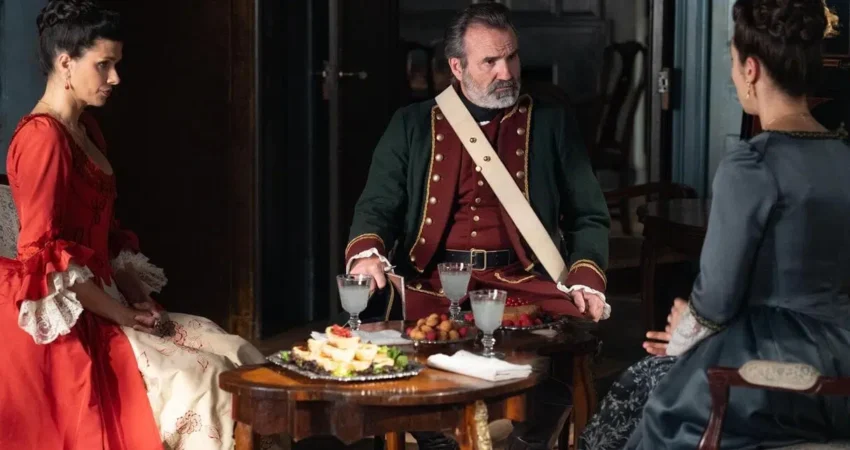
The week of September 14th to 18th in "Valle Salvaje" was a period of intense drama and pivotal developments, primarily centered around the protracted investigation into the disappearance of Damaso. Victoria and Mercedes found themselves under the relentless scrutiny of Captain Escobedo, facing the imminent threat of arrest. However, what seemed like an open-and-shut case took an unforeseen and dramatic turn, absolving them of suspicion and bringing a surprising conclusion to the inquiry. Concurrently, Rafael continued his determined efforts to integrate Rosalía into the Gálvez de Aguirre family, facing continued opposition. Meanwhile, the budding romance between Alejo and Luisa encountered its first significant obstacle, threatening to derail their future, and Bárbara experienced a night of social debut that was both dazzling and disconcerting.
The Damaso Investigation Concludes: A Twist of Fate for Victoria and Mercedes
For weeks, Victoria and Mercedes had lived under a cloud of suspicion, their every move scrutinized by Captain Escobedo. The pressure intensified dramatically when Enriqueta, seemingly seeking to protect herself, directly implicated both women in Damaso’s disappearance before the Captain. This crucial piece of testimony placed their carefully guarded secret in grave jeopardy, potentially leading to their formal accusation and imprisonment. Escobedo, convinced of their involvement, repeatedly visited the palace, demanding explanations and tightening his investigative net around them. The weight of the potential consequences was palpable; Victoria even contemplated fleeing the Valle, unable to bear the thought of imprisonment, while Mercedes adopted a more defiant stance, determined to face whatever repercussions might arise.
The turning point arrived when Captain Escobedo convened a family meeting to announce the findings of his extensive investigation. In a stunning revelation that brought immense relief to Victoria and Mercedes, the Santa Hermandad officially concluded that Damaso had not been a victim of foul play but had instead fled. This declaration effectively closed the case, lifting the oppressive shadow of suspicion that had loomed over the two women. The abrupt shift in the investigation’s conclusion suggests that either new evidence emerged that definitively pointed towards Damaso’s voluntary departure, or that the authorities were presented with a narrative that satisfied their requirements for closure, regardless of the underlying complexities. The swiftness with which the case was declared closed after such intense scrutiny raises questions about the thoroughness of the investigation and the potential for underlying motives that may have influenced the final outcome.
Rafael’s Steadfast Defense of Rosalía Amidst Family Discord
Rafael’s commitment to Rosalía’s integration into the Gálvez de Aguirre family remained unwavering throughout the week. He continued to treat her as an integral member, extending invitations to dine with the family and orchestrating a special dinner to ensure her full participation in their social circle. This gesture, while seemingly benevolent, underscored the deep divisions within the family regarding Rosalía’s presence.
Rosalía, despite Rafael’s support, struggled to adapt to her new circumstances. She openly admitted to feeling uncomfortable with the persistent scrutiny and whispered comments that her presence elicited. The inherent tension between her background and the established social hierarchy of the palace was evident, creating an atmosphere of unease. Rafael, recognizing her discomfort, redoubled his efforts to guide her, providing instruction on the necessary protocols and etiquette to navigate this unfamiliar environment.
However, Rafael’s efforts were consistently undermined by José Luis, who remained resolute in his determination to see Rosalía expelled from the Valle. In a clandestine agreement, José Luis proposed a deal to Rafael: he would cease his attacks on Rosalía if Rafael agreed to break his pact with Enriqueta. This maneuver highlights the complex web of alliances and animosities at play, with José Luis attempting to leverage familial obligations and personal vendettas to achieve his desired outcome. The patriarch’s subsequent actions, however, indicated a potential reluctance to honor this agreement, suggesting that the battle for Rosalía’s place within the family was far from over. The implications of this familial rift extend beyond personal animosity, potentially impacting the economic and social stability of the Gálvez de Aguirre estate, as internal dissent can often lead to external vulnerabilities.
Alejo and Luisa’s Relationship Faces Its First Major Test
The burgeoning relationship between Alejo and Luisa experienced a tumultuous week, marked by profound doubt and a significant crisis. The couple, deeply in love, decided to expedite their wedding plans, convinced that a lavish ceremony was secondary to building a life together. Their shared vision for the future seemed secure, only to be shattered by an unexpected confession.

Manuela, driven by her own unrequited feelings, revealed a kiss she had shared with Alejo. This revelation sent shockwaves through the household, prompting Don Hernando to demand an immediate explanation from Alejo. Alejo, in his defense, clarified that Manuela had initiated the kiss, an assertion that did little to quell the rising tide of suspicion and hurt.
The situation escalated when Luisa, grappling with the confession, overheard a conversation that further fueled her doubts. Her attempt to confront Manuela directly resulted in a heated argument, leaving Luisa deeply unsettled. In the aftermath of this emotional turmoil, Luisa made the difficult decision to break off her engagement with Alejo, denying him the opportunity to offer a more comprehensive explanation. This abrupt separation underscores the fragility of trust in nascent relationships, particularly when confronted with external pressures and past indiscretions. The long-term impact of this broken engagement could have far-reaching consequences, potentially affecting family alliances and the social standing of both individuals involved.
Manuela’s Persistent Pursuit of Alejo and Braulio’s Resignation
Manuela’s infatuation with Alejo showed no signs of waning. She remained steadfast in her conviction that she could win his affection, even confessing her love for him to her father. Despite Braulio’s counsel and Alejo’s own attempts to dissuade her, Manuela’s determination to pursue him remained unyielding. This unwavering focus, while indicative of her deep emotions, also painted a picture of potential emotional immaturity and an inability to accept rejection, which could lead to further complications within the narrative.
Meanwhile, Braulio began to accept the reality that his own hopes of winning Manuela’s heart were futile. His resignation was further compounded by a sharp rebuke from Enriqueta, who chastised him for failing to secure the affections of the Marquis’s daughter. This exchange exposed a strained relationship between Braulio and Enriqueta, hinting at underlying tensions and unfulfilled expectations within their own dynamic. The confrontation served to highlight Braulio’s perceived failures and the pressure he was under to achieve certain outcomes, potentially influencing his future decisions.
Bárbara’s Social Debut: A Night of Glamour and Disquieting Encounters
Manuela, in a strategic move, persuaded Bárbara to attend a high-society event in her stead. Bárbara, initially filled with apprehension about navigating the complexities of the upper echelons of society, found herself surprisingly at ease as the evening progressed. Her initial nervousness gave way to a growing sense of comfort and confidence, suggesting a latent ability to adapt to new social environments.
The presence of Doña Carla proved to be a significant source of reassurance for Bárbara, bolstering her confidence throughout the ball. It was during this auspicious occasion that Bárbara made the acquaintance of Don Genaro, a young nobleman who displayed an immediate and keen interest in her. This initial encounter appeared promising, suggesting the possibility of a new romantic connection.
However, the positive impression was quickly marred by a disturbing incident. Bárbara witnessed Don Genaro exhibit a violent outburst towards a servant. This jarring display of aggression cast a dark shadow over their introduction, raising serious concerns about Genaro’s character and temperament. The stark contrast between his charming demeanor and his sudden act of cruelty left Bárbara disillusioned and wary, highlighting the deceptive nature of appearances and the potential for hidden dangers even in seemingly auspicious social encounters. This incident raises critical questions about the vetting process within high society and the potential for individuals with volatile personalities to infiltrate prestigious circles. The long-term implications for Bárbara’s social journey and her perception of potential suitors are significant, as this encounter has likely instilled a heightened sense of caution and a deeper scrutiny of those she meets.

0 Comments