
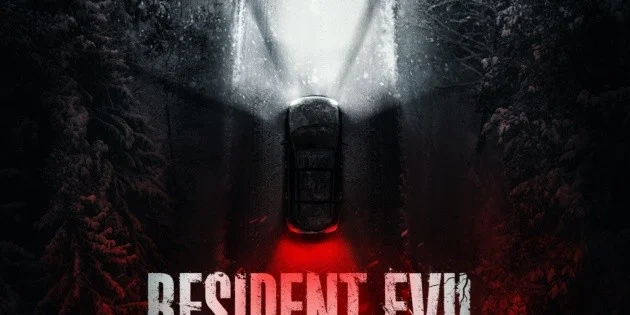
The narrative of "Resident Evil: Noche Cero" centers on Bryan, portrayed by actor Austin Abrams, a medical courier whose routine delivery to Raccoon City coincides with the terrifying onset of a biological outbreak. As the city descends into chaos, Bryan finds himself thrust into a desperate struggle for survival against grotesque creatures and the insidious biological experiments orchestrated by the infamous Umbrella Corporation. Uniquely, the film eschews a direct adaptation of any single video game title, instead drawing inspiration from the expansive universe created by Capcom and weaving together elements from various installments of the "Resident Evil" saga to forge a new, albeit familiar, cinematic experience. This creative approach allows for a fresh interpretation of the established lore while simultaneously providing ample opportunities for fan service through subtle and overt nods to the series’ iconic history.
The Enduring Legacy of the Resident Evil Franchise
The "Resident Evil" video game saga, which first captivated audiences in 1996, is a cornerstone of the survival horror genre, renowned for its intricate plots revolving around virulent outbreaks and bio-organic weapons (BOWs) that transform humans and animals into monstrous, dangerous creatures. Developed by Capcom, the franchise quickly established itself through its atmospheric horror, challenging puzzles, and resource management mechanics, setting a benchmark for future horror games. The original game, directed by Shinji Mikami, introduced players to the STARS (Special Tactics And Rescue Service) team members Chris Redfield and Jill Valentine as they investigated a mysterious mansion on the outskirts of Raccoon City, uncovering the horrifying truth about the Umbrella Corporation and its illicit viral research.
Since its inception, the franchise has undergone significant evolution, expanding far beyond its initial fixed-camera, tank-control roots. It has branched into various sub-genres, including more action-oriented titles like "Resident Evil 4," first-person horror experiences in "Resident Evil 7: Biohazard" and "Resident Evil Village," and critically acclaimed remakes that reimagine classic entries for modern audiences. With over 30 titles spanning main installments, remakes, spin-offs, and derived games, the "Resident Evil" universe boasts a rich tapestry of interconnected stories and a roster of iconic protagonists such as Leon S. Kennedy, Claire Redfield, Jill Valentine, and Chris Redfield. These characters have become synonymous with the struggle against Umbrella and other bioweapons manufacturers, each contributing significantly to the lore and enduring appeal of the series. The franchise’s commercial success is equally staggering, having sold over 150 million units worldwide across all platforms, making it Capcom’s best-selling property and one of the highest-grossing video game franchises of all time. This extensive history and profound cultural impact underscore the high expectations placed upon any new cinematic venture bearing the "Resident Evil" name.
Filmmakers’ Approach: Balancing Innovation and Nostalgia
The decision by the creators of "Resident Evil: Noche Cero" to craft an original story rather than a direct adaptation is a notable departure from previous cinematic iterations. The Milla Jovovich-led film series, which ran from 2002 to 2016 across six movies, often took significant liberties with the source material, creating a largely independent narrative universe that, while commercially successful, drew mixed reactions from dedicated video game fans. The 2021 reboot, "Resident Evil: Welcome to Raccoon City," attempted a more faithful adaptation of the first two games but also faced challenges in critical and fan reception.
Against this backdrop, "Noche Cero" appears to navigate a middle ground, aiming to capture the essence and atmosphere of the games while allowing for creative freedom in its plot. This strategy acknowledges the inherent difficulties in directly translating sprawling video game narratives to the two-hour cinematic format without alienating either new viewers or the loyal fanbase. By focusing on an original character like Bryan and embedding him within a familiar setting (Raccoon City) and confronting him with well-known antagonists (Umbrella), the film endeavors to provide a fresh perspective on the familiar horror while validating long-time players’ dedication through a plethora of identifiable in-game elements. The early box office figures suggest that this hybrid approach may be resonating with audiences, indicating a potential pathway for future video game adaptations that seek to honor their origins without being rigidly constrained by them.
A Deep Dive into the Easter Eggs and Homages
The true delight for fans of the "Resident Evil" games lies in the film’s commitment to incorporating numerous specific visual and thematic references. These aren’t just superficial nods but often integrate iconic gameplay mechanics or narrative devices directly into Bryan’s journey, enhancing the sense of immersion and connection to the original source material.
-
The Typewriter: One of the most evocative and historically significant objects in the "Resident Evil" universe, the typewriter makes a prominent appearance during Bryan’s exploration. In the early "Resident Evil" games, typewriters served as the sole means of saving player progress, a mechanic that instilled a profound sense of tension and resource management. Players weren’t allowed to save infinitely; instead, they required a finite supply of "Ink Ribbons" to utilize these machines. This scarcity meant that every save was a strategic decision, forcing players to weigh the risk of proceeding without saving against the potential waste of a precious resource. Its inclusion in "Noche Cero" is a powerful callback, immediately signaling to veteran players that the filmmakers understand the core elements that defined the early survival horror experience. It evokes memories of harrowing moments, carefully planning routes, and the sheer relief of reaching a typewriter after a challenging encounter.
-
The Shotgun: The shotgun is an indispensable weapon in nearly every "Resident Evil" title, known for its devastating close-range power against mutated creatures. Bryan’s discovery of a shotgun mounted on a wall is a direct visual echo of iconic scenes from the first "Resident Evil" and "Resident Evil 4." In the original mansion, players often found a shotgun in a precarious trap room, requiring a puzzle solution to retrieve it safely. Similarly, "Resident Evil 4" featured shotguns available in early areas, quickly becoming a staple for confronting the Ganados. The film’s portrayal of this discovery serves as a deliberate homage to these classic moments, highlighting the strategic importance of this weapon in combating the grotesque threats of the "Resident Evil" world. It’s not just a weapon; it’s a symbol of empowerment against overwhelming odds.
-
Heavy Field Rounds: Following the acquisition of the shotgun, Bryan locates "Heavy Field" cartridges, a specific type of ammunition that will be immediately recognizable to players of "Resident Evil 4." In that game, Heavy Field Rounds were a premium ammunition type, often used for powerful weapons like the Riot Gun or Striker, offering enhanced stopping power against tougher enemies like the Garrador or the Regenerators. Their presence in "Noche Cero" demonstrates an impressive level of detail and a deep understanding of the game’s specific mechanics and item nomenclature, reassuring fans that the creators are paying close attention to even the granular aspects of the source material. This particular reference speaks volumes about the filmmakers’ dedication to authentic fan service.
-
The Green Herb: Discreetly placed within a scene set in a house, a "Green Herb" (Hierba Verde) is spotted. This item is perhaps the most universally recognized healing item across the entire "Resident Evil" franchise. From the very first game, green herbs have been the primary means of restoring health, often found growing in pots or scattered in various environments. Their significance extends to their ability to be combined with other herbs (Red for enhanced healing, Blue for poison cure) to create more potent remedies. The subtle inclusion of this iconic curative element reinforces the film’s connection to the game’s core gameplay loop of exploration, combat, and resource management, reminding viewers of the constant struggle for survival and the vital role these simple plants play.
-
The Sewers: As Bryan navigates the infected city, his journey takes him through the dark, labyrinthine sewers of Raccoon City. This setting is an undeniable callback to "Resident Evil 2," where protagonists Leon Kennedy and Claire Redfield spent a significant portion of their terrifying ordeal traversing these subterranean passages. The sewers in "Resident Evil 2" were infamous for their challenging enemies, environmental hazards, and, most notably, a memorable encounter with a giant mutated alligator (a G-Type creature). The film’s depiction of this grim locale not only provides a familiar backdrop for horror but also implicitly hints at the kind of monstrous threats that might lurk within, further deepening the connection to the established game narrative.
-
Leon S. Kennedy: While the popular character Leon S. Kennedy does not make a physical appearance in "Noche Cero," his indelible mark on the "Resident Evil" universe is acknowledged through a highly visible and direct reference. A storefront bearing the name "Leon S. Kennedy Guns and Ammo" is featured, providing one of the most overt and appreciated Easter eggs for dedicated fans. Leon, who debuted as a rookie Raccoon City police officer in "Resident Evil 2," quickly became a fan favorite due to his resilience, sharp wit, and central role in subsequent entries like "Resident Evil 4" and "Resident Evil 6," as well as numerous animated films. The inclusion of his name in such a prominent way is a clear homage to his enduring legacy and his inextricable link to the Raccoon City incident, serving as a powerful wink to the audience.
Broader Implications and the Future of Video Game Adaptations
The early success and fan reception of "Resident Evil: Noche Cero," particularly its skillful integration of game elements, comes at a pivotal time for video game adaptations. Recent years have seen a significant shift in the quality and commercial viability of films and series based on gaming IPs. The monumental success of "The Super Mario Bros. Movie," the critical acclaim for HBO’s "The Last of Us," and the widespread popularity of animated series like "Arcane" (based on "League of Legends") have shattered the long-held notion of the "video game movie curse." These projects demonstrate that with careful attention to source material, respect for fan expectations, and strong storytelling, adaptations can achieve both critical and commercial triumph.
"Resident Evil: Noche Cero" appears to be following this trend, leveraging the vast and detailed lore of its source material to craft a compelling narrative that feels both fresh and reverent. Its performance could influence future decisions regarding the "Resident Evil" cinematic universe, potentially paving the way for further installments that continue to explore new stories within the established framework, or even inspiring a more direct adaptation of other fan-favorite game storylines. The film’s approach to fan service, balancing novelty with nostalgia, provides a blueprint for how adaptations can satisfy a diverse audience, from casual moviegoers to the most dedicated gamers.
As "Resident Evil: Noche Cero" continues its run, its box office performance and critical reception will be closely watched. Its ability to marry original storytelling with authentic nods to its video game roots highlights a maturing landscape for video game adaptations, suggesting a future where such projects are not merely cash-ins but genuinely engaging and respectful extensions of beloved digital worlds. The re-emergence of Raccoon City as a cinematic horror hub, enriched by these thoughtful homages, solidifies "Resident Evil" as a perennial force in both gaming and popular culture.

0 Comments