
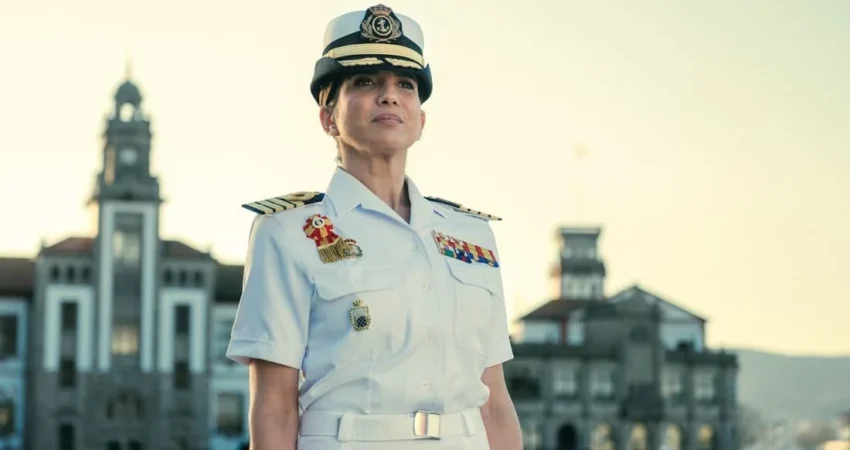
Telecinco has initiated its promotional campaign for "Marusía. Vientos de Honor," a highly anticipated fictional series produced by Unicorn Content. This groundbreaking drama marks the first time the interior of the Spanish Naval Military School in Marín will be depicted on television. Following its presentation at the FesTVal in Vitoria, the network has announced that the series will premiere "very soon" during its primetime slot, though a specific release date remains unconfirmed. The launch of the promotional campaign is a clear indication that the premiere is drawing near, signaling a significant addition to Spanish television programming.
Strategic Placement Amidst a Crowded Primetime Schedule
The integration of "Marusía. Vientos de Honor" into Telecinco’s schedule presents a strategic challenge for the network. Currently, the primetime lineup is densely populated with established and popular programming. Mondays and Wednesdays are dominated by "La Isla de las Tentaciones," a highly successful reality dating show. Tuesdays, Thursdays, and Sundays are reserved for the extensive run of "Supervivientes All Stars," the network’s flagship survival reality competition. Fridays feature "De Viernes," a weekly entertainment program, and Saturdays are dedicated to "Cine 5 Estrellas," showcasing major film releases. This packed schedule necessitates careful consideration for where "Marusía" will find its audience, suggesting that adjustments may be made to accommodate the new drama. The network’s commitment to a primetime launch underscores the perceived importance and potential appeal of the series.
A Reunion of Talent and a Proven Track Record
"Marusía. Vientos de Honor" represents a significant reunion between Mediaset España, Telecinco’s parent company, and Ana Rosa Quintana’s production company, Unicorn Content. This collaboration follows the considerable success of their previous joint venture, the fiction series "El Marqués." The creative team behind "Marusía" boasts substantial experience in crafting compelling narratives within confined and intriguing environments.
Two of the three principal creators from "El Marqués" are returning for this new project: Ignacio del Moral, a seasoned screenwriter also known for his work on the critically acclaimed film "Los Lunes al Sol," and Begoña Álvarez, who contributed to the popular series "Desaparecidos. La Serie." They are joined by Laura Belloso, whose impressive portfolio includes the successful suspense dramas "El Internado" and "Luna, el misterio de Calenda." This trio of writers brings a wealth of expertise in developing intricate plots driven by mystery and set within closed institutional settings, a genre that has consistently resonated with audiences.
Unraveling a Deathly Mystery at the Naval School
The narrative of "Marusía. Vientos de Honor" is anchored by a central mystery: the death of a student at the Naval Military School during the previous academic year. While officially ruled a suicide, a significant number of unanswered questions persist, fueling speculation and suspicion. The series introduces Teresa Ibarra, portrayed by Lucía Jiménez, who steps into the role of Commander Director of the school. Upon assuming her new position, she inherits the unresolved case. Ibarra’s mandate extends beyond managing the immediate aftermath of the student’s death; she is tasked with uncovering the truth behind the tragic event. This dual responsibility sets the stage for a complex and potentially perilous investigation within the rigid confines of the military institution.
The Dynamic Between Director and Investigator
Teresa Ibarra’s investigation will see her collaborating with Lieutenant Colonel Jorge Carvajal, played by Alfonso Bassave. Carvajal’s arrival is not solely as an investigator; his presence is intricately linked to Ibarra’s personal history. His involvement triggers dormant, traumatic memories and internal conflicts that Ibarra believed she had overcome. The palpable tension between these two characters is poised to become a central dramatic axis of the series, blending professional duty with unresolved personal demons. This dynamic promises to add layers of psychological depth and interpersonal conflict to the unfolding mystery.

New Cadets, New Challenges, New Secrets
Parallel to the investigation, the series will introduce three young women entering the Naval School: Carmela, portrayed by Paloma Stewart; Jahzara, played by Edith Martínez-Val; and Renata, brought to life by Carmen de la Vega. These cadets hail from diverse backgrounds and are thrust into an environment characterized by rigorous academic demands, strict military hierarchy, and intense psychological pressure. The series will explore their struggles to adapt to the values and discipline of the institution, contrasting sharply with their previous lives. Their personal journeys, fraught with their own individual challenges and aspirations, are expected to further complicate the already intricate dynamics within and beyond the school’s walls. The juxtaposition of these young women’s experiences with the central mystery is likely to provide a significant source of narrative tension and character development.
An Ensemble Cast of Established and Emerging Talent
Beyond the central roles, "Marusía. Vientos de Honor" features a robust supporting cast. Miquel Fernández, Álex Medina, Darío Loureiro, Arwent Martínez, Iria Orejudo, and Nacho Nugo are among the notable actors rounding out the ensemble. This diverse cast is expected to bring a wide range of performances, contributing to the richness and complexity of the series’ narrative tapestry. The collective talent of these actors promises to deliver compelling portrayals of characters navigating the demanding and often secretive world of the Naval Military School.
Unprecedented Access and Authentic Portrayal
A significant distinguishing factor for "Marusía. Vientos de Honor" is its unprecedented access to the Naval Military School in Marín for filming. This marks the first time a fictional production has been granted permission to shoot within the actual facilities. The Spanish Navy has provided direct advisory support to the production, contributing to the authenticity of both the sets and the portrayal of the institution’s internal operations. This level of access promises a visually striking and immersive experience for viewers, offering a glimpse into a world rarely seen on screen.
The timing of this series’ release is also noteworthy. It follows the recent presence of Princess Leonor at the same naval facilities, placing the Spanish Navy in a heightened state of media attention. While "Marusía" is a work of fiction and not based on specific real-life events, the series inevitably benefits from this contemporary focus, drawing attention to the institution and its role in national life. The production’s commitment to accuracy, bolstered by the Navy’s collaboration, suggests a dedication to presenting a credible and respectful depiction of military life.
The Sea as a Witness and a Character
The narrative scope of "Marusía. Vientos de Honor" extends beyond the confines of the Naval School. The surrounding town of Marín and the fishing community of the Ría will play integral roles in the storyline. The sea itself is presented as more than just a backdrop; it functions as a dynamic element within the narrative, serving as both a stage and a silent witness to the characters’ secrets and struggles. Described as sometimes an ally and at other times an adversary, the maritime environment is poised to imbue the series with a distinct atmosphere and potentially influence the unfolding plotlines. This integration of the local landscape and community adds a layer of realism and cultural depth to the drama.
Analysis: A Bold Proposition with High Stakes
"Marusía. Vientos de Honor" enters the Spanish television landscape with a compelling premise that combines familiar dramatic elements: a closed educational institution, an unresolved death, the resurfacing of past traumas, and young individuals confronting a rigid system. The success of the series will hinge on the creative team’s ability to transform the Naval School from a mere picturesque setting into a fully integrated element of the narrative.
The prior success of "El Marqués" provides a degree of confidence in the production team’s storytelling capabilities. Furthermore, the unprecedented access to the actual Naval Military School offers a unique visual and atmospheric advantage that no other Spanish fiction has previously achieved. The true test, however, will lie in how effectively this exceptional setting is utilized to amplify the drama, deepen character arcs, and drive the central mystery forward. If executed successfully, "Marusía. Vientos de Honor" has the potential to set a new benchmark for institutional dramas in Spain, offering viewers a captivating blend of suspense, character-driven storytelling, and a unique glimpse into a rarely depicted world. The series’ ability to balance its procedural elements with compelling personal narratives will be crucial to its impact and lasting appeal.

0 Comments