
The cinematic landscape of the 21st century has been punctuated by rare moments where technical prowess and narrative intimacy align perfectly to redefine a genre. Alfonso Cuarón’s 2013 masterpiece, Gravity, stands as a primary example of this phenomenon. However, as streaming licensing agreements continue to shift, the film is scheduled to depart the HBO Max catalog on September 30, 2026. This departure marks the end of a significant tenure on the platform for a film that not only secured seven Academy Awards but also fundamentally altered the way audiences and filmmakers perceive the vacuum of space. With only a week remaining for subscribers to experience the film in its high-definition streaming format, the industry is once again reflecting on the immense legacy of a production that was once deemed "unfilmable."
The Countdown to Removal from Streaming
The removal of Gravity from HBO Max is a result of standard licensing cycles between Warner Bros. Discovery and various distribution entities. While the film was a flagship title for the service, its departure highlights the transient nature of digital libraries. For viewers, the September 30 deadline represents a final opportunity to witness the 91-minute survival thriller that revolutionized the use of 3D and computer-generated imagery (CGI). The film’s presence on the platform has allowed a new generation of viewers to discover Cuarón’s work, which remains as visually arresting today as it was during its theatrical debut over a decade ago.
The urgency of this departure is underscored by the film’s status as a "must-see" technical achievement. Unlike many science fiction films that rely on fast-paced editing, Gravity utilizes long, unbroken takes to simulate the disorientation and isolation of Earth’s orbit. These sequences are best viewed in high-quality formats, making its availability on premium streaming services a point of interest for cinephiles.
A Narrative of Survival and Rebirth
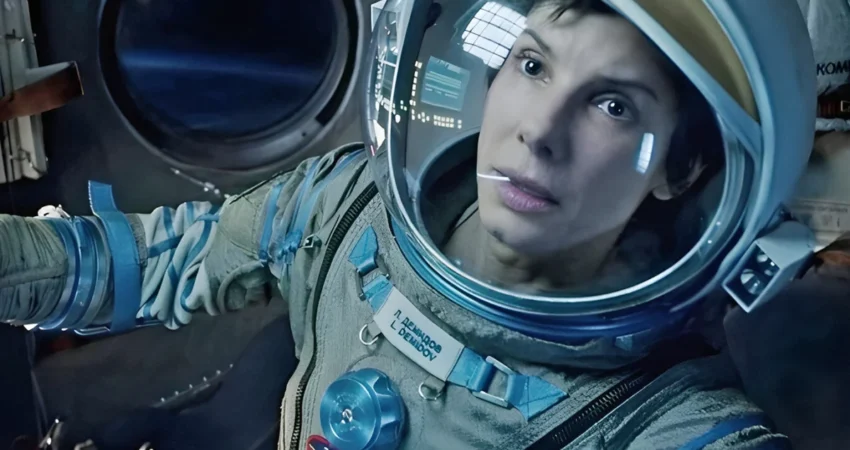
At its core, Gravity is a deceptively simple story. Dr. Ryan Stone (Sandra Bullock), a brilliant medical engineer on her first shuttle mission, is accompanied by veteran astronaut Matt Kowalski (George Clooney), who is commanding his final flight before retirement. The mission is routine until a catastrophic chain reaction occurs: a Russian missile strike on a defunct satellite triggers a "Kessler syndrome" event, sending a cloud of high-velocity debris hurtling toward the Space Shuttle Explorer.
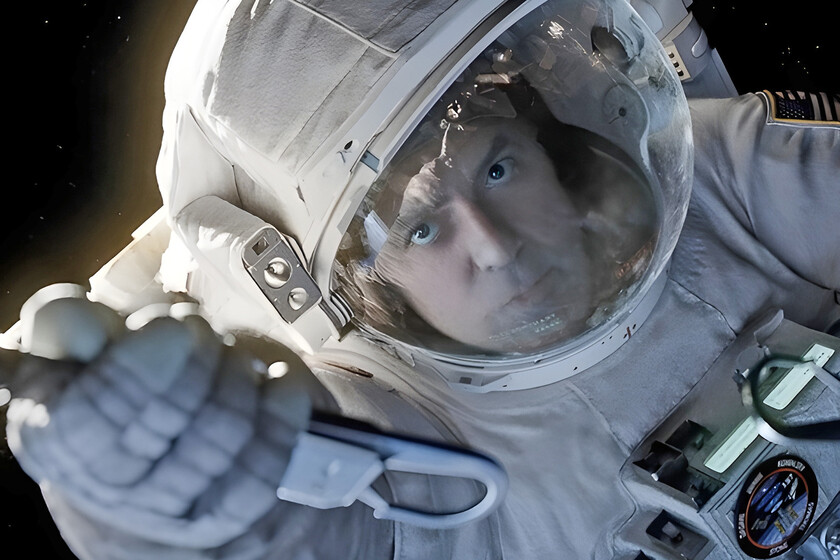
The ensuing disaster destroys the shuttle and leaves Stone and Kowalski tethered to one another, drifting into the blackness of space with no communication with Mission Control and a rapidly depleting oxygen supply. The narrative then follows Stone’s grueling journey to reach the International Space Station (ISS) and eventually a Chinese Tiangong station in a desperate bid to return to Earth.
While the plot functions as a high-stakes thriller, Cuarón and his son, co-writer Jonás Cuarón, infused the script with deep metaphorical resonance. Dr. Stone is a character paralyzed by the grief of losing her young daughter; her journey through the void serves as a literal and figurative "rebirth." The imagery of Stone floating in a fetal position inside an airlock, framed by the circular hatch, remains one of the most discussed visual metaphors in modern cinema.
The Technological Breakthroughs of the "Light Box"
The production of Gravity is a story of technological necessity. When Alfonso Cuarón first conceived the film, the technology required to execute his vision did not exist. The director insisted on realistic lighting and seamless transitions between live-action faces and digital environments. To achieve this, cinematographer Emmanuel Lubezki and visual effects supervisor Tim Webber developed the "Light Box."
The Light Box was a nine-foot-tall cube outfitted with over 1.9 million individually controllable LED bulbs. Sandra Bullock would be placed inside a specialized rig within this cube, which projected images of the Earth, the stars, and the sun onto her face. This ensured that the reflections in her visor and the shadows on her skin matched the digital environment that would be added in post-production. This innovation solved the "uncanny valley" problem that often plagues space films, where actors appear incorrectly lit compared to their backgrounds.
Furthermore, the film’s opening sequence—a continuous 17-minute shot—required complex robotic arms, similar to those used in automotive manufacturing, to move the camera and the lighting rigs with mathematical precision. This allowed the camera to "dance" around the actors, creating the illusion of weightlessness that had never been captured with such fidelity before.

The Long Road to Production: Cuarón’s Vision
The journey to bring Gravity to the screen lasted four and a half years. During this period, the project faced numerous hurdles, including casting changes and skepticism from studios regarding the film’s commercial viability. Initially, the roles were linked to several high-profile actors, including Angelina Jolie, Scarlett Johansson, and Natalie Portman. However, it was Sandra Bullock who eventually took the lead, undergoing months of physical training to maintain the core strength required to simulate zero-gravity movements while strapped into complex harnesses.
Cuarón’s commitment to the project was part of a larger movement in cinema often referred to as the "Mexican Wave." Alongside fellow directors Guillermo del Toro and Alejandro González Iñárritu, Cuarón sought to push the boundaries of what international directors could achieve within the Hollywood studio system. Gravity was his most ambitious gamble, requiring a $100 million budget for a film that featured essentially only two actors and a single location.
Scientific Realism and the Involvement of NASA
One of the hallmarks of Gravity is its commitment to scientific accuracy, albeit with some narrative concessions. The production team consulted extensively with NASA astronauts and specialists to ensure that the physics of movement in a vacuum were portrayed correctly. Astronaut Cady Coleman famously spoke with Sandra Bullock from the International Space Station to provide insights into how a woman moves and reacts in a microgravity environment.
While scientists, including astrophysicist Neil deGrasse Tyson, pointed out certain liberties taken with orbital mechanics—such as the proximity of various space stations to one another—the film was praised for its depiction of the "silence" of space. Sound does not travel in a vacuum, and Cuarón respected this by using a score by Steven Price that incorporated mechanical vibrations and muffled thuds to represent sound conducted through an astronaut’s suit, rather than external explosions.
Buzz Aldrin, the second man to walk on the moon, praised the film for its depiction of the Earth from orbit, stating that he was "staggered" by the realism of the visuals. This endorsement from the scientific community helped cement the film’s status as a landmark in realistic science fiction.
Critical Acclaim and Award Season Dominance
Upon its release in late 2013, Gravity became a critical darling. It currently holds a 96% approval rating on Rotten Tomatoes, with critics praising its "visceral" impact and Bullock’s career-best performance. The film’s success culminated at the 86th Academy Awards, where it was nominated for ten Oscars and won seven, including:
- Best Director: Alfonso Cuarón
- Best Cinematography: Emmanuel Lubezki
- Best Visual Effects: Tim Webber, Chris Lawrence, David Shirk, and Neil Corbould
- Best Original Score: Steven Price
- Best Film Editing: Alfonso Cuarón and Mark Sanger
- Best Sound Editing: Glenn Freemantle
- Best Sound Mixing: Skip Lievsay, Niv Adiri, Christopher Benstead, and Chris Munro
Cuarón’s win for Best Director was historic, making him the first Mexican filmmaker to win the award. The film’s sweep of the technical categories reflected the industry’s recognition that Gravity had set a new benchmark for what was possible in digital filmmaking.
Financial Success and Global Impact
Gravity was not only a critical success but also a massive commercial triumph. Despite the risks associated with its experimental style, the film grossed $274 million in the United States and Canada, and $449 million in other territories, for a worldwide total of $723.2 million. It was the eighth highest-grossing film of 2013 and remains one of the most successful "original" (non-franchise) science fiction films in history.
The film’s success proved that audiences were hungry for sophisticated, adult-oriented science fiction that prioritized tension and character over action tropes. It paved the way for subsequent space-themed successes such as Christopher Nolan’s Interstellar (2014) and Ridley Scott’s The Martian (2015), both of which utilized high-level scientific concepts and cutting-edge visual effects to tell human-centric stories.
The Philosophical Underpinnings of Survival
Beyond the spectacle, Gravity remains relevant because of its exploration of the human will to survive. The film asks a fundamental question: when faced with the absolute silence and indifference of the universe, why do we keep fighting? Dr. Stone’s character arc moves from a state of passive existence—haunted by the "static" on her radio and the memory of her daughter—to a state of active defiance.

The final scene of the film, showing Stone’s struggle to stand on solid ground after splashing down in a lake, is a powerful tribute to human evolution and resilience. The sound of her heavy breathing and the tactile sensation of mud between her fingers contrast sharply with the sterile, weightless environment of the previous hour, grounding the film’s cosmic stakes in a deeply physical reality.
Legacy and the Future of the Genre
As Gravity prepares to leave HBO Max on September 30, 2026, its legacy is secure. It is frequently cited in lists of the greatest films of the 21st century, including a notable ranking by The New York Times. Its influence can be seen in the way modern directors approach "invisible" CGI and the integration of physical acting with digital sets.
For those who have not yet experienced the film—or for those who wish to revisit Dr. Stone’s harrowing journey—the coming days represent a final window of accessibility on its current platform. Gravity remains a testament to the power of cinema to transport audiences to the furthest reaches of the unknown, only to remind them of the preciousness of the ground beneath their feet. Its departure from streaming is a reminder that while the stars are eternal, our access to the masterpieces that depict them is often subject to the whims of the digital age.

0 Comments