
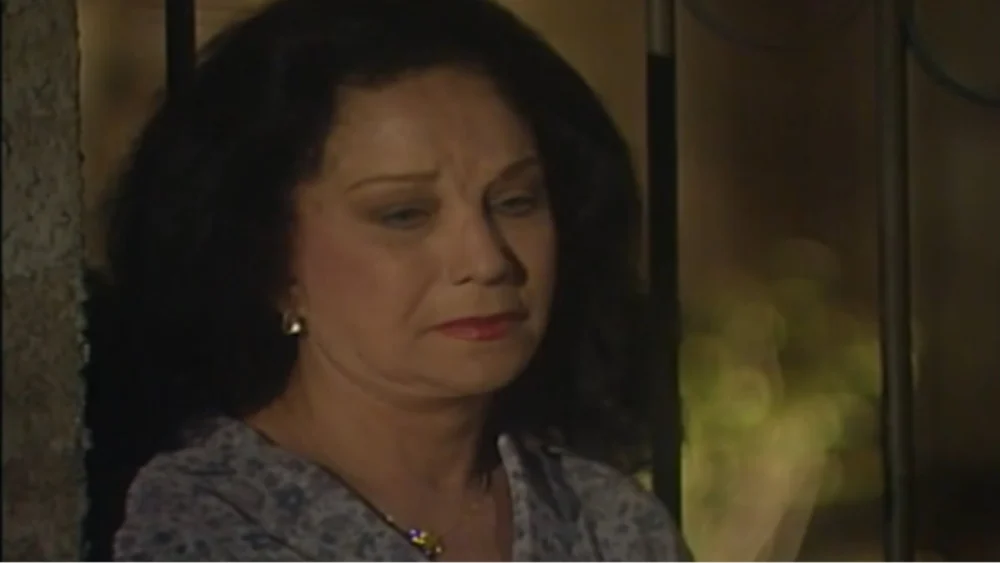
The classic Brazilian telenovela Rainha da Sucata, a masterwork from the pen of Sílvio de Abreu with the collaboration of Alcides Nogueira and José Antônio de Souza, is currently navigating a period of intense dramatic upheaval. Viewers are on the edge of their seats as the central conflict involving Lena and her daughter, Alaíde, escalates to a new zenith, triggered by a harrowing incident in the courtroom. This pivotal moment, where Alaíde collapses dramatically, marks an undeniable turning point in a narrative already steeped in intricate relationships and social commentary, as reported by Tv Pop. The incident not only sets off a chain reaction of personal confessions but also threatens to unravel a meticulously crafted deception that has long cast a shadow over several key characters.
The Shocking Revelation: Alaíde’s Collapse and Confession
The initial catalyst for this surge in dramatic tension occurs during a crucial courtroom proceeding, where Alaíde, under immense emotional strain, suddenly faints. This public display of distress immediately raises alarms, particularly for her mother, Lena. Witnessing her daughter’s fragile state, Lena’s maternal instincts take over, and she becomes relentlessly focused on uncovering the truth behind Alaíde’s alarming condition. The young woman, visibly shaken and attempting to conceal her true ailment, initially tries to deflect her mother’s persistent inquiries. Alaíde’s efforts to maintain a façade of normalcy are quickly undermined by Lena’s unwavering determination. The mother’s intuition is sharp, and she perceives that her daughter is harboring a significant secret.
Recognizing the futility of further pretense, and facing Lena’s firm resolve to take her to a doctor for a thorough examination, Alaíde finds herself cornered. With no viable escape from her mother’s concern, she makes the life-altering decision to reveal the truth. In a moment charged with emotion, Alaíde confesses that a medical examination is unnecessary because she already knows the reason for her condition: she is pregnant. The revelation itself is a profound shock, but its impact is magnified exponentially when Alaíde discloses the father of her unborn child: Rafael. This information plunges Lena into a state of utter horror and disbelief, as she has been led to believe, through years of manipulation and carefully constructed lies, that Alaíde and Rafael are, in fact, siblings.
The Shadow of Incest: A Core Conflict Unveiled
The belief that Alaíde and Rafael share a familial bond as siblings forms the core of Lena’s immediate distress and the central conflict that has been simmering beneath the surface of the narrative. This misconception, carefully orchestrated by the series’ primary antagonist, Laurinha, has created a deeply unsettling moral dilemma for Lena. The idea of her daughter being pregnant by her own brother is not only a societal taboo but a deeply personal tragedy that Lena cannot comprehend. The weight of this perceived incestuous relationship is designed to maximize the dramatic stakes, challenging Lena’s moral compass and pushing her to the brink of despair.
The emotional fallout from Alaíde’s confession is immediate and profound. Lena, reeling from the perceived horror, is galvanized into action. Her desperation leads her directly to Laurinha, the socialite whom she holds responsible for this calamitous situation, demanding answers and accountability. Lena arrives at Laurinha’s opulent residence, only to discover the villainess in conversation with Marcelo, an attorney who appears to be deeply entangled in Laurinha’s machinations.
During their dialogue, Marcelo expresses his concern regarding the implications of Alaíde’s pregnancy. He explicitly states that if the pregnancy is confirmed, the existing agreement between him and Laurinha would be nullified. This brief exchange offers a crucial glimpse into the extent of Laurinha’s manipulative schemes and the complex web of deceit she has woven. Laurinha, however, remains unflappable. Her reaction is chillingly cold and calculating. She issues a stark and menacing warning to Marcelo, making it unequivocally clear that if he dares to expose the truth – that Rafael and Alaíde are not siblings – he will face consequences that he will regret for the rest of his life. This threat underscores Laurinha’s ruthless determination to maintain her secrets and control the narrative, regardless of the emotional devastation it inflicts upon others.
It is at this tense juncture that Jonas, Laurinha’s butler, announces Lena’s arrival. Despite the charged atmosphere, Lena insists on speaking with Laurinha, setting the stage for a dramatic confrontation that promises to fundamentally alter the course of the story. This impending showdown is poised to intensify the already complex family drama that drives Rainha da Sucata, a telenovela famously set against the vibrant backdrop of São Paulo, exploring the compelling clash between the burgeoning new-rich class and the entrenched, decaying elite. This narrative, a classic example of Brazilian teledramaturgia, continues to resonate with fans of the original broadcast, who remember its iconic characters and unforgettable plot twists.
Laurinha’s Chilling Proposition: A Desperate Confrontation
The highly anticipated confrontation between Lena and Laurinha unfolds with devastating emotional intensity. Initially, the manipulative socialite attempts to evade Lena, dismissing her desperate pleas for an audience. However, Lena’s sheer resolve and the gravity of her situation compel Laurinha to finally listen. When Lena delivers the shocking news of Alaíde’s pregnancy with Rafael, Laurinha’s reaction is devoid of any compassion or empathy. Instead, with a chilling lack of humanity, she escorts Lena to her office, where she calmly states that, given the circumstances, there is only one viable solution: to terminate the pregnancy.
This cold and utterly heartless suggestion immediately ignites Lena’s fury. The mere thought of abortion, especially for a pregnancy she believes to be incestuous yet still sacred, is abhorrent to her. Lena vehemently rejects Laurinha’s proposition, making it clear that such a possibility is entirely unacceptable. Unfazed by Lena’s distress, Laurinha, with her characteristic cruelty, further provokes her rival. She advises Lena to simply "wait for the baby to be born" and then "cry tears of blood," a venomous prophecy designed to deepen Lena’s anguish and foreshadow a future filled with suffering. This exchange elevates the already tragic atmosphere of the story, signaling an impending cascade of darker events and moral quandaries for the characters involved.
Background of ‘Rainha da Sucata’: A Telenovela Classic
Rainha da Sucata, which translates to "Queen of Scrap," originally captivated audiences during its broadcast in 1990 on TV Globo. Penned by the celebrated Sílvio de Abreu, known for his sharp wit and intricate plots, the telenovela was a monumental success, defining an era of Brazilian television. Abreu collaborated with Alcides Nogueira and José Antônio de Souza to craft a narrative that was both entertaining and incisive, offering a poignant critique of Brazilian society at the time.
The series is renowned for its central thematic conflict: the clash between the "new rich" and the "old elite." At its heart is Maria do Carmo (Regina Duarte), a self-made millionaire who built her empire from a scrap metal business, hence the title. She embodies the "new rich" – ambitious, hardworking, and somewhat brash. Her primary antagonist is Laurinha Figueroa (Raquel Fabbri), a decadent socialite who represents the old, aristocratic São Paulo elite, clinging desperately to her vanishing prestige and wealth. Laurinha’s character is a masterclass in villainy, driven by malice, envy, and a ruthless desire to maintain her social standing, often through manipulation and psychological torment.
The plot of Rainha da Sucata is a complex tapestry of ambition, love, revenge, and social commentary. It explores themes of class struggle, moral decay, and the pursuit of happiness in a rapidly changing society. The setting of São Paulo provides a dynamic backdrop for these conflicts, with its towering skyscrapers symbolizing modernity and progress, contrasting with the crumbling mansions of the old money. The show’s ability to blend high drama with social critique cemented its place as a classic in Brazilian teledramaturgia, remembered for its compelling characters, memorable dialogues, and groundbreaking plot twists.
Character Profiles and Motivations: A Deeper Look
To fully appreciate the gravity of the current storyline, it is crucial to understand the key characters involved:
- Lena: A character defined by her protective maternal instincts and a strong moral compass. Lena is often portrayed as a figure of resilience, striving to protect her family from the harsh realities and manipulative schemes that surround them. Her horror at the perceived incestuous pregnancy stems from a deeply ingrained sense of right and wrong, and her desperate search for truth is driven by a mother’s unconditional love.
- Alaíde: The conflicted daughter, Alaíde finds herself entangled in a web of secrets and lies not entirely of her own making. Her collapse in court is indicative of the immense emotional and psychological burden she carries. Her pregnancy, particularly under the false pretense of a forbidden relationship, places her in an incredibly vulnerable position, forcing her to confront uncomfortable truths and make difficult decisions.
- Rafael: An unwitting participant in Laurinha’s grand deception, Rafael is caught in a romance that is falsely labeled as incestuous. His character represents the innocent party manipulated by external forces, highlighting the destructive power of Laurinha’s machinations. The revelation of Alaíde’s pregnancy and the subsequent clarification of their true relationship will undoubtedly have a profound impact on his arc.
- Laurinha Figueroa: The quintessential arch-villain, Laurinha is driven by a deep-seated malice and an insatiable desire for control and social dominance. Her actions, including the orchestration of the "sibling" lie, are calculated to inflict maximum pain and achieve her selfish objectives. Her chilling suggestion of abortion and her cruel taunts reveal the depths of her depravity, solidifying her role as the primary antagonist whose defeat is eagerly anticipated by viewers.
The Power of Telenovela Tropes in ‘Rainha da Sucata’
Rainha da Sucata masterfully employs several classic telenovela tropes to heighten drama and engage its audience. The "secret identity" or "mistaken parentage" trope is central to the Alaíde and Rafael storyline, creating the perception of forbidden love that is almost universally compelling in narrative. This trope allows for immense dramatic tension, only to be resolved through a grand revelation that often redefines character relationships and motivations.
The manipulative villain, personified by Laurinha, is another cornerstone of the genre. Her intricate schemes, threats, and calculated cruelty drive much of the plot, providing a clear antagonist for the audience to root against. The dramatic confrontations, such as the one between Lena and Laurinha, are essential to the genre, allowing for powerful performances and emotional catharsis for the characters and viewers alike. These elements, combined with themes of social inequality and moral dilemmas, ensure that the audience remains invested, eagerly awaiting justice and the triumph of good over evil.
Broader Narrative Implications and Future Arcs
Alaíde’s pregnancy is more than just a personal crisis; it serves as a powerful catalyst for unraveling the deeper truths embedded within the narrative of Rainha da Sucata. This pivotal event is poised to expose Laurinha’s long-held lies, particularly the fabricated notion that Alaíde and Rafael are siblings. The truth, when it inevitably surfaces, will not only vindicate Lena’s desperation but also fundamentally shift the dynamics between numerous characters.
The revelation will force a re-evaluation of all relationships touched by Laurinha’s deceit. The perceived forbidden nature of Alaíde and Rafael’s love will transform into a joyous, legitimate romance, profoundly impacting their individual character arcs. For Lena, the discovery that her daughter is not in an incestuous relationship will bring immense relief, but also a renewed determination to confront and dismantle Laurinha’s influence once and for all. The moral dilemmas previously faced by Lena and Alaíde will dissipate, replaced by new challenges related to their future and the impending birth of the child.
Furthermore, this development promises to intensify the show’s central conflicts. The battle between the "new rich" and "old elite," personified by Maria do Carmo and Laurinha, will gain new dimensions as Laurinha’s personal deceptions come to light, possibly leading to her social downfall. The pregnancy ensures that the stakes are higher than ever, promising a series of dramatic confrontations, betrayals, and ultimately, a path towards justice and resolution that is characteristic of Sílvio de Abreu’s storytelling.
The Enduring Appeal of Brazilian Telenovelas
Brazilian telenovelas hold a unique and cherished place in the nation’s cultural fabric, serving not only as entertainment but also as a powerful medium for social commentary and reflection. They often tackle complex societal issues, from class disparities to family dynamics, with a blend of melodrama and realism that resonates deeply with viewers. Rainha da Sucata, with its compelling characters and intricate plotlines, stands as a testament to the enduring appeal and cultural significance of the genre. Its ability to create gripping narratives that explore universal themes of love, ambition, and morality ensures its lasting legacy and continued relevance in discussions of classic television.
As the drama in Rainha da Sucata unfolds, with Alaíde’s pregnancy threatening to expose a deeply guarded secret and ignite a full-scale war between Lena and the manipulative Laurinha, viewers are left anticipating the profound implications for the characters and the broader narrative. The stage is set for a series of revelations that promise to redefine relationships, challenge moral boundaries, and deliver the kind of unforgettable storytelling that has cemented Rainha da Sucata‘s place as a true classic of Brazilian teledramaturgia.

0 Comments