
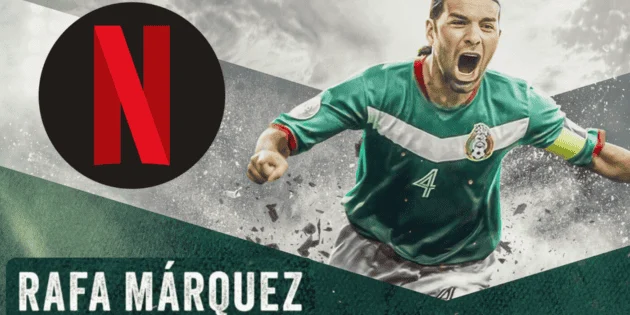
Just days before his anticipated debut as the technical director of the Mexican National Team in a pivotal match against Colombia, the release of the 82-minute biographical documentary, Rafa Márquez: El Capitán, on Netflix offers an indispensable lens into the psyche of the man tasked with steering Mexican football towards the 2030 FIFA World Cup. This cinematic deep dive arrives at a critical juncture, positioning itself as essential viewing for fans and analysts alike seeking to comprehend the strategic vision and leadership philosophy that Rafael Márquez brings to the helm of El Tri. The documentary, directed by Carlos Armella, is not merely a retrospective on a storied playing career but a profound character study, unveiling the formative experiences and unyielding resolve that have shaped one of Mexico’s most iconic football figures.
The narrative thrust of Rafa Márquez: El Capitán is particularly pertinent given the current landscape of Mexican football. The documentary meticulously chronicles the journey of Márquez, affectionately known as ‘El Káiser,’ from his nascent years with Atlas to his global ascendancy with AS Monaco and, most notably, FC Barcelona. It delves into the crucible of his early career, detailing the rigorous training and mental fortitude required to transition from a promising youth talent in Guadalajara to a linchpin defender in European football. His tenure at Monaco saw him clinch a Ligue 1 title, signaling his arrival on the international stage. However, it was his move to Barcelona in 2003 that truly cemented his legacy, where he became an integral component of one of football’s most dominant eras, playing alongside legends and under visionary coaches. This period, characterized by an unprecedented collection of domestic and international titles, is highlighted as a foundational chapter in Márquez’s tactical education, where he absorbed the sophisticated methodologies and winning mentality that he now aims to instill in the national squad.
The timing of the documentary’s release could not be more strategic. It precedes a momentous period for Mexican football, marked by the upcoming 2026 World Cup, which Mexico will co-host alongside the United States and Canada, and the subsequent 2030 cycle for which Márquez is slated to lead. Following the hypothetical departure of Javier Aguirre after the 2026 tournament, Márquez assumes what is arguably the most significant challenge of his professional career from the technical area. The Federación Mexicana de Futbol (FMF)’s decision to entrust him with this monumental task is underscored by the insights gleaned from El Capitán. The film illuminates the tactical acumen Márquez developed during his ‘golden era’ at FC Barcelona, where he not only honed his defensive skills but also cultivated a profound understanding of possession-based football, positional play, and high-pressing strategies – concepts that are widely considered elite in modern football and which he is now expected to adapt and implement within the Mexican setup.
A Chronicle of Excellence: From Guadalajara to Global Stardom
Rafael Márquez Álvarez’s professional journey began at Club Atlas de Guadalajara, where he made his debut in 1996. His innate talent, leadership qualities, and exceptional defensive prowess quickly set him apart. In 1999, at just 20 years old, he made the leap to European football, joining AS Monaco. His three seasons in France were highly successful, culminating in the 1999-2000 Ligue 1 title and the Coupe de la Ligue in 2003. This early European experience provided him with invaluable exposure to high-level competition and different tactical approaches.
However, it was his transfer to FC Barcelona in 2003 that truly defined his playing career. Over seven seasons at Camp Nou, Márquez became an indispensable figure, forming formidable defensive partnerships and showcasing his versatility as both a central defender and a defensive midfielder. Under coaches like Frank Rijkaard and Pep Guardiola, he amassed an impressive trophy cabinet, including four La Liga titles, two UEFA Champions League titles (2006, 2009), one Copa del Rey, two Spanish Super Cups, one UEFA Super Cup, and one FIFA Club World Cup. His intelligent play, exceptional passing range, and ability to read the game were crucial to Barcelona’s success. He famously became the first Mexican to win the Champions League.
On the international stage, Márquez’s commitment to the Mexican National Team was unwavering. He represented El Tri in five consecutive FIFA World Cups (2002, 2006, 2010, 2014, 2018), a feat achieved by only a handful of players globally. He captained Mexico in four of these tournaments, a testament to his unparalleled leadership and influence within the squad. His 147 caps make him one of Mexico’s most capped players, and his presence on the field often elevated the team’s performance, providing a calming yet commanding influence. This extensive experience at the highest levels of both club and international football provides Márquez with a unique perspective, combining tactical sophistication with a deep understanding of the pressures associated with national team duties.
The Transition to the Sidelines: Building a New Legacy
Upon retiring from playing in 2018, Márquez embarked on a carefully planned transition into coaching. His initial steps included a role as sporting director at Atlas, followed by a period of rigorous study and obtaining his coaching licenses. This deliberate approach underscored his commitment to mastering the craft, rather than simply relying on his playing reputation. His most significant coaching experience prior to this national team appointment came with Barcelona Atlètic, the reserve team of FC Barcelona, which competes in Spain’s Primera Federación.
During his tenure with Barcelona Atlètic, Márquez applied principles he had learned throughout his playing career, particularly those from his time under Guardiola. He focused on developing young talent, emphasizing possession-based football, tactical discipline, and a strong collective work ethic. His teams were known for their structured build-up play from the back, fluid movement in midfield, and aggressive pressing. This experience allowed him to hone his coaching philosophy in a demanding environment, working with aspiring professionals and navigating the complexities of player development and competitive league play. His success in nurturing young players and implementing a clear playing style at Barcelona Atlètic provided a tangible demonstration of his coaching capabilities and strategic vision, catching the attention of the FMF.
Illuminating Insights: The Documentary’s Core Revelations
Rafa Márquez: El Capitán transcends the typical sports biography by offering an intimate portrayal of a man who faced both extraordinary triumphs and profound personal challenges. Through a rich tapestry of never-before-seen archival footage, candid interviews with Márquez himself, his family, former teammates, and coaches, the film constructs a comprehensive picture of his life. It traces his evolution from a prodigious talent at Atlas, through his formative years at AS Monaco, to his iconic status at FC Barcelona.
Beyond the glitz of trophies and accolades, the documentary bravely confronts the darker episodes that tested Márquez’s resilience. It speaks openly about the profound grief he experienced following the loss of his father, a pivotal figure in his life and career. It also delves into the complex legal battles he faced, which cast a shadow over parts of his public image, and the agonizing memory of the penalty incident against the Netherlands during the 2014 World Cup, a moment that haunted a nation. By addressing these vulnerabilities with transparency, the film showcases an unbreakable spirit and an unwavering capacity for self-improvement and perseverance. This mental fortitude, the documentary argues, is precisely the quality Márquez now demands from the players comprising his inaugural national team call-up. Observing the 82-minute narrative, viewers discover a natural-born leader who has no tolerance for mediocrity, a trait deemed indispensable for transforming the identity of a team desperately in need of consistent success.
The film serves not merely as a nostalgic journey but as a veritable manual on sports leadership. The life lessons presented on screen directly reflect the exacting standards, tactical discipline, and hierarchical structure that are expected to define Márquez’s management leading up to the next two World Cups. It underscores his belief in a meritocratic system, where performance and commitment are paramount.
The Mexican National Team: A Quest for Identity and Success
The context into which Rafael Márquez steps as the national team coach is one of high expectations and considerable pressure. Mexican football has long been characterized by a passionate fan base, but also by a recurring cycle of hope and disappointment on the international stage, particularly at the World Cup. The elusive "quinto partido" (fifth match) – the quarter-final stage – remains a historical barrier that El Tri has been unable to breach since 1986, when Mexico hosted the tournament.
Recent years have seen a carousel of coaching changes, reflecting the FMF’s search for a formula for sustained success. Following the departure of Gerardo "Tata" Martino after the 2022 World Cup, where Mexico failed to advance from the group stage for the first time since 1978, the team experienced a turbulent period under Diego Cocca and then Jaime Lozano. The hypothetical scenario outlined in the original article, where Javier Aguirre departs after the 2026 World Cup and Márquez takes over for the 2030 cycle, highlights a strategic shift towards a long-term project centered on a figure deeply ingrained in Mexican football culture.
The decision to appoint Márquez for the 2030 cycle, as inferred from the documentary’s relevance, signals a commitment to developing a distinct playing philosophy and fostering a new generation of talent. The FMF is likely betting on Márquez’s intimate understanding of the European elite game, combined with his deep roots in Mexican football, to bridge the gap between local talent development and international competitiveness. The upcoming 2026 World Cup, with Mexico as a co-host, adds an extra layer of pressure and opportunity, making the foundation laid for 2030 even more critical.
Tactical Blueprint and Expectations for El Tri
Márquez’s coaching philosophy, heavily influenced by his Barcelona days, is expected to emphasize intelligent possession, tactical flexibility, and relentless pressing. His teams will likely prioritize building attacks from the back, utilizing technically gifted midfielders, and demanding high defensive responsibility from all players. This contrasts with some previous Mexican national team iterations that sometimes relied more on counter-attacking or individual brilliance.
Key elements of his tactical approach will include:
- Positional Play (Juego de Posición): Players are expected to maintain specific positions to create passing lanes and triangles, facilitating quick ball movement and numerical superiority in different zones.
- High Pressing: A proactive defensive strategy aimed at winning the ball back quickly in the opponent’s half, stifling their build-up, and creating immediate scoring opportunities.
- Technical Proficiency: A strong emphasis on individual skill, ball control, and passing accuracy, ensuring that players are comfortable under pressure.
- Versatility: Encouraging players to understand multiple roles and adapt to different tactical formations within a game.
Márquez’s debut match against Colombia, likely in Baltimore as mentioned in the original article, will be the first glimpse into how these principles translate onto the field with the senior national team. Colombia, known for its technical quality and physical play, will provide a robust test for El Tri’s new tactical direction. This game is not just a friendly; it is the symbolic start of a new era, where Márquez will begin to imprint his vision and demands on the squad.
Challenges and the Road to 2030
The path to the 2030 World Cup will be fraught with challenges. Márquez will need to navigate the complexities of player selection, integrating promising young talents with experienced veterans. He will also face the perennial issue of Mexican players transitioning to top European leagues, which is crucial for raising the overall quality and competitiveness of the national team. Furthermore, the intense scrutiny from the Mexican media and a passionate fan base will require him to demonstrate strong leadership and unwavering focus.
However, Márquez also brings significant opportunities. His unparalleled playing career commands respect from players and fans alike. His deep understanding of what it takes to win at the highest level, combined with his recent coaching experience, positions him uniquely to inspire and develop the next generation of Mexican footballers. The 2026 World Cup, co-hosted on home soil, offers an unprecedented chance to build momentum and galvanize national support, providing an ideal platform for the long-term project leading to 2030.
In essence, Rafa Márquez: El Capitán is more than a historical account; it is a profound declaration of intent. It serves as the definitive prologue to his new era as the leader of the Mexican National Team. Before the ball officially rolls in Baltimore, this compelling documentary on Netflix provides the crucial context and emotional resonance needed to rekindle the hopes and dreams of a nation yearning for footballing glory. It’s an invitation to understand the man, his journey, and the formidable vision he brings to the most coveted position in Mexican football.
This note was created with the help of artificial intelligence and reviewed by an editor.

0 Comments