
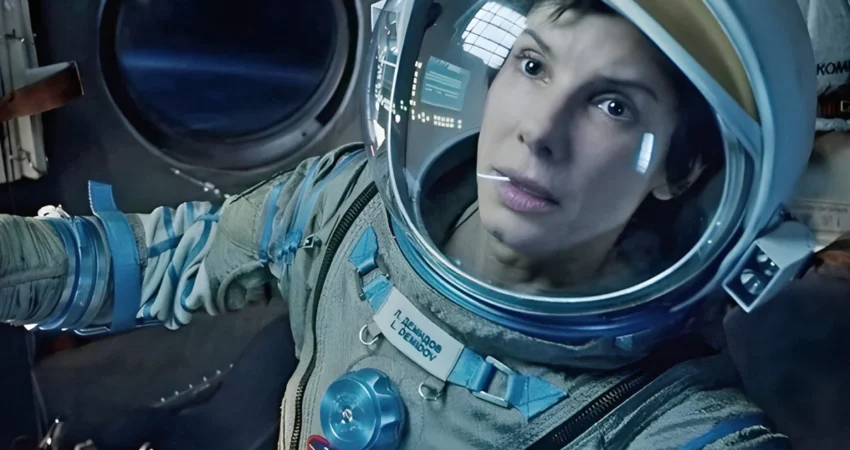
The digital library of HBO Max, now rebranded as Max in several territories, is set to lose one of its most prestigious cinematic offerings as the month of September 2026 concludes. Alfonso Cuarón’s 2013 survival thriller, Gravity, which redefined the boundaries of visual effects and immersive storytelling, is scheduled for removal on September 30, 2026. This departure marks the end of a significant streaming window for a film that not only dominated the global box office but also secured a permanent place in the pantheon of science fiction history. As the deadline approaches, the film’s exit prompts a retrospective on its grueling production, its scientific contributions, and its enduring legacy as a pinnacle of 21st-century filmmaking.
A Technical Odyssey: The Production of Gravity
The journey to bring Gravity to the silver screen was as perilous and complex as the journey of its protagonist, Dr. Ryan Stone. When Alfonso Cuarón and his son, Jonás Cuarón, completed the script, they initially believed the project would be a straightforward endeavor. However, the technology required to simulate zero gravity and the harsh lighting of low Earth orbit did not yet exist. Production was delayed for several years as Cuarón and his long-time collaborator, cinematographer Emmanuel "Chivo" Lubezki, worked with visual effects house Framestore to invent new filming techniques.
To achieve the seamless, long-take aesthetic for which Cuarón is famous, the team constructed the "Lightbox," a nine-foot-tall cube outfitted with over 1.9 million LED lights. This structure allowed the filmmakers to project images of the Earth and the stars onto the actors, ensuring that the reflections in their visors and the shadows on their faces were physically accurate. Sandra Bullock, who portrayed Dr. Stone, spent significant portions of the shoot isolated inside this rig, strapped into a mechanical harness that manipulated her body to simulate the absence of weight. This isolation reportedly aided her performance, mirroring the psychological desolation of her character.
Narrative Depth and the Theme of Rebirth
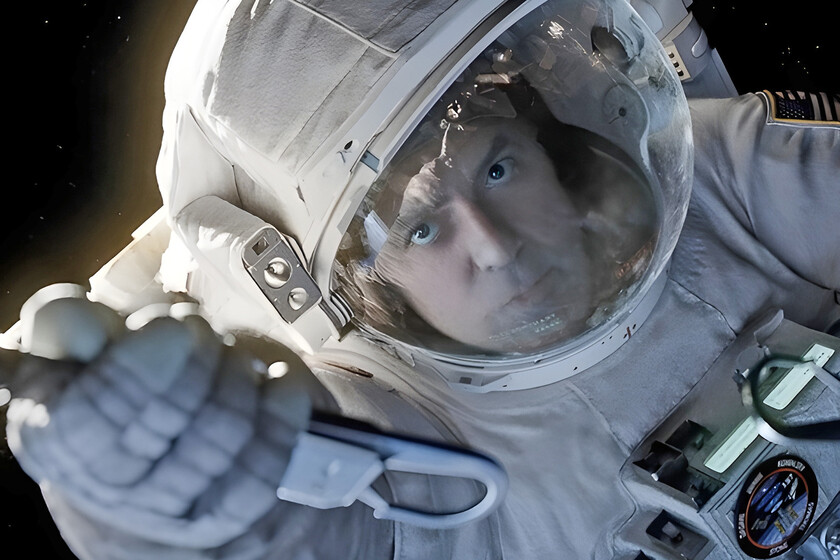
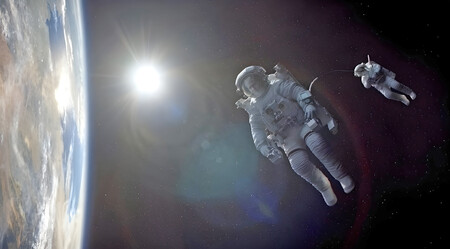
While Gravity is often lauded for its technical prowess, its narrative simplicity provides the emotional anchor that resonated with millions of viewers. The story follows Dr. Ryan Stone, a medical engineer on her first shuttle mission, and Matt Kowalski (George Clooney), a veteran astronaut on his final flight. When a Russian missile strike on a defunct satellite triggers a chain reaction of debris—a phenomenon known as the Kessler Syndrome—their shuttle is destroyed, leaving them drifting in the vacuum of space.
The film functions as a minimalist survival drama, stripped of the usual sci-fi tropes of alien encounters or futuristic warfare. Instead, it focuses on the internal struggle of a woman grieving the loss of her child, finding the will to live in an environment that is fundamentally hostile to life. Critics have frequently noted the film’s heavy use of symbolism, particularly the imagery of rebirth. The scene in which Bullock’s character sheds her spacesuit and curls into a fetal position inside the airlock of the International Space Station (ISS) remains one of the most iconic visual metaphors in modern cinema, representing a transition from the "womb" of the station back into the harsh reality of existence.
The Impact of the Kessler Syndrome and Scientific Realism
One of the primary reasons Gravity remains a subject of discussion among scientists and enthusiasts is its depiction of the Kessler Syndrome. Proposed by NASA scientist Donald J. Kessler in 1978, the theory suggests that the density of objects in low Earth orbit (LEO) is high enough that collisions between objects could cause a cascade in which each collision generates space debris that increases the likelihood of further collisions.
While the film takes creative liberties with the proximity of various space stations and the speed at which events unfold, it brought the very real issue of space junk into the public consciousness. NASA officials and veteran astronauts have praised the film for its "feeling" of space. Retired astronaut Buzz Aldrin described the film’s depiction of zero gravity as the most realistic he had ever seen on screen. However, the film did not escape scrutiny; astrophysicist Neil deGrasse Tyson famously pointed out several inaccuracies on social media, such as the way Dr. Stone’s hair did not float freely inside her helmet. Despite these minor critiques, the film’s commitment to technical fidelity earned it a level of respect rarely accorded to Hollywood blockbusters.

Commercial Success and the 86th Academy Awards
Upon its release in October 2013, Gravity was a commercial juggernaut. Produced on a budget of approximately $100 million, the film grossed $274 million in North America and $449 million in other territories, for a worldwide total of $723.2 million. It was a rare example of an "original" property (not based on a pre-existing franchise or comic book) achieving massive financial success.
The film’s critical reception was equally stellar. It currently holds a 96% approval rating on Rotten Tomatoes, with a consensus that praises its "dazzling visual effects" and "riveting performances." This momentum carried the film into the 86th Academy Awards, where it received 10 nominations. On the night of the ceremony, Gravity was the most awarded film, taking home seven Oscars:
- Best Director: Alfonso Cuarón
- Best Cinematography: Emmanuel Lubezki
- Best Visual Effects: Tim Webber, Chris Lawrence, David Shirk, and Neil Corbould
- Best Original Score: Steven Price
- Best Film Editing: Alfonso Cuarón and Mark Sanger
- Best Sound Editing: Glenn Freemantle
- Best Sound Mixing: Skip Lievsay, Niv Adiri, Christopher Benstead, and Chris Munro
Cuarón’s win for Best Director was a historic moment, as he became the first Mexican filmmaker to win the award, paving the way for a decade of dominance by Mexican directors in that category.
Legacy and Place in 21st-Century Cinema
In the years since its release, Gravity has been consistently cited as one of the best films of the 21st century. A 2024 retrospective by The New York Times included the film in its list of the 100 most significant cinematic works of the millennium, highlighting how it used technology not just for spectacle, but to enhance the intimacy of the human experience.
The film’s influence can be seen in subsequent space-centric dramas such as Christopher Nolan’s Interstellar (2014) and Ridley Scott’s The Martian (2015), both of which leaned into scientific realism and the "hard sci-fi" subgenre that Gravity helped revitalize. Furthermore, the film’s success proved that audiences were willing to support high-concept, director-driven projects, encouraging studios to invest in ambitious visual storytelling.
The Streaming Transition and Viewer Implications
The removal of Gravity from HBO Max on September 30, 2026, highlights the shifting nature of digital licensing in the streaming era. While HBO Max (Max) is the primary home for Warner Bros. Discovery content, the rights to specific titles are often subject to complex, pre-existing agreements with other broadcasters and platforms.
For subscribers, this seven-day window represents the final opportunity to experience the film’s immersive soundscape and visual brilliance within the platform’s ecosystem. While the film will likely remain available for digital purchase or rental on services like Amazon Prime Video and Apple TV, its absence from a major "free-to-subscriber" library is a notable loss for fans of high-quality science fiction.
Chronology of Gravity’s Milestone Events
- 2010: Project development begins; Alfonso Cuarón starts collaborating with Framestore to invent the Lightbox technology.
- August 2013: Gravity premieres at the 70th Venice International Film Festival to universal acclaim.
- October 4, 2013: The film is released theatrically in the United States, breaking October box office records.
- March 2, 2014: Gravity wins seven Academy Awards, including Best Director for Alfonso Cuarón.
- 2020-2024: The film becomes a staple of the HBO Max / Max catalog, frequently appearing in "Best of Sci-Fi" curated lists.
- September 23, 2026: Official notification of the film’s upcoming removal from the Max streaming service.
- September 30, 2026: Final day for subscribers to stream Gravity on the platform.
Final Analysis: Why Gravity Still Matters
As the countdown to September 30 begins, Gravity stands as a testament to the power of the theatrical experience translated to the home screen. It remains a masterclass in tension, pacing, and the use of sound—or the lack thereof—to convey the terrifying beauty of the cosmos. In an era increasingly dominated by CGI-heavy spectacles that often feel weightless and detached, Gravity’s physical, tactile approach to digital filmmaking ensures its relevance.

The film does not merely ask "How do we survive in space?" but rather "Why do we choose to survive at all?" By grounding its cosmic disaster in the very human struggle of a mother trying to find her footing after a tragedy, Cuarón created a work that is as emotionally resonant as it is technically groundbreaking. For those who have not yet witnessed Dr. Ryan Stone’s harrowing descent through the atmosphere, or for those who wish to experience it one last time, the next seven days are an essential window into one of the greatest cinematic achievements of the modern age.

0 Comments