
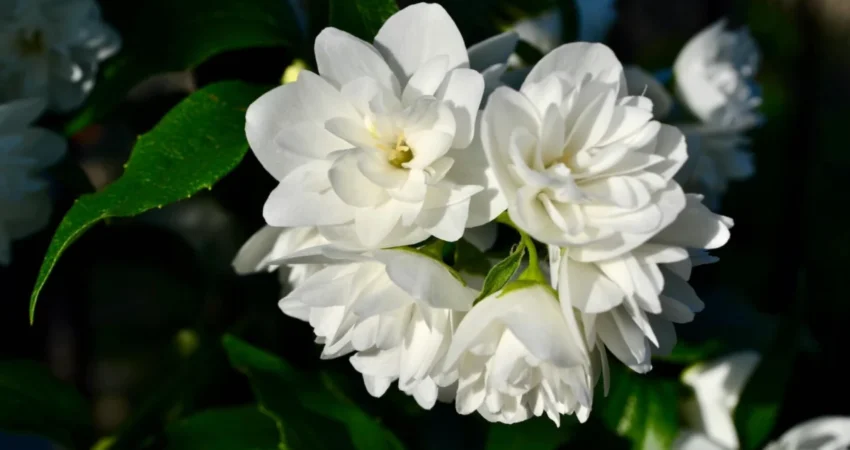
The sensory experience of walking through a blooming garden often triggers an immediate, almost instinctive cognitive response where a sweet, heady, and narcotic trail is instantly labeled as jasmine. However, this reflex frequently overlooks a complex botanical and chemical reality: the scent in question may originate from plants entirely unrelated to the Jasminum genus. In the sophisticated world of high perfumery and horticulture, the lines between jasmine, mock orange, and orange blossom are frequently blurred, creating a fascinating intersection of botanical science and olfactory illusion. This confusion is not merely a modern oversight but a deeply rooted historical phenomenon reflected in common nomenclature, where plants from vastly different families share a singular "white flower" identity in the human imagination.
For centuries, the fragrance industry has relied on these three distinct floral profiles to create some of the world’s most iconic scents. Yet, the technical ability to differentiate between them requires an understanding of their chemical compositions, their geographical origins, and the specific extraction methods that define their presence in a bottle. As consumers increasingly seek transparency and "naturality" in their luxury purchases, the distinction between a true jasmine absolute and a mock orange accord has become a point of significant interest for both perfumers and enthusiasts alike.
The Botanical Landscape and the Evolution of Scent Identification
The historical confusion between these species stems largely from their visual similarities—predominantly small, white, star-shaped petals—and their shared reliance on heavy, sweet scents to attract nocturnal pollinators. Botanically, true jasmine belongs to the Oleaceae family, the same family as the olive tree. Mock orange, despite its deceptive name, belongs to the Hydrangeaceae family under the genus Philadelphus. Orange blossom, meanwhile, is the flower of the Citrus sinensis or Citrus aurantium, belonging to the Rutaceae family.

The evolution of these plants’ roles in perfumery can be traced back to the Silk Road and the subsequent Moorish influence in the Mediterranean. Jasmine was brought to Europe from Central Asia, finding its spiritual home in Grasse, France, during the 16th century. Orange blossoms followed a similar trajectory, becoming a staple of Andalusian and Provençal landscapes. The mock orange, native to North America and parts of Southeast Europe, earned its "mock" moniker precisely because its fragrance mimicked the prized orange groves of the nobility, providing a hardy, temperate-climate alternative to the delicate citrus trees of the south.
Jasmine: The Indolic King of Floral Notes
In the hierarchy of perfumery, jasmine is often referred to as "The King" (with the rose being "The Queen"). Within this category, two primary species dominate the global market: Jasminum grandiflorum and Jasminum sambac. The distinction between these two is critical for understanding the "jasmine" profile.
Jasminum grandiflorum, often called "large-flowered jasmine" or Grasse jasmine, is celebrated for its elegance and luminosity. It possesses a refined, fruit-forward sweetness that feels airy and sophisticated. In contrast, Jasminum sambac, or Arabian jasmine, offers a more robust, green, and nearly muscular profile. Sambac is often associated with the dense, humid heat of South Asia, where it is used in religious ceremonies and traditional teas.
The defining characteristic of true jasmine is the presence of indoles. Chemically, indoles are organic compounds that, in high concentrations, can smell unpleasant or fecal, but in trace amounts found in flowers, they provide a profound "animalic" depth. This gives jasmine its carnal, "lived-in" quality that distinguishes it from the cleaner, more virginal profiles of other white flowers. A prime example of this complexity is found in Guerlain’s Jasmin Grandiflorum Extrait 30, which utilizes a 30% concentration to highlight the multi-faceted nature of the flower, blending its natural creaminess with sandalwood to ground its more volatile floral peaks.

Mock Orange: The Master of Olfactory Deception
The mock orange (Philadelphus) represents one of nature’s most successful "olfactory illusions." In English, the name itself admits to the deception. While it lacks the botanical machinery to produce citrus fruit, its flowers emit a fragrance that captures the high-pitched, breezy sweetness of a blooming orange grove.
Unlike jasmine, mock orange does not typically yield its scent through traditional steam distillation or solvent extraction in a way that is commercially viable for mass production. Therefore, in the world of perfumery, "mock orange" is often an accord—a carefully constructed "illusion" created by perfumers using a combination of synthetic and natural molecules to replicate the flower’s specific scent profile.
The mock orange profile is characterized by a lack of the heavy, indolic weight found in jasmine. Instead, it leans into a "solar" freshness, often incorporating aldehydes and light citrus notes like bergamot to mimic its airy trail. Maison Francis Kurkdjian’s 724 exemplifies this approach. By combining aldehydes with a bouquet of unspecified white flowers and musks, the fragrance captures the "clean" and "urban" luminosity that mock orange represents in a garden setting—vibrant, fresh, and devoid of animalic undertones.
Orange Blossom and Neroli: The Citrus Spectrum
The orange blossom is perhaps the most versatile of the white flowers, providing two distinct raw materials depending on the extraction process. When the flowers of the bitter orange tree (Citrus aurantium) are steam-distilled, they produce Neroli—a fresh, green, and spicy oil. When the same flowers undergo solvent extraction, they produce Orange Blossom Absolute, which is deeper, sweeter, and more reminiscent of the actual scent of the grove in the heat of the afternoon.

Orange blossom shares the intensity of jasmine but expresses it through a citrus lens. It possesses a "honeyed" quality that is absent in mock orange and a "soapy" cleanliness that is absent in jasmine. This dual nature—being both narcotic and fresh—makes it a staple in "clean" fragrances and traditional colognes. Serge Lutens’ Fleurs d’Oranger is widely considered a masterclass in this category. It pairs the solar radiance of the orange blossom with Egyptian jasmine and white rose, creating a scent that feels both traditional and intensely sensual, bridging the gap between the fresh citrus grove and the heavy floral garden.
Market Data and Economic Implications
The economic value of these florals varies wildly, impacting how they are used in commercial products. Jasmine absolute remains one of the most expensive raw materials in the world. In the fields of Grasse, it takes approximately 8,000 hand-picked blossoms to produce just one gram of jasmine absolute, leading to prices that can exceed $15,000 to $20,000 per kilogram depending on the harvest quality.
According to industry reports from organizations like the International Fragrance Association (IFRA), the global fragrance market is seeing a 5.5% compound annual growth rate, driven largely by "prestige" and "niche" sectors. In these high-end markets, the authenticity of the "white floral" note is a major selling point. However, due to the high cost and volatility of natural jasmine and orange blossom, many mid-market perfumes rely on "reconstitutions." These are chemical blueprints of the flowers’ scents, using molecules like benzyl acetate (for jasmine) or methyl anthranilate (for orange blossom) to provide the consumer with the expected olfactory experience at a fraction of the cost.
Comparative Analysis: Identifying the Notes
For the discerning consumer or budding perfumer, distinguishing these scents involves looking for specific "markers" within the fragrance’s development:

- The "Weight" Test: If the scent feels heavy, "thick," or slightly "dirty" as it dries down, it likely contains jasmine or a high-indole synthetic equivalent.
- The "Soap" Marker: If the floral note feels exceptionally clean, bright, and reminiscent of high-end luxury soap or honey, orange blossom is the likely culprit.
- The "Air" Factor: If the fragrance is fleeting, citrusy, and lacks any "fleshy" or "creamy" texture, it is likely mimicking the mock orange profile through a combination of light florals and citrus top notes.
Future Trends and Sustainability
As the fragrance industry moves toward more sustainable practices, the sourcing of these white flowers is under scrutiny. Jasmine and orange blossom harvests are highly labor-intensive and climate-dependent. Changes in rainfall patterns in India and Egypt (major jasmine producers) and Tunisia or Morocco (orange blossom hubs) have led to fluctuating yields.
In response, biotechnology firms are now experimenting with "biosynthetics"—using fermented yeast to create scent molecules that are identical to those found in jasmine or orange blossom without the need for vast acreage or manual labor. While purists argue that these lack the "soul" of soil-grown flowers, they offer a consistent and sustainable way to provide the "white floral" illusion that the global market demands.
The boundary between a flower and its olfactory illusion remains one of the most poetic aspects of perfumery. Whether it is the regal complexity of Grasse jasmine, the airy deception of the mock orange, or the honeyed sun of the orange blossom, these scents continue to define our understanding of beauty and nature. To know the difference is to appreciate the intricate dance between botany and art, a transition from simply smelling a fragrance to truly understanding the narrative of the garden from which it was born.

0 Comments