
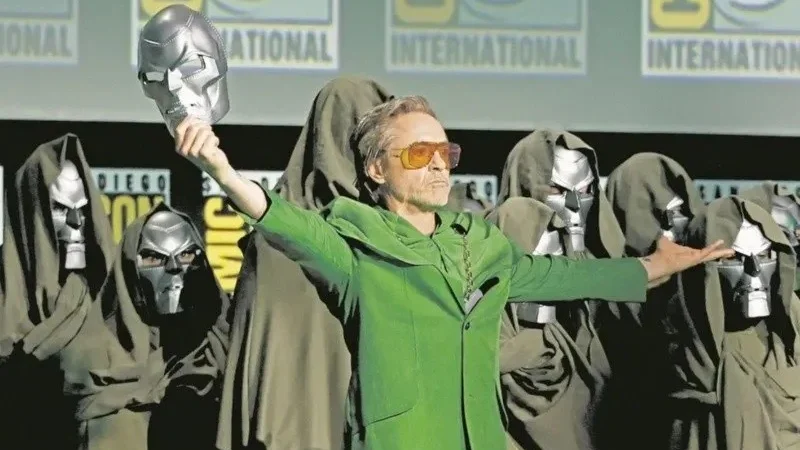
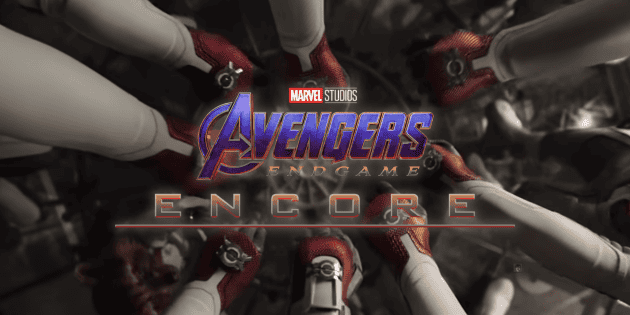
The cinematic landscape has once again been reshaped by Marvel Studios, as the highly anticipated re-release of "Avengers: Endgame" arrived in theaters, offering an unprecedented expansion to its original narrative. This iconic 2019 film, which famously concluded an era within the Marvel Cinematic Universe (MCU) and shattered global box office records, returned to screens not merely as a nostalgic revisit but as a pivotal bridge to the forthcoming "Avengers: Doomsday." Fans who flocked to witness the "Encore" edition were met with a groundbreaking addition: four new post-credit scenes that directly unravel critical plot points and character trajectories, setting the stage for the monumental multiversal conflict expected to define the next phase of the MCU. This strategic re-release, a move that surprised many industry observers, marks a significant departure from Marvel’s established traditions and underscores a deliberate effort to meticulously weave an intricate narrative tapestry that connects past triumphs with future cataclysms.
The Original "Endgame" and its Unique Post-Credits Anomaly
When "Avengers: Endgame" first premiered on April 26, 2019, it was hailed as a cultural phenomenon, culminating a decade of interconnected storytelling across 22 films. The film’s staggering box office performance, ultimately surpassing "Avatar" to become the highest-grossing film of all time with over $2.798 billion worldwide (a record it briefly held before "Avatar" reclaimed it with a re-release), cemented its legacy. Beyond its financial success and critical acclaim, "Endgame" also became notable for a singular anomaly within the MCU: it was the only film in the franchise’s history to not feature a traditional post-credits scene. This deviation from a tradition established with "Iron Man" in 2008, which often teased future films or introduced new characters, was widely interpreted as a definitive conclusion to the "Infinity Saga," signaling a clear end rather than a direct preview of what was next. The film instead featured the distinct sound of Tony Stark’s hammer, a poignant auditory callback to his origin story, reinforcing its finality.
However, the "Avengers: Endgame Encore" now fundamentally recontextualizes this perceived finality. Marvel Studios’ decision to integrate new material, filmed during the production phase of "Avengers: Doomsday," transforms the re-release from a simple nostalgic offering into an essential viewing experience for understanding the impending multiversal threats. This move is indicative of Marvel’s evolving storytelling strategy, leveraging past successes to build momentum for future narratives, a tactic that has generated considerable buzz among the dedicated fanbase and the broader cinematic community.
Unveiling the "Encore" Revelations: Four Critical Post-Credit Scenes
The "Avengers: Endgame Encore" edition introduces four distinct post-credit sequences, each packed with significant implications and direct ties to the "Avengers: Doomsday" storyline. These scenes, now crucial pieces of the larger puzzle, were meticulously crafted to expand upon existing character arcs while simultaneously introducing new elements of conflict and intrigue.
1. Captain America’s Altered Destiny: A Multiversal Catalyst
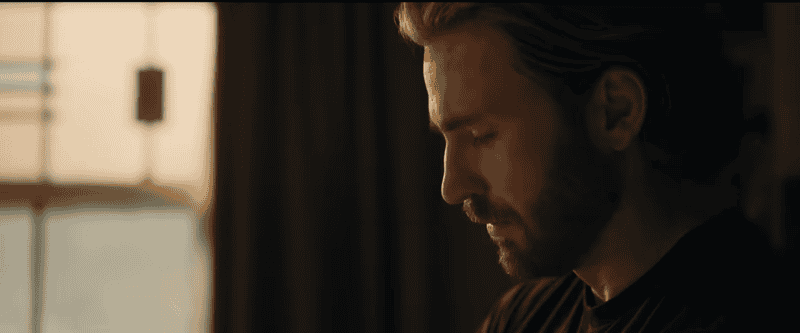
The first and arguably most impactful of the new scenes directly challenges the long-cherished "happy ending" of Steve Rogers, Captain America. In the original "Endgame," Steve successfully returned the Infinity Stones to their proper timelines and chose to remain in the past, living a full life with his beloved Peggy Carter. The film’s poignant final moments showed an elderly Steve passing his shield to Sam Wilson, followed by a flashback to a younger Steve and Peggy dancing, finally achieving the domestic bliss they had always yearned for.
The "Encore" edition, however, injects a shocking twist into this idyllic conclusion. The scene revisits Steve and Peggy’s dance, portraying their serene moment of happiness. Yet, this tranquility is abruptly shattered by a knock at their door. Steve, ever cautious, quickly hides, while Peggy answers. The voice from beyond the door is instantly recognizable to Marvel aficionados: Loki. Clad in his Time Variance Authority (TVA) uniform, Loki calmly states his purpose, offering assistance to both Steve and Peggy. Steve’s expression, a mixture of surprise and dawning realization, hints at the profound disruption this visit signifies.
This scene directly confirms a long-held fan theory, as well as statements from directors Joe and Anthony Russo, that Captain America’s choice to remain with Peggy Carter, while personally fulfilling, was a significant violation of the established timeline. His actions created a divergent branch reality, a "nexus event" of immense magnitude that the TVA, led by figures like Loki (who himself had a significant journey through time and multiversal concepts in his eponymous series), would inevitably detect and seek to prune. The Russo brothers have reportedly confirmed that this singular act by Captain America is, in fact, the primary catalyst for the "Multiversal disaster" that will drive the plot of "Avengers: Doomsday." This revelation reframes Captain America’s heroic sacrifice, transforming it from a simple act of personal happiness into the unintended spark of an existential crisis for the entire multiverse, elevating the stakes and adding a layer of tragic irony to his legacy.
2. The Return of Bruce Banner: Hulk’s Confinement and Doom’s Intervention
The second post-credit scene picks up a thread from the recently released (hypothetical within the article’s narrative context) film, "Spider-Man: A New Day." In that film, Bruce Banner, after an apparent resurgence of the untamed Hulk, was last seen being transported away in an ambulance, his fate uncertain. The "Encore" scene clarifies his immediate aftermath: Banner is shown confined within a highly secure, subterranean military facility, a prison so impenetrable that even the Hulk’s formidable strength proves insufficient for escape.
Within this high-tech incarceration, Banner reveals he has been relentlessly conducting experiments, attempting to regain control over the monstrous persona of the Hulk, a battle he has waged for decades. He believes his containment is absolute, a necessary evil to protect the world from his uncontrolled alter ego. However, his self-imposed isolation is dramatically interrupted. The scene climaxes with the arrival of Doctor Doom, who, with chilling efficiency, breaches the supposedly impregnable facility to "collect" Banner. The specific purpose of Doom’s interest in Banner remains shrouded in mystery, but his ability to effortlessly infiltrate such a secure location immediately establishes his formidable power and reach.
The scene leaves a tantalizing question: will the Hulk be unleashed in "Avengers: Doomsday," or is his full return being reserved for the even larger canvas of "Avengers: Secret Wars," rumored to be the culmination of the current saga next year? This uncertainty fuels speculation about Banner’s role, whether as an unwilling pawn, a weapon, or perhaps even a reluctant ally in the face of Doom’s grand designs. The implication that Banner, a cornerstone Avenger, is now under Doom’s influence signals a profound shift in the power dynamics of the MCU. Furthermore, the mention of "Spider-Man: A New Day" also provided a crucial clue that Peter Parker, portrayed by Tom Holland, is currently off-world, likely abducted by Doom himself, a fact deduced by his friend Ned Leeds through a specialized tracking device. This suggests Doom’s machinations extend far beyond Earth, involving key heroes in his burgeoning empire.
3. Doctor Doom in Action: The Forging of a New Tyrant
The third post-credit scene serves as the official, dramatic introduction of the MCU’s newest major antagonist: Doctor Doom, portrayed by the returning Robert Downey Jr. The scene is a powerful visual parallel to the origin of Iron Man, harkening back to Tony Stark’s iconic cave workshop in "Iron Man" (2008). Just as Stark meticulously crafted his initial suit of armor, Victor Von Doom is shown in a desolate, industrial setting, forging his signature metallic mask. The deliberate mirroring of these two moments is striking, drawing an immediate, chilling comparison between the hero who launched the MCU and the villain poised to shatter it.
Robert Downey Jr.’s return to the Marvel universe, not as Iron Man but as the enigmatic and formidable Doctor Doom, has sent shockwaves through the fandom. His portrayal promises a nuanced yet terrifying villain, one whose intellect, will, and raw power could potentially eclipse any adversary the Avengers have faced thus far. This scene, while brief, effectively establishes Doom’s persona: a self-made, technologically advanced figure driven by a relentless ambition, cloaked in an air of regal menace. The visual callback solidifies Doom’s place as a dark mirror to Stark, suggesting a conflict rooted not just in power, but in ideologies and methods of shaping the world.
4. Crisis at the TVA: The Multiverse Collapses
The final post-credit scene plunges viewers directly into the heart of multiversal chaos, depicting the catastrophic consequences of Doom’s actions on the Time Variance Authority (TVA). Miss Minutes, the iconic AI mascot of the TVA, delivers a stark reminder of the organization’s fundamental purpose: to safeguard the "Sacred Timeline" and prevent the collision and destruction of divergent realities.
However, the scene immediately showcases the TVA’s abject failure to maintain this order. Agents Mobius, Casey, and OB are shown observing a terrifying spectacle: two Earths are on a collision course, exchanging violent attacks as their realities begin to merge and fracture. This localized disaster is merely a symptom of a far grander, more widespread breakdown. The TVA headquarters is inundated with a deluge of distress signals and reports, indicating countless universes are teetering on the brink of destruction, reacting with unbridled violence as their existential boundaries erode. OB, with a grave urgency, informs Mobius that "the multiverse is collapsing," a phrase that encapsulates the sheer scale of the impending catastrophe.
This scene confirms that the multiversal incursions, a concept previously explored in films like "Doctor Strange in the Multiverse of Madness" and the "Loki" series, are now accelerating into an unprecedented crisis. The TVA, once presented as the ultimate arbiter of time and reality, is overwhelmed, powerless against the forces unleashed. It underscores the profound and irreversible damage caused by the nexus events and Doom’s manipulations, painting a bleak picture of the cosmic stakes involved in "Avengers: Doomsday." The imagery of colliding realities and the frantic reports within the TVA effectively convey the existential horror that awaits the heroes.
The Road to "Avengers: Doomsday": Implications and Analysis
The strategic inclusion of these four post-credit scenes in the "Avengers: Endgame Encore" serves multiple critical purposes for Marvel Studios. Firstly, it retrospectively enriches the "Infinity Saga" by revealing that its conclusion was not as definitive as once thought, but rather a prelude to a new, even grander conflict. Captain America’s seemingly perfect ending is now tainted by the knowledge of its catastrophic consequences for the multiverse, adding a complex layer to his legacy.
Secondly, these scenes provide invaluable setup for "Avengers: Doomsday," which is now firmly established as a multiversal epic. The film will not only feature the return of beloved characters in unexpected roles (Loki and possibly Banner/Hulk) but will also introduce a villain of unparalleled threat in Doctor Doom. Doom’s character, traditionally one of Marvel Comics’ most formidable and complex antagonists, is portrayed here as a force capable of manipulating reality, abducting key heroes, and orchestrating multiversal collapse. His cold, calculated rise, contrasting with the more emotional and power-hungry villains of the past, presents a new kind of challenge for the Avengers.
The decision to bring back Robert Downey Jr. as Doctor Doom is a bold stroke, leveraging the immense popularity of the actor while reinventing his connection to the MCU. This casting choice is likely to be a major draw, promising a villain who can command the screen with the same gravitas as the heroes he opposes. The thematic parallel between Doom’s forging of his mask and Tony Stark’s creation of his armor is a subtle but powerful way to establish Doom as an intellectual and technological equal, if not superior, to Earth’s mightiest heroes.
Furthermore, the complete breakdown of the TVA signifies that the traditional safeguards of the multiverse have failed. This means that the upcoming conflict will be fought in an environment of unprecedented chaos, where the very fabric of reality is under threat. The heroes will not only be battling Doom but also grappling with the consequences of collapsing timelines and colliding universes.
"Avengers: Doomsday" is slated to arrive in cinemas in Mexico on December 17 of this year, a release date that positions it as a major cinematic event capping off the year. The revelations from the "Endgame" re-release have meticulously laid the groundwork, transforming the anticipation for "Doomsday" from mere excitement into a profound understanding of the stakes involved. This film promises to be a pivotal moment, not just for the Avengers, but for the entire Marvel Cinematic Multiverse, defining the trajectory of its heroes and villains for years to come. The "Encore" has successfully demonstrated Marvel’s continued ability to innovate its storytelling, ensuring that even its most celebrated past achievements remain vibrant and relevant to its unfolding future.

0 Comments