
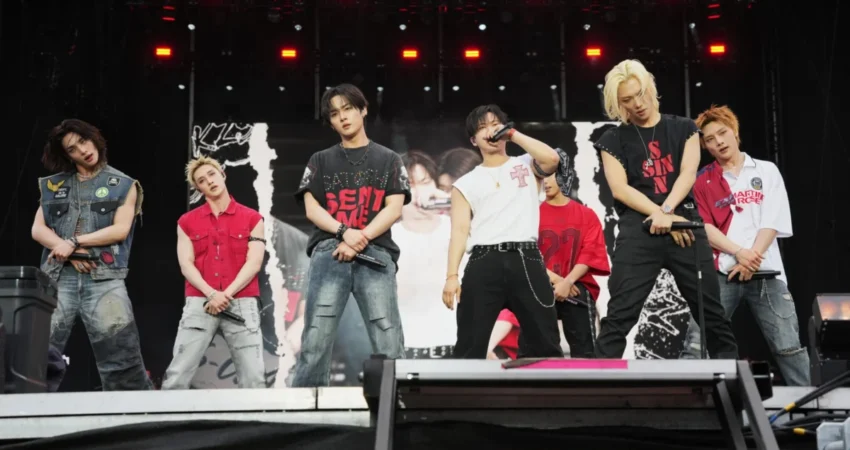
Mexican President Claudia Sheinbaum admitted on Thursday, September 24th, that she had anticipated the members of the globally acclaimed K-pop supergroup Stray Kids would accompany South Korea’s President Lee Jae Myung during his official visit to the National Palace. This revelation came after the popular music ensemble failed to materialize at the presidential headquarters, a presence she had announced hours earlier. The K-pop sensation is currently slated for two highly anticipated performances at the Estadio GNP Seguros in Mexico City, scheduled for Friday and Saturday, September 25th and 26th.
A Presidential Expectation and Fan Anticipation
In a video shared on her official TikTok account on Thursday evening, President Sheinbaum addressed the situation, stating, "We are seeing off the president of the Republic of Korea, Lee Jae Myung." She elaborated, "We thought perhaps he was coming with the group Stray Kids. They are performing tomorrow at one of Mexico City’s most important venues. And we have already invited them to come to our country on another occasion." This statement followed an earlier press conference on Thursday morning where the Mexican head of state had, with apparent conviction, announced the visit of Stray Kids in conjunction with the South Korean leader.
During that morning briefing, Sheinbaum had explicitly stated, "The group coming is called Stray Kids." She further characterized the group’s appeal, drawing a comparison to another K-pop phenomenon, "They’re kind of like BTS, but younger. I don’t know if they’re boys and girls – they’re young, younger than the members of BTS." This comparison, while intended to contextualize the group’s popularity, highlighted a slight misapprehension of their current member demographics and global standing relative to BTS. The current ages of Stray Kids members range from 25 to 28, while BTS members are aged between 29 and 33.
The President’s initial announcement about Stray Kids’ presence triggered a significant response from the group’s dedicated fanbase, known as "STAY." Dozens of fans converged outside the National Palace, anticipating a glimpse of their idols alongside the visiting dignitary. However, the only individuals to appear on the presidential balcony and greet the gathered crowd in the Zócalo were President Sheinbaum and President Lee Jae Myung. Videos documenting this scene and the subsequent fan reaction have circulated widely across social media platforms.
Context of High-Profile K-Pop Visits to Mexico
This incident draws parallels to a previous high-profile K-pop engagement in Mexico. In May, BTS members indeed met with President Sheinbaum, appearing on one of the balconies of the presidential residence. They waved to an estimated 50,000 members of BTS’s fanbase, ARMY, who had assembled in the Zócalo, according to figures released by the Mexico City government. The expectation that Stray Kids might follow a similar trajectory underscores the growing cultural and economic influence of K-pop in Mexico and the significant fan bases these groups command.
The K-pop industry has seen a meteoric rise in global popularity over the past decade, with groups like BTS and Stray Kids achieving multi-platinum sales, sold-out world tours, and a substantial impact on international music charts and cultural trends. Mexico has emerged as a key market within Latin America for K-pop, with fan communities actively engaging with the music, fashion, and social media presence of these artists. The enthusiastic reception of BTS’s presidential visit demonstrated the significant cultural capital K-pop groups possess in the country, capable of drawing large crowds and capturing national attention.
Stray Kids’ Impending Performances and Cultural Significance
Stray Kids, known for their self-produced music and powerful performances, are set to embark on their "5-STAR Dome Tour" in Mexico City, a significant milestone in their global touring career. The group, comprising Bang Chan, Changbin, Felix, Han, Hyunjin, I.N, Lee Know, and Seungmin, has garnered a massive international following since their debut in 2018 under JYP Entertainment. Their music often explores themes of youth, self-discovery, and societal challenges, resonating deeply with a global audience.
The decision to hold their concerts at the Estadio GNP Seguros, a venue with a capacity of over 50,000, signifies the group’s substantial draw in Mexico. Their upcoming performances are expected to attract a diverse range of attendees, from long-time fans to those newly introduced to their music. The tour’s success in Mexico is indicative of the broader trend of K-pop’s expanding reach into major global markets, solidifying its position as a significant force in the contemporary music landscape.
Analysis of the Presidential Miscommunication
The miscommunication surrounding Stray Kids’ potential appearance at the National Palace highlights several aspects of contemporary diplomacy and cultural engagement. Firstly, it underscores the increasing intersection of international relations and popular culture, where the influence of global music acts can play a role in diplomatic exchanges. Presidents and government officials are increasingly recognizing the soft power potential of engaging with popular cultural phenomena to connect with younger demographics and foster positive international relations.
Secondly, the incident points to the challenges of accurately disseminating information in the fast-paced digital age, particularly when dealing with the logistical complexities of international artist tours. The initial announcement, likely based on an assumption or preliminary information, ultimately led to public anticipation that was not met, resulting in a moment of public correction by the President. This serves as a reminder of the importance of meticulous verification of details when making public statements, especially those involving high-profile individuals and events.
The comparison made by President Sheinbaum between Stray Kids and BTS, while illustrative of her attempt to explain the group’s significance, also reveals a potential gap in understanding the nuances of K-pop fandom and artist profiles. While both groups are undeniably monumental in the K-pop world, their individual trajectories, fan bases, and specific appeals differ. Such observations, though minor in the grand scheme of international relations, can sometimes shape public perception and understanding.
Broader Implications for K-Pop in Mexico
The attention garnered by this event, even due to a misunderstanding, further amplifies the visibility of Stray Kids and K-pop in Mexico. The ensuing social media buzz and news coverage ensure that the group remains a topic of conversation, potentially drawing in new fans and reinforcing their existing fanbase’s enthusiasm. The fact that a presidential misstatement could generate such widespread discussion speaks volumes about the cultural penetration of K-pop in Mexico.
Moreover, this incident could prompt a more refined approach to cultural diplomacy in Mexico, emphasizing accurate information dissemination and strategic engagement with international artists. It also highlights the power of fan communities in shaping public discourse and influencing events. The dedication of STAY, who gathered at the National Palace in anticipation, demonstrates the passion and commitment of K-pop fandoms in Mexico.
As Stray Kids prepare for their highly anticipated concerts, the focus will undoubtedly shift to their performances. However, the brief moment of presidential anticipation and subsequent clarification has already etched this visit into the annals of K-pop’s cultural impact on Mexico, illustrating the evolving landscape where global music stars command not only fan adoration but also a degree of governmental attention and expectation. The successful staging of their concerts will ultimately be the definitive measure of their presence, but the presidential interaction has already guaranteed them a unique place in the narrative of their Mexican tour.

0 Comments