
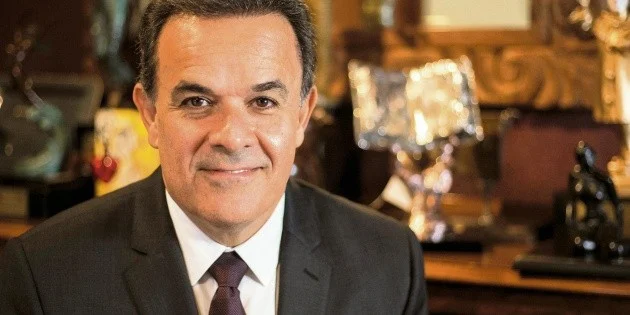
Renowned tenor Fernando de la Mora, a vocal legend whose career spans nearly five decades, is set to return to Guadalajara, a city deeply intertwined with his artistic journey, to headline the closing gala of the inaugural Festival Resonalia. The highly anticipated recital will take place on October 3 at 8:00 PM in Sala 2 of the distinguished Conjunto Santander de Artes Escénicas, promising an evening that traverses the refined beauty of French mélodie and the heartfelt resonance of traditional Mexican music. This appearance marks a significant moment for both the celebrated artist and the nascent festival, underscoring Guadalajara’s enduring role as a vibrant cultural hub.
De la Mora, who speaks of singing as an activity that, after decades, retains the pristine joy that first ignited his passion, has graced some of the world’s most prestigious stages. His illustrious career has seen him perform at iconic venues such as the Teatro alla Scala in Milan, the Metropolitan Opera in New York, London’s Royal Opera House at Covent Garden, and the Vienna State Opera. Yet, in recalling Guadalajara, the tenor invariably speaks of his formative years, a period that cemented his connection with the city. It was here, at the majestic Teatro Degollado, that he made his operatic stage debut in Puccini’s "Madama Butterfly," an experience he cherishes as foundational to his artistic identity.
A Career Defined by Passion and Versatility
Fernando de la Mora’s journey in music began in the early 1970s, establishing a trajectory that would see him become one of Mexico’s most internationally recognized tenors. His initial foray into opera, prior to his staged debut in Guadalajara, included an unstaged performance in Xalapa, Veracruz. However, the full theatrical experience of "Madama Butterfly" at the Teatro Degollado provided the crucible for his burgeoning talent. This pivotal role, often a benchmark for tenors, showcased his vocal prowess and dramatic interpretation, setting the stage for a career that would encompass a vast operatic repertoire, from bel canto to verismo. Beyond the grand opera houses, De la Mora has cultivated a unique artistic duality, seamlessly transitioning between the classical stage and popular music genres. His willingness to explore and excel in diverse musical forms, including mariachi, bolero, and trios, has endeared him to a broad audience, demonstrating an unparalleled versatility that few classical singers achieve. This ability to bridge worlds, from the intricate demands of a Verdi aria to the soulful expression of a traditional Mexican canción, has become a hallmark of his enduring appeal.
Festival Resonalia: Nurturing Guadalajara’s Cultural Landscape
The Festival Resonalia, now celebrating its inaugural edition, represents a fresh and ambitious initiative to enrich Guadalajara’s performing arts scene. Founded by pianist Mikhail Hallak, who will accompany De la Mora at the upcoming recital, the festival aims to present high-caliber musical experiences, fostering an appreciation for diverse genres and supporting artistic excellence. Hallak’s vision for Resonalia is to create a platform where both established masters and emerging talents can connect with audiences in intimate and profound ways. "Bringing an artist of Fernando de la Mora’s stature to close our first festival is a tremendous honor and a testament to our commitment to presenting world-class talent," states Hallak, emphasizing the festival’s aspiration to become a significant fixture in the international cultural calendar. "His deep connection to Guadalajara, combined with his unparalleled artistry, makes him the ideal choice to culminate this inaugural journey."
The choice of Conjunto Santander de Artes Escénicas as the venue further underscores the festival’s commitment to excellence. Opened in 2017, the Conjunto Santander has rapidly established itself as a premier cultural complex in Latin America, featuring state-of-the-art facilities designed for optimal acoustic and visual experiences. De la Mora’s upcoming performance will be his first time singing on one of its stages, a fact he expresses with considerable enthusiasm. "I have a great desire to sing for the first time in this venue," he remarks, recalling his attendance at one of its inaugural concerts as a guest. This debut performance at such a modern, acoustically advanced facility symbolizes a new chapter in his storied relationship with the city.
An Homage to the Mélodie Française
The first half of De la Mora’s recital will be largely dedicated to the mélodie française, a rich tradition of French art song where music and poetry intertwine in an intimate and sophisticated dialogue. This genre, which flourished in the late 19th and early 20th centuries, distinguishes itself from the German Lied by often prioritizing the delicate nuances of the French language and a more fluid, less overtly dramatic musical setting. Composers like Gabriel Fauré, Reynaldo Hahn, Henri Duparc, and Francis Poulenc elevated the mélodie to an art form, setting texts by some of France’s most esteemed poets.
De la Mora, accompanied by Mikhail Hallak, will present a program featuring compositions from these masters. He explains the profound connection inherent in this repertoire: "It is music linked to poetry of the highest level, and even though it is in French and many may not speak French, there is a transparency of keywords in this repertoire." This transparency allows the emotional core and poetic essence to transcend linguistic barriers, inviting the audience into a world of subtle beauty and profound feeling. The tenor’s previous engagement with mélodie highlights his deep affinity for the genre. Early in the century, he developed a significant project centered on these pieces with acclaimed Mexican pianist Silvia Navarrete. This collaboration saw them perform the repertoire across Mexico and internationally, including presentations in Paris and at the prestigious Festival Internacional Cervantino, garnering critical acclaim for their sensitive interpretations and profound understanding of the French aesthetic. The invitation from Resonalia, De la Mora notes, felt like a natural return to this cherished artistic territory. "It was something I addressed many years ago, and now that Mikhail Hallak approached me to invite me to Resonalia, I truly loved it, and I believe the repertoire is very fitting," he recalls.
The mélodie format, with its focus on voice, piano, and brief, concentrated song-poems, presents a distinct interpretative challenge compared to the expansive narrative of opera. Without elaborate sets or a character developed over hours, the singer must convey an entire dramatic arc within minutes. De la Mora, however, sees no diminution of the dramatic component. "You have a text in which you are the protagonist of a story, a small story that can last three minutes or five minutes," he elaborates, emphasizing the intensity and depth achievable within these miniature musical dramas. The concert is thus a "gift for lovers of good music," bringing together the brilliance of universal poets such as Charles Baudelaire, Guillaume Apollinaire, and Paul Verlaine with the musical genius of composers like Claude Debussy, Gabriel Fauré, Ernest Chausson, Henri Duparc, and Reynaldo Hahn.
From French Elegance to Mexican Soul
De la Mora also recognizes the far-reaching influence of the French song tradition, noting its significant impact beyond European borders, particularly in Mexico. He identifies its indelible mark on Mexican composers such as Manuel M. Ponce, Candelario Huízar, and Ricardo Castro, who, during a period of intense musical exploration, integrated these sophisticated European influences into their own burgeoning national styles. This era, which coincided with transformative movements in painting and other arts, saw Mexican composers crafting what De la Mora describes as "super-dramatic," yet simultaneously "delicate, inspired, and poetic" works, showcasing a rich cross-cultural dialogue.
The concert’s second half will pivot dramatically, embracing a "bouquet" of beloved Mexican popular songs. This transition reflects De la Mora’s remarkable versatility and his commitment to connecting with his audience on a deeply personal level. "In the second part, we are going to perform a selection of very popular Mexican songs," he anticipates. "To make them very simple, very transparent, so that they are close to people’s hearts; to feel them so close that they begin to sing with you." This shift from the refined intimacy of mélodie to the vibrant immediacy of popular Mexican music is a testament to his artistic breadth and his philosophy of performance.
De la Mora’s ability to navigate between opera and popular song has been a defining characteristic of his career. He frequently articulates the fundamental differences in approach required for each. While opera demands adherence to stylistic conventions, offering a relatively narrow margin for individual emotional interpretation, popular music prioritizes emotional connection and direct communication. "Opera has an essence that has to do with style, with many things, and there it leaves you a very small margin where you can play with emotion, with your interpretation," he explains. "In popular music, interpretation comes first, and then the voice." In the latter, the capacity to forge a bond with the audience can even supersede the conventional beauty of the vocal instrument. "The voice is what matters least; what matters most is your connection with people, how you communicate." This philosophy explains his successful ventures into genres like mariachi, where raw emotion and storytelling often take precedence over classical vocal technique. As a special treat, De la Mora hints at a "small surprise" for the concert’s conclusion: if the audience’s response is enthusiastic, he anticipates performing some French arias, linking back to one of the operatic specializations that has traversed his distinguished career.
Guadalajara: A City Etched in Memory
De la Mora’s relationship with Guadalajara extends far beyond his stage debut. He recalls his early days performing in palenques in Tlaquepaque during the 1980s, even sharing the stage with the legendary Lola Beltrán, a pivotal figure in Mexican ranchera music. These experiences highlight the tenor’s deep immersion in Mexico’s diverse musical traditions from the very beginning of his career. Throughout the years, he has returned repeatedly for concerts, benefit performances, and public celebrations, solidifying his bond with the Tapatío community. "Guadalajara I carry in my heart. I have done so many things in Guadalajara, so many benefit concerts for many institutions," he states, reflecting on his philanthropic endeavors in the city.
His admiration for the Teatro Degollado, where he made his operatic debut, remains profound. "Guadalajara is the seat of my operatic stage debut. I made my stage debut with ‘Madama Butterfly’ at the Teatro Degollado, the theater of my loves, the theater with the best acoustics in all of Mexico. It is a perfect theater for opera," he affirms, speaking to the architectural and acoustic excellence that makes the venue a national treasure.
An Enduring Legacy and the Joy of Singing
As Fernando de la Mora approaches his 50th year in professional singing, the passage of time is a recurring theme in his reflections. Yet, he speaks not of farewells, but of profound gratitude. What truly amazes him is the preservation of his instrument and the continued ability to use it for the very purpose he sought when he began. "I am approaching 50 years of career. I am privileged to still have a voice to continue moving people, to continue inviting people to savor good music," he declares.
His definition of "good music" transcends genres or schools, resting instead on a singular, difficult-to-surpass test: time. "That 100 years pass over it, and it remains current, remains close to people’s hearts," he articulates, a philosophy that applies equally to the timeless mélodies of Fauré and the enduring popular songs of Mexico. For De la Mora, the October 3rd concert is precisely built around this concept of closeness and enduring connection. After navigating international stages, embodying operatic characters, and dedicating decades to his craft, he distills the essence of the experience to something profoundly elemental: a singer standing before those who have come to listen. "Singing is not work; singing is a joy," he affirms. "I am happy to return to Guadalajara, to meet the eyes of those sitting in the front rows, to sing to them, to move them, to take their heart and squeeze it." This intimate promise underscores the profound personal connection De la Mora seeks to forge with every performance, making his return to Guadalajara a truly special event for music lovers.

0 Comments