
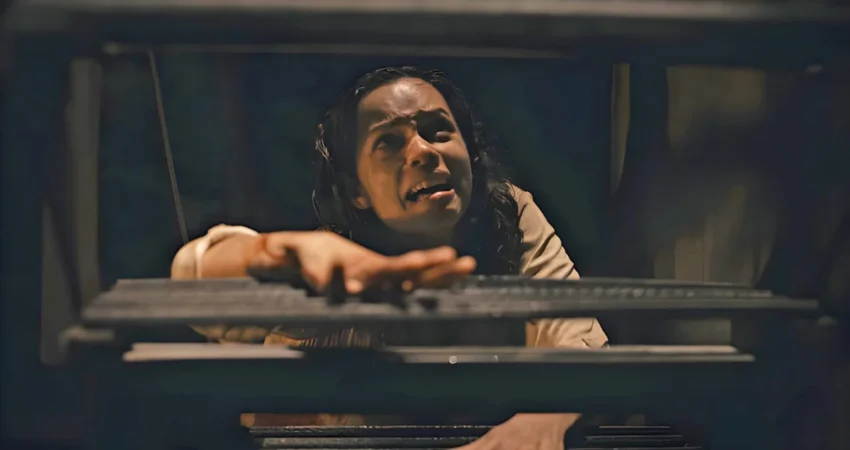
The landscape of contemporary horror was irrevocably altered in late 2022 when a modestly budgeted film from a primarily comedic director defied industry expectations, grossing ten times its production cost and securing near-universal critical acclaim. Barbarian, the directorial debut of Zach Cregger, has spent the last two years cementing its status as a cult classic on streaming platforms, but its tenure on Max is rapidly drawing to a close. With only 13 days remaining before the film exits the service on October 13, audiences have a final window to experience one of the most unpredictable cinematic journeys of the decade. Produced for a lean $4.5 million, the film’s success story—culminating in a $46.2 million global box office haul—serves as a testament to the power of original storytelling in an era dominated by franchises and sequels.
The Genesis of a Modern Nightmare
The origins of Barbarian are as unconventional as the film’s structure. Zach Cregger, best known as a founding member of the sketch comedy troupe The Whitest Kids U’ Know, began writing the script as a creative exercise. Influenced by Gavin de Becker’s non-fiction book The Gift of Fear, which encourages women to trust their intuition regarding "red flags" in social interactions, Cregger set out to write a single scene loaded with as many sub-perceptual warnings as possible. What began as a 30-page exercise in tension eventually evolved into a feature-length screenplay that broke almost every traditional rule of Hollywood screenwriting.
The narrative follows Tess (Georgina Campbell), a young woman who arrives at a rental home in a dilapidated neighborhood of Detroit for a job interview, only to find the house has been double-booked. Inside is Keith (Bill Skarsgård), a man whose presence immediately triggers the "red flags" Cregger sought to explore. Despite her better judgment, Tess agrees to stay the night, setting the stage for a first act that functions as a masterclass in psychological suspense. However, the film’s brilliance lies in its refusal to remain a standard home-invasion thriller. By the end of the first act, Cregger shifts the perspective entirely, introducing a secret basement, a labyrinthine network of tunnels, and a tonal pivot that left audiences stunned.
A Subversion of Casting and Expectations
The casting of Barbarian was a deliberate move to manipulate audience expectations. Bill Skarsgård, globally recognized for his terrifying portrayal of Pennywise the Dancing Clown in the IT franchise, was cast specifically because his presence carries an inherent sense of dread. Audiences conditioned to see him as a villain spent the first forty minutes of the film waiting for his character to commit an act of violence. By subverting this trope, Cregger forced viewers to confront their own biases and the reality of female vulnerability in shared spaces.
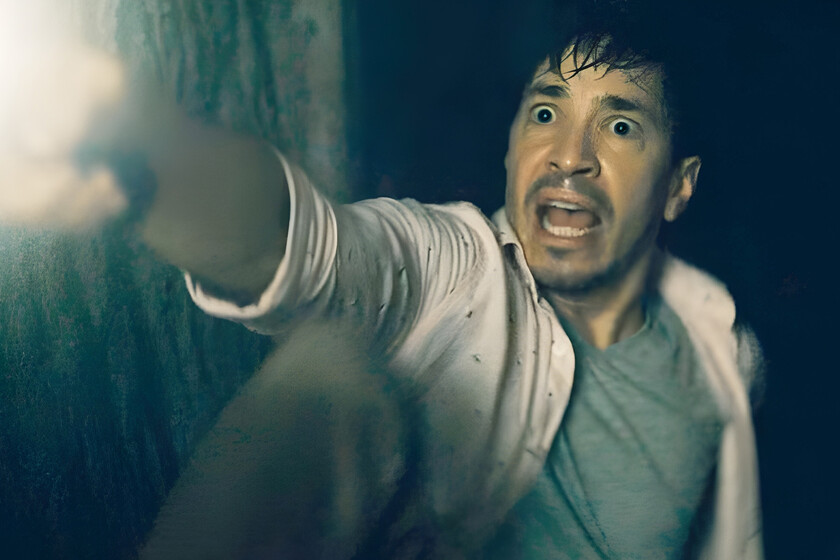
The introduction of the film’s second lead, AJ (Justin Long), marks a jarring transition into dark satire. AJ is a disgraced Hollywood actor facing a "Me Too" style cancellation, and his arrival in Detroit to liquidate his assets—including the rental property—shifts the film from claustrophobic horror to a biting commentary on male entitlement and moral bankruptcy. Justin Long’s performance provides a necessary, albeit disturbing, levity that balances the grotesque physical horror found in the basement tunnels.
Technical Execution and the Anatomy of the Monster
Technically, Barbarian utilizes its limited budget to maximum effect. Working with cinematographer Zach Kuperstein, Cregger employed distinct visual styles for each of the film’s segments. The present-day Detroit sequences are characterized by a cold, clinical digital look, while a pivotal flashback sequence to the 1980s is presented in a 4:3 aspect ratio with a saturated, grainy palette. This flashback serves to explain the origin of the "Mother," the creature inhabiting the tunnels, and reveals the film’s most unsettling truth: the monster is not a supernatural entity, but a byproduct of human depravity.
The "Mother," portrayed by Matthew Patrick Davis in a transformative makeup performance, is the result of decades of forced inbreeding perpetrated by a man named Frank (Richard Brake). The film posits that the true monster is not the deformed woman living in the walls, but the systemic abuse and the "barbaric" nature of the man who created her environment. This thematic depth—exploring the cycle of abuse and the perversion of maternal instincts—elevated Barbarian from a mere "creature feature" to a work of social horror.

Financial Success and Critical Consensus
The financial trajectory of Barbarian is a rare success story in the post-pandemic theatrical market. After being rejected by multiple major studios who found the script "too weird" or the tonal shifts "too risky," the project was eventually greenlit by New Regency. Upon its release, it earned a 92% approval rating on Rotten Tomatoes, with critics praising Cregger’s "fiendishly clever" script and the film’s ability to remain three steps ahead of the audience.
Data from Box Office Mojo highlights the film’s incredible "legs" in theaters. Unlike many horror films that see a 60% or 70% drop in their second weekend, Barbarian maintained steady viewership, fueled by viral word-of-mouth regarding its "must-see" twists. Its domestic total of $40.8 million accounted for the bulk of its earnings, proving that American audiences were hungry for original, R-rated horror that didn’t rely on existing intellectual property.
Chronology of the Barbarian Phenomenon
To understand the impact of the film, one must look at the timeline of its release and subsequent influence:
- August 2022: Barbarian premieres at San Diego Comic-Con to immediate buzz, with early viewers warned not to spoil the second half.
- September 9, 2022: The film is released theatrically in the United States, debuting at number one.
- October 2022: The film arrives on streaming services, sparking a second wave of discourse on social media platforms like TikTok and X (formerly Twitter).
- January 2023: Zach Cregger signs a massive multi-year deal with Warner Bros. Pictures, establishing his production company, Bad Hombre.
- Late 2023 – 2024: Cregger begins production on his follow-up film, Weapons, which boasts an ensemble cast including Josh Brolin and Julia Garner, directly resulting from the industry capital earned by Barbarian.
Broader Implications for the Horror Genre
The success of Barbarian has had a ripple effect across Hollywood, encouraging studios to take more significant risks on "high-concept" horror. It proved that a director could transition from low-budget comedy to high-stakes horror successfully, provided they have a deep understanding of pacing and audience psychology. Furthermore, the film’s exploration of Detroit’s urban decay—specifically the Brightmoor neighborhood—added a layer of "geographic horror" that resonated with contemporary anxieties about economic collapse and abandoned spaces.
The film also reignited discussions about the ethics of the "sharing economy." While Airbnb and similar services have become ubiquitous, Barbarian tapped into the primal fear of the stranger in the next room and the lack of oversight in private rentals. It joined the ranks of films like Get Out and Parasite, which use the architecture of a home to symbolize class structures and hidden societal rot.
Final Call: Why to Watch Before October 13
As the licensing agreement for Barbarian on Max expires, the film’s departure marks the end of an era for the platform’s horror catalog. While it will likely resurface on another service—potentially Hulu or Disney+ due to 20th Century Studios’ ownership—the immediate future of its streaming availability remains unconfirmed.
For those who have yet to see it, the recommendation remains the same as it was upon its theatrical release: go in knowing as little as possible. The film’s ability to transition from a tense "he-said-she-said" thriller into a grotesque, action-packed survival horror, and finally into a tragic character study, is a feat rarely seen in modern cinema. For returning viewers, a second watch reveals the intricate foreshadowing and the meticulous sound design that makes the basement sequences so claustrophobic.
Zach Cregger’s Barbarian is more than just a horror movie; it is a cultural moment that redefined the "rules" of the genre. Whether it is the shocking "tape measure" scene or the haunting final shot, the film leaves an indelible mark on the viewer. With only 13 days left on Max, there is no better time to descend into the tunnels and discover why the true monster is often the one who built the cage.

0 Comments