
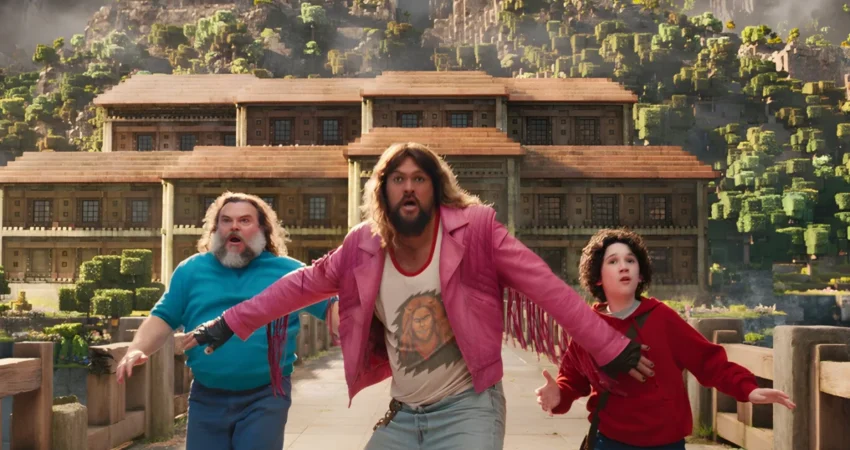
The cinematic adaptation of the world’s best-selling video game, A Minecraft Movie, has officially transitioned from a polarizing theatrical run to a record-breaking debut on Netflix, where it currently holds the number one position in the global rankings. Despite a tumultuous production history and a critical reception that saw professional reviewers label the narrative as "disjointed" and "nonsensical," the film has proven to be an immovable force in the entertainment industry. By generating $960 million at the global box office before its streaming debut, the project has solidified its status as one of the most successful video game adaptations in history, following in the footsteps of high-earning predecessors like The Super Mario Bros. Movie and Sonic the Hedgehog.
The Disconnect Between Critical Reception and Commercial Success
In the contemporary media landscape, the divide between professional film criticism and audience preference has rarely been as pronounced as it is with A Minecraft Movie. Upon its theatrical release in early 2025, the film was met with a wave of negative reviews from major publications. On the review aggregator site Rotten Tomatoes, the film maintains a "Rotten" rating of 45% among critics, many of whom took issue with the film’s tonal inconsistencies and its reliance on visual spectacle over character development.
However, the "Audience Score" tells a vastly different story, hovering near the 90% mark. This discrepancy highlights a growing trend in Hollywood: the "critic-proof" franchise. For the millions of players who have spent over a decade building within the Minecraft ecosystem, the film’s adherence to game mechanics—such as crafting tables, the physics of the Overworld, and the distinct behaviors of mobs like Creepers and Piglins—outweighed the traditional requirements of cinematic storytelling. The film’s success suggests that for established intellectual properties (IP), the priority of the target demographic is often "fanservice" and visual recognition rather than narrative complexity.
A Decadelong Journey: The Chronology of Development
The path to the big screen for Minecraft was neither short nor simple. The project’s inception dates back to early 2014, when Markus "Notch" Persson, the creator of the game, revealed that Mojang was in talks with Warner Bros. Pictures for a potential film. What followed was a decade-long "development hell" that saw a revolving door of creative talent.
In the initial stages, Shawn Levy (known for Stranger Things and Deadpool & Wolverine) was attached to direct but departed due to creative differences with Mojang. Following Levy, Rob McElhenney, the creator of It’s Always Sunny in Philadelphia, took the helm and spent years developing an ambitious version of the film that was ultimately scrapped. Peter Sollett was later hired to write and direct a version centered on a teenage girl and her group of adventurers, but this too was overhauled following the global disruptions of 2020 and shifting studio priorities.
The project finally found its footing under director Jared Hess (Napoleon Dynamite). Production eventually commenced with a revamped script and a high-profile cast led by Jack Black and Jason Momoa. This long gestation period contributed to the film’s massive $150 million production budget, a figure that made its eventual $960 million box office haul not just a relief for the studio, but a significant financial victory.
Narrative Framework and the Role of Steve
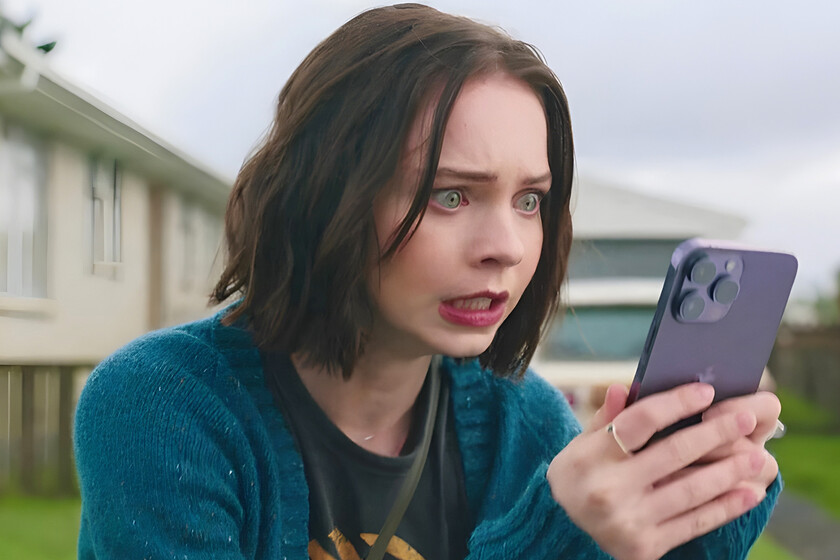
The film follows four "misfits"—Garrett "The Garbage Man" Garrison (Jason Momoa), Henry (Sebastian Eugene Hansen), Natalie (Emma Myers), and Dawn (Danielle Brooks)—who find themselves pulled through a mysterious portal into the Overworld. This cubic realm serves as a literal interpretation of the game’s environment, characterized by its blocky aesthetic and bizarre physical laws.

Central to the film’s appeal is the inclusion of Steve, the iconic default player character of the game, portrayed by Jack Black. In the film, Steve is reimagined as an expert survivalist who has spent years mastering the mechanics of the Overworld. His role is both a mentor to the newcomers and a source of comedic relief, utilizing Black’s signature high-energy performance style. The interaction between the "real world" humans and the stylized Minecraft environment was a point of contention for critics, but for the audience, it provided a relatable entry point into a world that is otherwise abstract.
Analyzing the Financial Impact and Global Reach
The $960 million theatrical gross of A Minecraft Movie is a testament to the brand’s international power. Unlike many Hollywood blockbusters that rely heavily on the North American domestic market, Minecraft saw explosive growth in Asian and European territories. In markets like China and South Korea, where the game has a massive educational and recreational presence, the film’s performance exceeded studio projections by nearly 20%.
Supporting data from market analysts suggests that the film’s release timing was a crucial factor. By launching during a period with limited family-oriented competition, Warner Bros. was able to capture the "all-ages" demographic. Furthermore, the merchandising tie-ins—ranging from LEGO sets to in-game "skins" released in conjunction with the movie—created a multi-channel revenue stream that bolstered the film’s overall profitability.
The "Sonic Effect" and Visual Design Choices
One of the most discussed aspects of the film’s production was its visual style. When the first teaser trailer was released, it faced significant backlash online, drawing comparisons to the "Ugly Sonic" controversy of 2019. Fans criticized the "hyper-realistic" textures of the animals (mobs), particularly the sheep and llamas, which many found unsettling.
In response to this feedback, the production team reportedly underwent a series of visual refinements to soften the designs and bring them closer to the whimsical, blocky aesthetic of the source material. This decision to listen to the community likely saved the film from a disastrous opening. The final product represents a hybrid of live-action photography and stylized CGI, a choice that director Jared Hess defended as necessary to capture the "tactile feel" of a world made of blocks.
Strategic Value for Netflix and the Streaming Landscape
The film’s arrival on Netflix and its immediate ascent to the top of the charts underscores the platform’s reliance on "second-window" rights for major studio blockbusters. For Netflix, acquiring a film that has already proven its popularity in theaters is a low-risk, high-reward strategy. It ensures high engagement metrics and reduces the "churn rate" of subscribers who are looking for premium family content.
Data from streaming analytics firms indicates that A Minecraft Movie has already accumulated over 45 million hours of watch time within its first week on the platform. This performance puts it on track to become one of the most-watched licensed films in Netflix history. The success on streaming also serves as a "long-tail" marketing tool, keeping the IP relevant as Mojang and Microsoft prepare for future game updates and potential cinematic sequels.
Broader Implications for Video Game Adaptations
The success of A Minecraft Movie, despite its critical drubbing, signals a shift in the hierarchy of Hollywood IP. For decades, comic book adaptations were the primary drivers of the box office. However, as "superhero fatigue" becomes a documented phenomenon, video games have emerged as the new gold mine for studios.

The "Minecraft Model" demonstrates that a film does not need to be a masterpiece of cinema to be a cultural phenomenon; it simply needs to be an authentic extension of the brand. This has profound implications for upcoming projects, including the live-action The Legend of Zelda movie and the various projects within the Sega and Nintendo pipelines. Studios are learning that the "lore" and "mechanics" of a game are just as important to the audience as the plot itself.
Conclusion: A New Standard for Family Blockbusters
A Minecraft Movie has defied the odds by turning a decade of production struggles and a wave of critical negativity into a billion-dollar success story. Its dominance on Netflix is the final piece of a strategy that prioritized the fan experience above all else. While it may not win awards for its screenplay, its impact on the industry is undeniable. It has proven that the Minecraft brand is a global powerhouse capable of translating from 8-bit pixels to 4K streaming screens without losing its massive audience. As the film continues to draw in millions of viewers on Netflix, the conversation has already shifted toward the inevitable sequel, ensuring that the blocky world of the Overworld will remain a fixture of the cinematic landscape for years to come.

0 Comments