
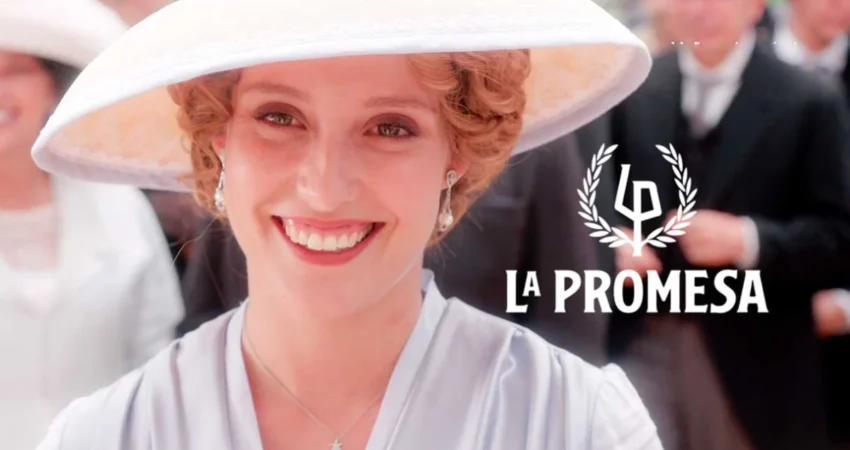
The highly anticipated return of Ana Garcés as Jana in the Spanish drama "La Promesa" has sent ripples of excitement through its dedicated fanbase. Her reappearance, strategically placed during a moment of profound emotional turmoil for the character of Curro, has been lauded for its narrative depth and poignant execution. This carefully orchestrated cameo not only provided a crucial emotional anchor for Curro at a critical juncture but also offered a nuanced resolution for Jana’s storyline, respecting the established narrative while delivering a powerful impact.
The series, known for its intricate plotlines and character development, had expertly built suspense around a mysterious guest at the wedding of Curro and Ángela. For days, RTVE, the broadcaster, had playfully teased the identity of this figure, veiled and observing from the sidelines. The show’s presenters, Xavi Lock and Marta Costa, had even hinted at a "very special guest," fueling widespread speculation among viewers. The eventual reveal of Jana, portrayed by Garcés, confirmed the most fervent fan theories. However, her return was not a dramatic resurrection or a convenient plot device to undo past events. Instead, it was presented as an intimate, emotional apparition, a manifestation of Curro’s deepest need for his sister’s presence and guidance as he stood on the precipice of a life-altering decision.
The narrative meticulously crafted this moment, ensuring that Jana’s appearance served a specific dramatic purpose without undermining the established tragedy of her death. The episode leading up to this pivotal scene had seen Curro grapple with the devastating revelation that Leocadia was responsible for Jana’s demise. This knowledge had sent him into a period of intense distress, including a period of disappearance and a heated confrontation with Pía, who had kept the truth from him. The weight of this betrayal and the impending union with Ángela created a palpable tension as the wedding ceremony commenced.
Curro’s Crisis at the Altar
The climax of the episode unfolded with Curro at the altar, facing the ultimate question from the officiant, Samuel: "Do you wish to receive Ángela as your wife?" The seconds ticked by, each moment amplifying the silence and the growing unease among the assembled guests. Ángela’s expression shifted from hopeful anticipation to concern, and the murmurs amongst the attendees grew, reflecting a shared fear: Curro might reject Ángela at the altar. In this agonizing silence, Curro’s gaze drifted, eventually settling on Leocadia. Behind her, almost imperceptibly illuminated amidst the throng of guests, a figure stood apart. A young woman, her face obscured by a wide-brimmed hat, slowly lifted her head. It was Jana.
This visual cue was immediately recognized by Curro, triggering a profound emotional response. The scene was masterfully constructed to avoid lengthy exposition or improbable dialogue. Jana’s presence was conveyed through a simple, affirmative gesture. Her gaze, directed at Curro, conveyed a silent message of encouragement, a subtle urging to proceed with the marriage to Ángela. The subtext of this non-verbal communication was rich and multifaceted. Jana was not asking Curro to forget the past or forgive Leocadia’s heinous act. Instead, her spectral appearance symbolized a crucial understanding: Ángela was not complicit in her mother’s crimes, and Curro should not allow the actions of a murderer to dictate his own happiness and future. This silent affirmation from his beloved sister provided Curro with the emotional validation he desperately needed.
Following this poignant exchange, Curro finally responded to the officiant’s question with a resounding "Yes, I do," allowing the ceremony to continue and culminating in his marriage to Ángela. This resolution, facilitated by Jana’s timely intervention, underscored the show’s commitment to exploring the enduring bonds of family and the power of emotional support, even in the face of insurmountable loss.
A Second Farewell to Jana

"La Promesa" was not yet finished with its emotional arc. As the newlyweds emerged from the church, greeted by a jubilant crowd of guests, Curro caught sight of Jana once more, this time amidst the celebratory throng. This second encounter allowed for audible dialogue, providing a more definitive sense of closure. Jana confirmed that Curro had made the right decision and expressed her wish for his profound happiness. Then, she began to recede into the crowd, her form gradually fading until she disappeared entirely.
This second farewell was markedly different from the devastating reality of her death. It was a more serene and cathartic parting, likely serving as the emotional resolution that Curro, and indeed the audience, needed after the recent revelation of her murder. It offered a gentle, respectful goodbye, allowing Curro to process his grief and move forward with a sense of peace, knowing his sister’s enduring love and support.
Ana Garcés’ Return: A Narrative Masterstroke
The return of Ana Garcés was a delicate balancing act. The potential for such a significant character’s reappearance, especially after the profound impact of her death on the series’ narrative, carried a considerable risk of feeling forced or contrived. However, "La Promesa" navigated this challenge with remarkable finesse by presenting Jana’s return not as a resurrection, but as a personal apparition for Curro. The exact nature of her presence – whether a vivid memory, a hallucination, or a dream – was left deliberately ambiguous. This ambiguity allowed the scene to function purely on an emotional level, representing what Curro believed his sister would convey in that critical moment.
This approach enabled Ana Garcés to re-enter the narrative for a brief, impactful duration without disrupting the established storyline of Jana’s fate. Simultaneously, it allowed her to participate in an event that her character would undoubtedly have cherished: her brother’s wedding. This strategy proved highly effective, providing a deeply moving experience for viewers who had followed Jana’s journey closely.
The Power of Daily Drama
The effectiveness of this particular scene further highlights the inherent strengths of the daily drama format. "La Promesa" produces five full-length episodes each week, a demanding production schedule that requires a distinct pace of writing, filming, and editing compared to limited series. While this format presents inherent challenges, episodes like this demonstrate that daily dramas are capable of delivering significant emotional impact when a strong script, meticulous staging, and compelling performances converge.
Xavi Lock, as Curro, carried the emotional weight of the critical "yes, I do" moment, his performance conveying the internal struggle and eventual resolution. Ana Garcés, with minimal gestures, instantly re-established the profound connection between Jana and Curro, requiring little else to resonate with the audience. Her return, after months of her absence, was already a significant event for the show’s followers. By imbuing her appearance with narrative purpose – enabling Curro to choose his own happiness with Ángela – her cameo transcended a mere guest appearance, solidifying its place as a memorable and meaningful moment in the series.
Jana returned because Curro needed her. And in doing so, she provided a final, loving farewell, offering closure and paving the way for his future. This carefully crafted narrative arc serves as a testament to the storytelling capabilities within the demanding landscape of daily television, proving that even within tight production constraints, profound emotional resonance can be achieved. The series’ ability to weave such intricate and emotionally charged storylines into its weekly output continues to captivate its audience and solidify its position as a leading example of effective daily drama production.

0 Comments