
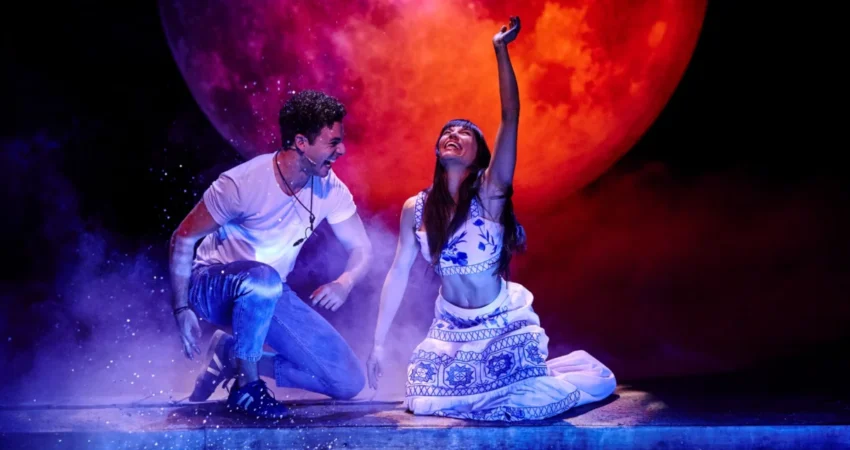
El Alma al Aire, a captivating new musical inspired by the iconic songs of Alejandro Sanz, has officially premiered at Madrid’s Teatro Ocaso Coliseum, marking a significant milestone in the adaptation of popular music into theatrical productions. The highly anticipated show, which opened its curtains on October 1st, represents the culmination of four years of dedicated development and creative collaboration, involving Sanz himself in the artistic process. This ambitious production weaves an original narrative around Sanz’s extensive and beloved repertoire, transporting audiences to the fictional fishing village of Gazulea, a charming locale drawing inspiration from the Andalusian province of Cádiz.
A Symphony of Storytelling and Song
The genesis of El Alma al Aire lies in Alejandro Sanz’s long-held fascination with the potential of his music to transcend the recording studio and resonate on a theatrical stage. "Sometimes I had fantasized about my songs ending up on stage in a different way," Sanz stated in a released statement, expressing his profound engagement with the world of musical theater. He acknowledged his role as an "apprentice" in this new creative domain, noting with surprise the intricate process of transforming his individual songs into a cohesive narrative. "A musical is not a succession of songs, one after another, without any connection," he elaborated, highlighting the complex alchemy required to imbue each melody and lyric with dramatic purpose.
The musical’s title, El Alma al Aire, which translates to "The Soul in the Open Air," aptly captures the essence of its narrative. The story centers on Ale, a young man blessed with musical talent who navigates life alongside his mother and his loyal best friend, Bruno. Their world is significantly altered by the arrival of Alma, a dynamic real estate developer from Madrid. Her decision to establish roots in Gazulea with her two daughters introduces a compelling tension between the village’s impending modernization and the imperative to preserve its deeply cherished traditions and heritage. This central conflict sets the stage for an intricate tapestry of intergenerational relationships, as each character grapples with their personal aspirations and the choices that will define their futures.
A Stellar Cast and a Rich Theatrical Experience
The principal cast is led by a talented ensemble including Pepe Nufrio, Amanda Digón, Lydia Fairén, Hugo Ruiz, and Natán Segado. Their performances are further enriched by the presence of a live band comprising 12 accomplished musicians, underscoring the production’s commitment to delivering a high-fidelity musical experience. Critics and early audiences have lauded the cast’s exceptional vocal and acting capabilities, positioning El Alma al Aire as a large-scale production that stands shoulder-to-shoulder with major international musical theater offerings. The narrative itself is a celebration of love in its myriad forms, punctuated by moments of unexpected plot developments, infectious humor, and scenes designed to elicit heartfelt laughter, enthusiastic applause, and genuine surprise from the audience.
A particularly poignant element of the production is the prominent role of flamenco, which finds one of its most powerful expressions through the performance of Inma La Carbonera. She embodies Levante, the personification of the characteristic wind that sweeps across the Cádiz coast, a symbolic force that adds an atmospheric layer to the unfolding drama. The stagecraft is equally impressive, with a dramatic storm sequence even bringing simulated rain onto the performance space, enhancing the immersive quality of the storytelling.
A Creative Journey Rooted in Andalusian Soul
The playwright behind this ambitious adaptation, Álvaro Tato, a distinguished two-time winner of the Max Awards for Performing Arts, was granted significant creative latitude in crafting the story. Alejandro Sanz provided two fundamental guidelines: the musical should not be a biographical account of his life, and it must deeply embed the culture and roots of southern Spain. Despite being born in Madrid, Sanz maintains a profound connection to Cádiz, as his parents hail from the province, and he spent formative years of his childhood there. This personal link served as a powerful catalyst for Tato’s creative process.
"I went down to Cádiz with a list of songs, to feel the Levante wind and to listen, simply letting myself be carried away," Tato recounted in an interview with Billboard Español. This immersive journey to the south proved instrumental in the conceptualization of Gazulea and its distinct characters, allowing the setting and its inhabitants to emerge organically from the spirit of the region.
A Reimagined Repertoire of Iconic Hits
The musical’s repertoire draws from Alejandro Sanz’s most iconic hits, including universally recognized songs such as "Amiga Mía," "¿Lo Ves?", and "La Música No Se Toca." These familiar melodies are seamlessly integrated into the narrative, providing a sense of recognition and emotional resonance for the audience. The genius of the adaptation lies in its ability to present these beloved songs in fresh and unexpected ways. For instance, "Y Si Fuera Ella" is transformed into a moving duet, while "Corazón Partío," a song often associated with heartbreak, embarks on a journey from sorrow to joyous celebration within the context of the story. "We try to ensure that audiences looking for the songs will find them, but also feel like they are being sung for the first time," Tato explained, emphasizing the delicate balance between honoring the original intent and forging new dramatic pathways.
During the development process, Tato identified a recurring thematic element in Sanz’s songwriting that proved crucial for bringing his songs to the stage. "They always deal with someone wanting something they don’t have," he observed. This pervasive sense of longing—whether it be for romantic connection, personal fulfillment, or emotional catharsis—provided a fertile ground for developing the characters’ motivations and allowing them to deeply connect with and personalize the lyrics.
A Collaborative Vision: Sanz’s Active Role
Alejandro Sanz remained actively involved in the project from its nascent stages, participating in script readings, rehearsals, and various creative meetings, offering his invaluable insights and impressions to the production team. Tato fondly recalled Sanz’s consistent perspective as the "first spectator," marveling at the artist’s enduring sense of wonder as he witnessed his own compositions acquire new narrative dimensions. "You recognize great masters because they never stop being children in some way, never lose their sense of wonder," the playwright remarked, underscoring Sanz’s humility and artistic curiosity.
After four years of meticulous work and creative refinement, El Alma al Aire has embarked on its journey in Madrid, with the aspirations of Gazulea and its compelling characters gracing the stage for an extended and successful run. The production stands as a testament to the enduring power of music to tell stories and connect with audiences on a profound emotional level, offering a unique and vibrant theatrical experience for fans of Alejandro Sanz and lovers of musical theater alike. The success of El Alma al Aire also signifies a broader trend in the entertainment industry, where established musical catalogs are increasingly being reimagined for the stage, promising further innovative collaborations between music and theater in the years to come. The musical’s premiere not only enriches Madrid’s cultural landscape but also sets a high bar for future adaptations, demonstrating the potential for a rich dialogue between popular music and dramatic storytelling.

0 Comments