
The arrival of the 2022 superhero epic Black Adam on Netflix marks a significant moment for both casual viewers and dedicated followers of comic book cinema. Starring Dwayne "The Rock" Johnson in the titular role, the film was marketed for years as a transformative event that would, in Johnson’s own frequently repeated words, "change the hierarchy of power in the DC Universe." While the film did ultimately trigger a massive shift within the industry, it did so in a manner far different from what its producers and star had envisioned. Instead of anchoring a new era of the DC Extended Universe (DCEU), Black Adam served as the catalyst for the franchise’s total dissolution and the subsequent birth of the DC Universe (DCU) under the leadership of James Gunn and Peter Safran.
The Long Road to Kahndaq: A Decade of Development
The journey of Black Adam to the big screen is one of the longest development cycles in modern superhero history. Dwayne Johnson was first linked to the character as early as 2007, originally considered for the role of the antagonist in a Shazam! movie. However, as Johnson’s global stardom grew, so did the scope of the project. By 2014, it was decided that Black Adam would receive his own solo origin story, separating him from the lighter tone of the Shazam! franchise to establish him as a formidable, morally ambiguous anti-hero.
The film finally entered production under the direction of Jaume Collet-Serra, known for his work on Jungle Cruise and several Liam Neeson action thrillers. The narrative follows Teth-Adam, an ancient slave from the fictional nation of Kahndaq who is bestowed with the powers of the Egyptian gods. After using these powers for vengeance, he is imprisoned for 5,000 years, only to be awakened in the modern day. The plot centers on his conflict with the Justice Society of America (JSA)—a precursor to the Justice League—and his eventual realization that he must protect Kahndaq from a demonic threat known as Sabbac.
Financial Realities and the Box Office Disconnect
Upon its theatrical release in October 2022, Black Adam faced an uphill battle. The film opened to a respectable $67 million in the United States, marking the highest opening weekend for a Dwayne Johnson-led film outside of the Fast & Furious franchise. However, the momentum quickly stalled. With a production budget estimated between $190 million and $260 million—plus a marketing spend exceeding $100 million—the film required a massive global haul to break even.
Ultimately, Black Adam concluded its theatrical run with approximately $393 million worldwide. In the context of modern blockbuster economics, industry analysts estimated that the film resulted in a loss of nearly $100 million for Warner Bros. Discovery. Several factors contributed to this financial shortfall, including the film’s inability to secure a release in China, which had historically been a lucrative market for Johnson’s action films. Furthermore, the crowded superhero market and a lack of critical consensus hampered its long-term "legs" at the box office.
The Critical Divide: Critics vs. Audience Reception
One of the most striking aspects of the Black Adam legacy is the sharp divide between professional critics and the general public. On the review aggregator site Rotten Tomatoes, the film holds a "Rotten" critical score of 39%. Critics largely panned the movie for its heavy reliance on CGI, its "generic" superhero tropes, and a script that many felt prioritized spectacle over character depth. The film was frequently compared to early 2000s superhero fare, with some reviewers suggesting it felt dated in an era of more experimental comic book storytelling.
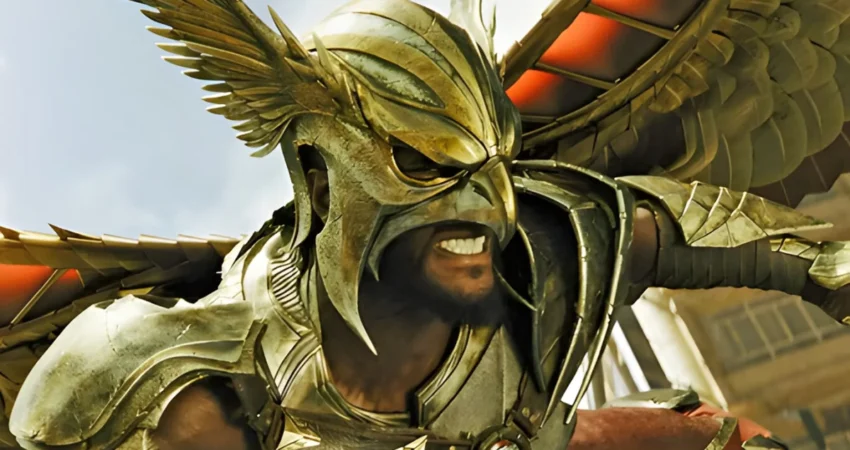
Conversely, the audience score remains high, sitting at 88%. This discrepancy highlights the film’s effectiveness as a "popcorn movie"—a term used to describe high-energy entertainment designed for casual viewing. Fans praised the introduction of the Justice Society of America, particularly Pierce Brosnan’s sophisticated portrayal of Doctor Fate and Aldis Hodge’s commanding presence as Hawkman. For many viewers, the visceral action sequences and Johnson’s physical embodiment of the character provided exactly what they sought: two hours of escapist entertainment.

Internal Politics and the Henry Cavill Controversy
The narrative surrounding Black Adam was further complicated by the behind-the-scenes maneuvering of Dwayne Johnson. In the months leading up to the release, Johnson campaigned heavily for the return of Henry Cavill as Superman. This effort culminated in a post-credits scene that featured Cavill’s Superman confronting Black Adam, a moment intended to tease a future "Black Adam vs. Superman" showdown.
Reports later surfaced indicating that Johnson had bypassed several DC executives to secure Cavill’s return, dealing directly with Warner Bros. Discovery film chiefs Michael De Luca and Pamela Abdy. While this delighted fans momentarily, it created a logistical and creative nightmare for the studio. Cavill officially announced his return to the role on social media shortly after the film’s debut, only to be forced to retract the statement weeks later when the studio decided to move in a completely different direction. This public relations friction contributed to the perception of a fractured and disorganized franchise.
The Catalyst for the James Gunn Reboot
The underperformance of Black Adam, coupled with the internal leadership struggles at DC, provided the final impetus for Warner Bros. Discovery CEO David Zaslav to enact a "hard reset." In November 2022, shortly after Black Adam’s release, it was announced that James Gunn and Peter Safran would take the helm of the newly formed DC Studios.
The duo was tasked with creating a unified, ten-year plan for the DC brand across film, television, and gaming. One of their first major decisions was to discontinue the "Snyderverse" and the narrative threads established in Black Adam. This meant that despite Johnson’s public lobbying, a Black Adam sequel was removed from the immediate slate. In a formal statement, Johnson acknowledged that while Black Adam would not be part of the "first chapter" of the new DCU, he and Gunn would continue to explore ways the character could be used in future multiversal stories. This effectively marked the end of the DCEU as it had existed since 2013’s Man of Steel.
The Streaming Second Life: Why Netflix Matters
Now that Black Adam has transitioned to Netflix, it is experiencing a significant resurgence in popularity. Streaming platforms often provide a "second chance" for films that struggled at the box office or faced critical backlash. For a film like Black Adam, the "no-additional-cost" barrier of a Netflix subscription allows audiences who skipped the theatrical experience to engage with the film without financial risk.
The film’s presence in the Netflix "Top 10" lists across various regions suggests that the appetite for high-budget superhero action remains strong, even if the theatrical business model for such films is becoming more volatile. On streaming, the film’s flaws—such as its thin plot and over-reliance on visual effects—are often more easily forgiven by viewers looking for home entertainment.
Chronology of the Black Adam Era
To understand the film’s impact, it is essential to view it within the timeline of DC’s turbulent transition:
- 2007–2014: Initial development and the decision to split Black Adam from Shazam!.
- July 2021: Production wraps after significant delays due to the COVID-19 pandemic.
- July 2022: Johnson makes a dramatic appearance at San Diego Comic-Con in full costume, promising a "new era."
- October 2022: Black Adam premieres; Henry Cavill cameos; the film receives mixed reviews.
- November 2022: James Gunn and Peter Safran are appointed co-CEOs of DC Studios.
- December 2022: Official confirmation that Henry Cavill will not return as Superman and that Black Adam is not in the immediate DCU plans.
- 2024: Black Adam debuts on Netflix, becoming one of the most-watched films on the platform.
Broader Implications for the Superhero Genre
The legacy of Black Adam serves as a cautionary tale for the "star-driven" blockbuster model. For decades, a major star like Dwayne Johnson was considered a guarantee of box office success. However, the reception of Black Adam suggests that in the modern era, "brand" and "cinematic universe cohesion" often outweigh individual star power.

The film’s failure to launch a sub-franchise also highlighted the dangers of prioritizing "fan service" (such as the Superman cameo) over foundational storytelling. As James Gunn prepares to launch Superman in 2025, the industry is watching to see if a more director-driven, tonally consistent approach can restore the DC brand to its former glory.
In conclusion, while Black Adam may not have become the cornerstone of a new cinematic empire, its historical importance cannot be denied. It was the film that inadvertently forced a major Hollywood studio to stop trying to fix a broken machine and instead build a new one from scratch. For viewers watching on Netflix today, it remains a high-octane spectacle—a loud, visual-heavy reminder of a transitional period in film history where the "hierarchy of power" did indeed change, just not in the way anyone expected.

0 Comments