
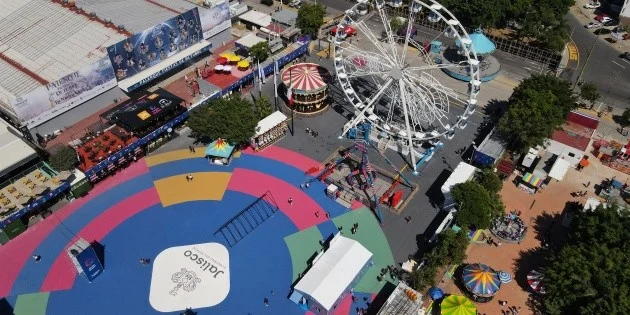
As October arrives, Guadalajara once again transforms, embracing its iconic Fiestas de Octubre. The inauguration of a new edition today, October 1, 2026, marks another chapter in a tradition deeply woven into the fabric of Tapatío life. Understanding the profound origins and evolution of this annual celebration offers attendees a richer perspective, allowing them to appreciate its historical significance and enduring cultural impact beyond mere entertainment.
The Genesis of a Grand Tradition: Addressing Economic Lull in 1965
The captivating history of this monumental celebration dates back to 1965, born from a specific economic imperative facing the western region of Mexico, particularly Jalisco. Francisco Medina Ascencio, then Governor of the State of Jalisco, identified through comprehensive economic analyses that October historically represented a period of significant downturn in commercial and tourist activity for the state capital. Post-harvest agricultural cycles often led to a decrease in rural spending, and the lull between the summer tourist season and the December holiday period left many local businesses struggling.
Governor Medina Ascencio, a visionary leader known for his strategic economic development initiatives, recognized the urgent need for a robust countermeasure. His administration sought to devise a strategy that would not only mitigate this evident economic slump but also inject vitality into the local economy. The ingenious solution he conceived was the creation of a monumental fair designed to attract visitors from across Mexico and abroad, while simultaneously stimulating local consumption. This strategic move aimed to convert a period of economic dormancy into one of dynamic growth. What began strictly as a sophisticated financial reactivation plan quickly integrated with Mexico’s vibrant folklore, laying the robust foundations for what would become one of the region’s most anticipated annual festivities. This fusion of economic pragmatism and cultural celebration was a stroke of genius that redefined the state’s calendar.
Parque Agua Azul: The Inaugural Home of Guadalajara’s Grand Celebration
The inaugural home for this ambitious cultural, tourist, and commercial project was the emblematic and centrally located Parque Agua Azul. Its expansive green spaces, serene lake, and strategic accessibility made it an ideal setting for the burgeoning fair. The park’s natural beauty and existing infrastructure provided a picturesque backdrop for the first editions, which featured nascent livestock exhibitions, novel mechanical rides that captivated families, and artistic performances showcasing local talent. These early attractions immediately resonated with Tapatío families, who flocked to the park to experience this new form of entertainment and community gathering.
For nearly two decades, this vital urban lung bore witness to the exponential growth of the Fiestas. In its nascent years, the fair was organized exclusively by the Secretariat of Tourism of the State of Jalisco, reflecting its primary objective as a tourism and economic development tool. However, the sheer success and overwhelming public attendance proved to be a double-edged sword. By 1984, the natural space of Parque Agua Azul, despite its initial advantages, proved insufficient to accommodate the burgeoning crowds and the ever-expanding scope of the event. This necessitated a pivotal decision: authorities were compelled to relocate the celebration to a larger, more permanent venue, leading to its move to the Auditorio Benito Juárez in the municipality of Zapopan, which has since become its definitive and beloved home.
The Auditorio Benito Juárez Era: Expansion and Institutionalization
The move to the Auditorio Benito Juárez marked a significant turning point in the history of the Fiestas de Octubre. This purpose-built venue offered vastly superior infrastructure, including dedicated exhibition halls, a large concert arena, and ample space for the diverse array of attractions that the fair had come to embody. This relocation allowed for an unprecedented expansion in terms of both physical footprint and programmatic offerings. The fair could now host larger livestock shows, more elaborate artisan markets, a greater variety of gastronomic experiences, and international-caliber musical acts. The Auditorio Benito Juárez, with its robust facilities, transformed the Fiestas from a popular local event into a major regional, and increasingly national, attraction.
With the change of venue came an imperative for a more complex and specialized organizational structure. The sheer magnitude of the event demanded professional management beyond the scope of a state secretariat. Consequently, in 1989, a dedicated Patronato (Trust) was established to oversee the planning, execution, and promotion of the Fiestas de Octubre. This administrative evolution was crucial; it allowed for greater flexibility, specialized expertise, and a more focused approach to managing the multi-faceted demands of such a large-scale event.
A key innovation under the Patronato’s stewardship was the decision, starting in 1991, for each annual edition to adopt a distinct cultural theme. This initiative profoundly enriched the visitor experience, transforming the fair into a dynamic showcase of Jalisco’s rich heritage and broader Mexican culture. Themes might focus on a particular region, an artistic discipline, a historical period, or even an abstract concept, ensuring that each year offered a fresh visual and intellectual journey for attendees. This thematic approach not only diversified the enormous entertainment offerings but also deepened the educational and cultural value of the Fiestas, solidifying its role as a premier cultural event.
Economic Engine and Cultural Showcase: The Broader Impact
The Fiestas de Octubre have evolved far beyond their initial economic impetus to become a critical economic engine and a vibrant cultural showcase for Jalisco. Annually, the fair attracts millions of visitors, with recent editions drawing an estimated 2.5 to 3 million attendees over its month-long duration. This massive influx of people generates a substantial economic spillover, estimated to be in the billions of pesos (e.g., upwards of 2.5 billion pesos in recent years), benefiting a wide array of sectors. Local businesses, from hotels and restaurants to transportation services and retail shops, experience a significant boost in revenue.
The event also serves as a major employer, creating thousands of direct and indirect jobs each year. Artisans, performers, food vendors, security personnel, event staff, and technicians all find opportunities during the Fiestas. For many small and medium-sized enterprises, particularly those in the traditional crafts and culinary sectors, the fair represents their most significant sales platform of the year, providing vital income and exposure. "October used to be a quiet month for us, but now it’s our busiest," notes María Elena Sánchez, a third-generation textile artisan who has exhibited at the Fiestas for over 30 years. "The fair allows us to reach customers from all over the state and beyond, preserving our traditions while sustaining our families."
Culturally, the Fiestas de Octubre are an unparalleled platform for showcasing Jalisco’s rich heritage. It is a place where mariachi music resonates through the air, where the spectacle of charrería (Mexican rodeo) captivates audiences, and where traditional folk dances fill the stage with color and movement. The fair actively promotes the state’s renowned gastronomy, from birria and tortas ahogadas to tequila and raicilla, offering a sensory journey through Jalisco’s culinary landscape. Exhibitions of traditional crafts, including pottery from Tonalá and Tlaquepaque, leather goods, and intricate textiles, not only celebrate artistic skill but also support the preservation of ancestral techniques. "The Fiestas are a living museum of our culture," states Dr. Ricardo Flores, a cultural historian specializing in Jalisco. "From a practical economic initiative, it blossomed into a cornerstone of Tapatío identity, preserving and projecting our heritage to new generations and global audiences."
Modern Stewardship and Future Horizons
In the current era, the intricate organization of this grand event falls under the purview of the Agencia Estatal del Entretenimiento (State Entertainment Agency), a governmental entity that assumed responsibility in January 2019 following the dissolution of the former Patronato. This transition reflects a modernization of event management, aiming for greater efficiency, accountability, and a more integrated approach to public entertainment initiatives across the state. The Agency is tasked with ensuring the Fiestas remain relevant and appealing to contemporary audiences while honoring their deep-rooted traditions.
Despite constant administrative changes and unforeseen historical interruptions—most notably the regrettable cancellation in 2020 due to the global COVID-19 pandemic—the festive essence of the fair has remained remarkably intact. The 2020 cancellation, a rare occurrence in its history, underscored the event’s profound importance to the social and economic fabric of Jalisco. Its triumphant return in subsequent years was met with overwhelming enthusiasm, demonstrating its resilience and the community’s unwavering attachment to the tradition.
The Fiestas continue to offer an unparalleled space for social convergence, a vibrant meeting point where families, friends, and communities gather to share experiences, celebrate their heritage, and create new memories. The diverse programming, from children’s attractions and thrilling rides to world-class concerts and cultural performances, ensures there is something for every age and interest. For example, the Cartelera del Auditorio Jalisco for any given weekend during the Fiestas, such as October 2-4, 2026, typically features a lineup of prominent national and international artists, drawing immense crowds and generating significant buzz.
In conclusion, the Fiestas de Octubre exist today because an audacious strategic vision in 1965 successfully transformed itself organically into the cultural heart of an entire state. What began as a calculated move to reactivate a flagging economy has evolved into a beloved institution that profoundly shapes Guadalajara’s identity. Every vibrant concert, every meticulously crafted artisanal exhibition, and every joyous smile witnessed on the mechanical rides are living reflections of a beautiful tradition. This tradition started with the pragmatic goal of economic revival and, in doing so, ended up forever conquering the soul of Guadalajara, becoming an indispensable part of its past, present, and future. The Fiestas de Octubre are not merely an event; they are a testament to Jalisco’s enduring spirit, its rich cultural tapestry, and its capacity for joyful celebration.

0 Comments