
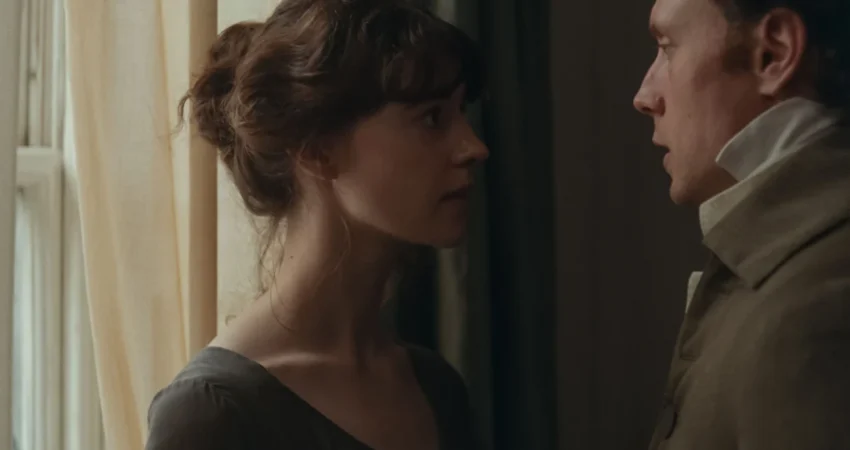
The 2026 theatrical release of Sense and Sensibility, directed by Georgia Oakley and adapted for the screen by Diana Reid, marks a significant milestone in the enduring legacy of Jane Austen’s literary works. Produced under the Focus Features banner, this latest iteration of the 1811 classic seeks to bridge the gap between the rigid social structures of the Regency era and the sensibilities of a contemporary global audience. Featuring cinematography by Arnaud Potier and starring Daisy Edgar-Jones as Elinor Dashwood, the film has prompted extensive discussion regarding its fidelity to the source material and its calculated departures from Austen’s original narrative.
While the production has been lauded for its visual evocative power—drawing frequent comparisons to Joe Wright’s 2005 adaptation of Pride & Prejudice—the screenplay introduces several pivotal modifications to the plot and character motivations. These changes reflect a broader trend in period drama production: the attempt to translate 19th-century social nuances into high-stakes cinematic conflict. This report examines the specific divergences between the 2026 film and the original text, the historical context of the era, and the industry implications of modernizing classic literature.

Narrative Divergences: The Dashwood Inheritance and the Will of Mr. Dashwood
One of the most striking departures in the Oakley-directed film occurs in the opening sequence concerning the death of Mr. Henry Dashwood and the subsequent reading of his will. In the film, the future of the Dashwood women—Mrs. Dashwood and her daughters Elinor, Marianne, and Margaret—is presented as an unfolding mystery. The characters are depicted in a state of suspense, unaware of the specific contents of the patriarch’s final testament until a formal reading occurs. This narrative choice heightens the immediate drama, portraying the loss of their home, Norland Park, as a sudden and shocking reversal of fortune.
In contrast, Jane Austen’s original text establishes that the family was well aware of the legal constraints surrounding their estate long before Mr. Dashwood’s passing. The property was subject to an "entail," a legal mechanism common in 19th-century England designed to keep estates intact by restricting inheritance to male heirs. Austen meticulously details how the estate was settled on Mr. Dashwood’s son from his first marriage, John Dashwood, and John’s own young son. Consequently, the Dashwood sisters grew up with the understanding that Norland would never be theirs. The tension in the novel arises not from a surprise revelation in a will, but from the agonizing realization that John Dashwood, influenced by his parsimonious wife Fanny, would fail to fulfill his deathbed promise to provide for his sisters. By reframing this as a sudden shock, the 2026 film prioritizes cinematic "stakes" over the slow-burning psychological dread of the original prose.
Character Reconstructions: The Social Standing of Lucy Steele
The 2026 adaptation significantly alters the backstory of Lucy Steele, a character traditionally serving as the primary antagonist to Elinor Dashwood’s happiness. In the film, Lucy is portrayed as a young woman of respectable birth who suffered a financial downfall remarkably similar to that of the Dashwood sisters. The narrative suggests that her secret engagement to Edward Ferrars was originally sanctioned by their families during a period when Lucy still possessed a significant fortune. The conflict then shifts to Mrs. Ferrars, Edward’s mother, who demands the engagement be broken once Lucy’s wealth is lost.

This portrayal deviates sharply from Austen’s characterization. In the novel, Lucy Steele is never presented as an equal to the Dashwoods in terms of social refinement or family history. She and her sister, Anne (often referred to as Nancy), are the nieces of a tutor, Mr. Pratt, with whom Edward Ferrars studied in Plymouth. Lucy is depicted as shrewd, manipulative, and socially inferior—qualities emphasized by her poor grammar and lack of genuine "elegance" as defined by the standards of the time. Austen uses Lucy to critique the mercenary nature of the marriage market, where a woman’s lack of fortune forces her into desperate and often deceptive strategies. By making Lucy a "fallen" member of the gentry in the film, the writers create a more sympathetic parallel to Elinor, perhaps at the expense of Austen’s sharper social satire regarding class distinctions.
The Willoughby Scandal and the Revision of Colonel Brandon’s History
Perhaps the most significant structural change in the 2026 film involves the character of John Willoughby and his connection to Colonel Brandon. In the film, Willoughby’s departure from Marianne is linked to a past affair with a widow who is identified as the sister-in-law and former first love of Colonel Brandon. This adjustment simplifies a complex web of backstory to fit a two-hour runtime.
In the original text, the scandal is far darker and involves two generations of women named Eliza. The first Eliza was the Colonel’s first love, who was forced into a miserable marriage with his brother and eventually died in poverty after a series of misfortunes. The second Eliza, the illegitimate daughter of the first, became the Colonel’s ward. At the age of fifteen, she was seduced and abandoned by Willoughby, resulting in an illegitimate pregnancy.

Industry analysts suggest the 2026 film’s decision to replace the fifteen-year-old ward with a widow was likely a response to modern sensibilities. The original text features a significant age gap—Marianne is sixteen (turning seventeen) while the Colonel is thirty-five—and the "Eliza" subplot involves the grooming of a minor. By aging up the characters involved in Willoughby’s scandal, the film avoids the more disturbing implications of the 1811 narrative, though it loses the poignant parallel Austen drew between Eliza’s ruin and Marianne’s near-destruction. The film does, however, retain and emphasize the duel between Colonel Brandon and Willoughby, a scene only briefly mentioned in the novel, providing a moment of physical catharsis for the audience.
Visual Direction and Cinematographic Analysis
Cinematographer Arnaud Potier’s work on the 2026 production has been identified as a core strength of the film. Utilizing a color palette that emphasizes the moody, rain-swept landscapes of the English countryside, Potier moves away from the "chocolate box" aesthetic of 1990s period dramas. Instead, the film adopts a naturalistic lighting style reminiscent of the 2005 Pride & Prejudice, where the environment serves as an extension of the characters’ internal emotional states.
However, historical purists have noted discrepancies in the film’s visual "period" accuracy, particularly regarding hair and makeup. The Dashwood sisters are frequently depicted with loose, unstyled hair—a look that would have been considered scandalous and "undressed" for women of their station in the early 1800s. In the Regency era, hair was meticulously curled and pinned; loose tresses were reserved for the privacy of the bedchamber. This stylistic choice in the 2026 film is viewed as a deliberate attempt to make the protagonists appear more relatable and "modern" to a 21st-century audience, favoring emotional resonance over strict historical verisimilitude.

Chronology of Major Sense and Sensibility Adaptations
To understand the context of the 2026 release, it is essential to view it within the timeline of major Austen adaptations:
- 1981 (BBC Miniseries): A faithful, if stagey, adaptation that focused heavily on the dialogue of the novel.
- 1995 (Theatrical Film): Directed by Ang Lee and written by Emma Thompson (who also starred as Elinor). This version remains the gold standard for many, winning an Academy Award for Best Adapted Screenplay. It introduced significant humor and warmth to the story.
- 2008 (BBC Miniseries): Written by Andrew Davies, this version returned to a more sensual and grounded interpretation, emphasizing the physical landscape and the precariousness of the Dashwoods’ poverty.
- 2022 (Netflix’s Persuasion): While not Sense and Sensibility, this adaptation’s heavy "modernization" and use of fourth-wall breaking served as a cautionary tale for the 2026 production, which chose a more middle-ground approach.
- 2026 (Theatrical Film): The Oakley/Reid adaptation, characterized by its focus on visual atmosphere and the streamlining of 19th-century legal and social complexities.
Economic and Cultural Impact of Austen Adaptations
The release of a major Austen film typically triggers a quantifiable surge in literary interest. Data from previous years indicates that theatrical releases of Austen adaptations correlate with a 15% to 25% increase in sales of the original novels. Furthermore, the "Austen-core" aesthetic continues to influence fashion and interior design, with the 2026 film expected to drive a resurgence in Regency-inspired apparel.
From an industry perspective, the 2026 production reflects the continued viability of the "mid-budget" period drama in an era dominated by franchise blockbusters. By casting rising stars like Daisy Edgar-Jones, the producers aim to capture a younger demographic—specifically the "BookTok" community—which has shown a robust appetite for classic romantic tropes rebranded for the modern era.

Broader Implications and Critical Reception
The critical reception of the 2026 Sense and Sensibility has highlighted a growing divide between "purists" and "progressives" in the realm of literary adaptation. Scholars argue that by removing the specificities of the "entail" and the "Eliza" subplot, the film dilutes Austen’s critique of the patriarchal structures of her time. Without the rigid legal and social barriers that Austen so carefully constructed, the characters’ suffering can appear self-indulgent rather than a systemic inevitability.
Conversely, supporters of the film argue that every generation must "re-translate" the classics to ensure their continued relevance. By focusing on the emotional core of the relationship between sense (Elinor) and sensibility (Marianne), the 2026 film manages to convey the timeless nature of heartbreak, sisterhood, and the search for security in an uncertain world.
As the film moves through its international theatrical run, it stands as a testament to the flexibility of Jane Austen’s narratives. Whether through the lens of strict historical accuracy or through the modernized, visually-driven approach of Georgia Oakley, the story of the Dashwood sisters remains a foundational pillar of English storytelling, capable of evolving to meet the demands of each new century.

0 Comments