
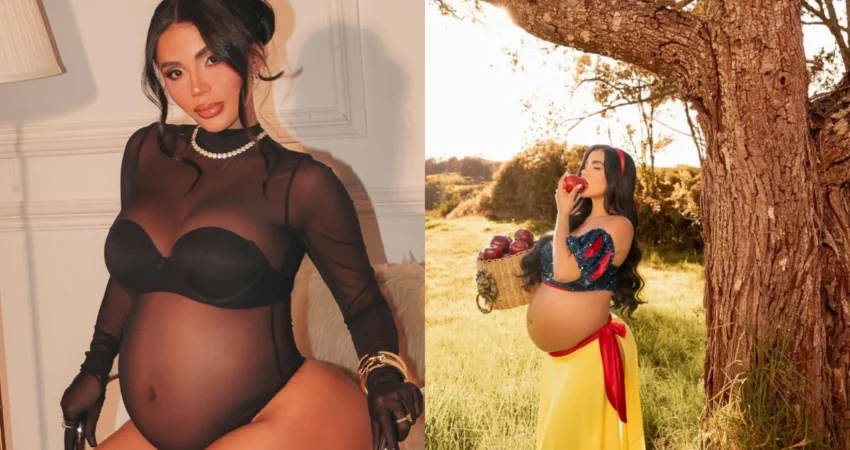
Karina García, a prominent Colombian content creator, has definitively addressed circulating rumors and purported images claiming to depict the birth of her son, Baby K. The influencer, known for her engaging online presence and candid interactions with her followers, took to social media to humorously debunk these claims, stating unequivocally that the images are fabricated and that her child has not yet been born. The incident highlights the intense public interest surrounding García’s pregnancy and the challenges of managing information and misinformation in the digital age.
The confusion began when several social media users shared images, asserting they were from the delivery of Baby K, the child García is expecting with popular singer Kris R. These alleged "leaks" quickly gained traction, creating a buzz among her extensive fanbase, who have been eagerly anticipating the arrival of the couple’s first child for weeks. The intensity of this anticipation, coupled with a previous post by García that some interpreted as a signal of imminent labor, fueled the speculative wildfire.
García, however, responded with her characteristic wit and directness. In a series of Instagram Stories, she directly confronted the false reports, employing a lighthearted yet firm tone. "Do you really think I would let myself be seen like that during my delivery? NEVER," she declared, drawing a clear distinction between her personal life and her public persona. She further elaborated, referencing her participation in the reality television show "La Casa de los Famosos" (LCDLF), where cameras documented her every move, even in less-than-ideal moments. "That only happened in LCDLF, and that was because it was unavoidable, hahaha," she quipped, emphasizing that such unvarnished exposure is not something she intends to permit during the intimate and significant event of childbirth. This comparison effectively underscored the absurdity of the circulating images, positioning them as a misinterpretation or deliberate fabrication rather than a genuine glimpse into her private moment.
The "Macrobebé" Dilemma: Natural Birth or Cesarean Section?
Beyond debunking the false imagery, García also provided a crucial update on her pregnancy, shedding light on the current medical considerations surrounding Baby K’s arrival. She revealed that her son has finally moved into the optimal position for birth, a significant milestone in the final stages of pregnancy. However, this development is accompanied by a considerable medical question mark: the mode of delivery.
García explained that Baby K is being classified as a "macrobebé," a term used to describe a significantly larger-than-average fetus. This size presents a potential complication for a natural birth. "There’s a small problem," she shared with her followers. "We don’t know if he can be born naturally because he is very big. As I told you before, he is a MACROBEBÉ, I’m not kidding. The doctor still doesn’t know whether to perform a cesarean section." This announcement introduces an element of uncertainty, as the medical team evaluates the safest and most appropriate delivery method for both mother and child. The decision will likely hinge on a thorough assessment of fetal size, maternal pelvic structure, and other relevant obstetric factors.
This update comes shortly after García shared a poignant message expressing her mixed emotions about the impending end of her pregnancy. In a previous post, she spoke of a sense of nostalgia for her pregnant belly, even as she eagerly anticipates holding her child. "I’m about to give birth and, although it sounds contradictory, today I feel nostalgic saying goodbye to my belly. The moment to let you go to embrace the love of my life is almost here," she wrote, a sentiment that resonated deeply with her audience and, in retrospect, likely contributed to the premature labor rumors.
A Timeline of Anticipation and Public Fascination
The journey towards Baby K’s arrival has been a closely watched event by a substantial online community. The public announcement of Karina García and Kris R’s pregnancy in June marked the beginning of a sustained period of intense interest. This initial reveal was followed by a gender reveal celebration, which surprised many and confirmed that the couple would be welcoming a son.
Since then, the couple has been proactive in sharing updates, albeit carefully curated, about García’s pregnancy. Their journey has been a consistent source of engagement for their combined millions of followers across various social media platforms. Every post, every shared moment, has been dissected and discussed, underscoring the deep connection fans feel with the couple.
The pregnancy has also served to further solidify their public image as a devoted couple. Despite occasional unsubstantiated rumors of relationship troubles, recent events have demonstrably countered such speculation. A notable instance occurred during Kris R’s concert at the Movistar Arena in Bogotá. In a highly publicized and emotionally charged moment, the singer knelt on stage and kissed García’s baby bump, a gesture that was widely interpreted as a public affirmation of their love and commitment, effectively quashing any lingering doubts about their relationship status.
Broader Implications: Influencer Culture and Digital Misinformation
The incident surrounding the alleged Baby K birth photos offers a microcosm of broader trends in influencer culture and the pervasive challenge of digital misinformation. Influencers like Karina García cultivate a unique relationship with their followers, characterized by a perceived intimacy and authenticity. This often leads to an elevated level of public curiosity and investment in their personal lives, including significant milestones like pregnancy and childbirth.
However, this intense interest also creates fertile ground for the rapid spread of unverified information. The ease with which images and narratives can be disseminated online means that false or misleading content can reach a vast audience before it can be effectively corrected. For public figures, managing this influx of information requires a delicate balance between maintaining transparency and protecting their privacy. García’s response, characterized by humor and directness, appears to be a strategic approach to reclaiming the narrative and educating her audience about the nature of online content.
The case also raises questions about the ethical responsibilities of social media platforms in combating the spread of misinformation, particularly concerning sensitive personal events. While platforms have implemented measures to flag and remove false content, the sheer volume of daily uploads makes comprehensive oversight a significant challenge.
The Future: Patience and Authenticity
As Baby K continues to grow within his mother’s womb, the anticipation for his arrival remains palpable. Karina García has assured her followers that she will be the one to announce the birth when the time is right. This commitment to personal control over the announcement underscores her desire to experience and share this momentous occasion on her own terms.
In the interim, her fans are urged to exercise discernment and patience, understanding that the online world can often be a landscape of manufactured realities. The focus remains on the health and well-being of Karina, Kris R, and their unborn son. The story of Baby K’s imminent arrival, marked by both genuine excitement and the pervasive challenge of online misinformation, continues to unfold, captivating the attention of a devoted online community. The couple’s journey, from the initial announcement of their pregnancy to the current considerations for delivery, serves as a testament to the powerful connection they share with their audience, a connection that is now being tested and refined in the digital age.

0 Comments