
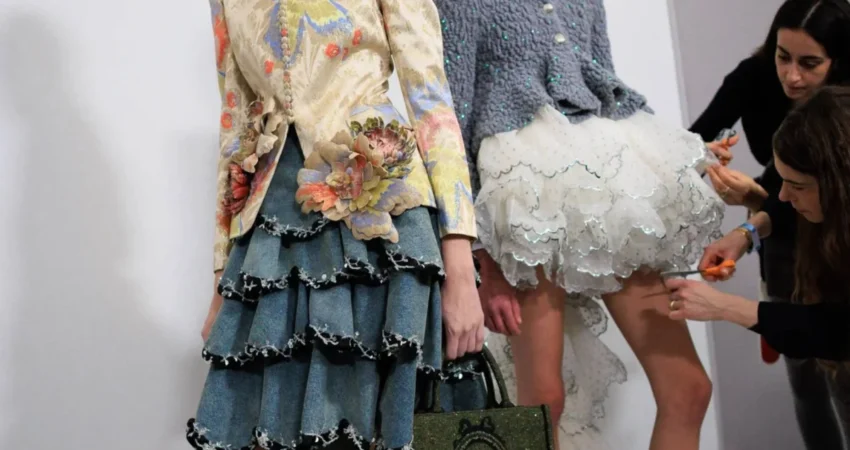
The global fashion landscape for the Autumn-Winter 2026 season has identified its most definitive accessory, as the T-Bar shoe ascends to a position of unrivaled prominence across international runways. This classic silhouette, characterized by a vertical strap that joins a horizontal ankle strap to form a distinct "T" shape, has transitioned from its historical roots in the early 20th century to become the focal point of contemporary luxury collections. As creative directors seek to balance heritage with modern innovation, the T-Bar shoe has emerged as the primary vehicle for delivering a sense of grounded elegance, marking a significant departure from the experimental and often polarized footwear trends of the previous decade.
The resurgence of the T-Bar—also known as the T-strap—represents a broader shift within the industry. Following the "ugly shoe" movement that began around 2019, which prioritized bulky silhouettes and subverting traditional beauty standards, the 2026 collections signal a return to refined craftsmanship. Designers are no longer relying on aesthetic shock value; instead, they are focusing on the longevity of classic forms, reimagining them with sophisticated materials and avant-garde styling to ensure they remain unforgettable in a crowded marketplace.

Historical Foundations: From the Roaring Twenties to the Modern Runway
To understand the impact of the T-Bar shoe in 2026, one must look to its origins. The style first gained widespread popularity in the 1920s, serving as the quintessential footwear for the "Flapper" era. Its design was functional, providing the necessary security for dancing while showcasing the instep. Over the decades, the T-Bar evolved into a staple for children’s school uniforms and mid-century formal wear, eventually finding its way into the archives of high-fashion houses.
The 2026 iteration of the T-Bar shoe strips away the purely juvenile or strictly vintage connotations of the past. Instead, it is being utilized as a tool for "aesthetic pivots." While the silhouette remains recognizable, its application in the current season involves varying heel heights, pointed toes, and unexpected embellishments. This evolution demonstrates a maturation of the trend, where the shoe acts as a bridge between the rebellious spirit of the 1920s and the structured minimalism of the mid-2020s.
A Departure from the Shock Aesthetic of the 2010s
Market analysts note that the dominance of the T-Bar shoe is a direct response to consumer fatigue regarding "maximalist" and "shock-heavy" footwear. Between 2017 and 2022, the industry was flooded with oversized soles, animal-inspired shapes, and neon-drenched sneakers. However, as the 2026 season approaches, the luxury sector is observing a pivot toward "Quiet Luxury" and "Hyper-Refinement."

Designers have shifted their focus from creating a visual shock to perfecting the "closure" of an outfit. The T-Bar shoe provides a clean, architectural finish that complements the layered, textural ensembles favored for the colder months. By choosing a model with deep historical roots, brands are tapping into a sense of stability and timelessness that resonates with a consumer base increasingly concerned with the sustainability and "wearability" of their high-end purchases.
Institutional Analysis: The Vision of Dries Van Noten and Fendi
The Autumn-Winter 2026 runways provided a comprehensive showcase of how the T-Bar can be adapted to suit different brand identities. At Dries Van Noten, the shoe was presented through a vintage lens, intended to symbolize the transition between youth and adulthood. The collection utilized the T-Bar to represent growth and maturity, providing a sober foundation for more experimental garments. For example, the footwear was frequently paired with strapless floral blouses and pixelated-effect skirts. This contrast between the "lively" patterns of the clothing and the "disciplined" structure of the shoes highlighted the Belgian designer’s ability to blend eras seamlessly.
In contrast, Fendi adopted a more frugal, minimalist approach under the mantra of "less is more." The collection was dominated by a palette of deep blacks and charcoals, where the lack of color was compensated by an intense focus on construction and detail. Fendi’s T-Bar shoes featured sharp, pointed toes and were often adorned with delicate feathers or intricate appliqués on the instep. These were styled with perfectly constructed lace dresses and skirts, accompanied by long black socks. This specific styling choice—pairing the T-Bar with hosiery—has become one of the most significant micro-trends of the season, enhancing the autumnal feel of the garments.

The American Perspective: Calvin Klein’s Retro-Architectural Approach
Veronica Leoni, in her third show as the creative director for Calvin Klein, took a decidedly retro route for the Autumn-Winter 2026 season. Drawing inspiration from the brand’s archives in the 1960s and 1970s, Leoni sought a balance between fluid silhouettes and architectural rigidity.
In this collection, the T-Bar shoe served as the grounding element for complex layering. Models appeared in combinations of leggings, transparent blouses, and heavy overcoats or trench coats. The T-Bar provided a dramatic finish to these outfits, proving that the silhouette is versatile enough to work with both the high-concept layering of the 1970s and the sleek, modern aesthetic that defines the current Calvin Klein identity. The use of the T-Bar in this context emphasizes its role as a "wardrobe staple" that can elevate even the most functional outerwear.
Diversification of Form: The T-Bar Sandal at Givenchy and Dior
While the closed-toe pump is the most traditional version of the T-Bar, the 2026 season has seen an expansion into sandal territory. Givenchy utilized the T-Bar sandal to accompany asymmetrical pieces that played with bold color combinations, such as cobalt blue paired with vibrant red. One of the standout looks featured a high-necked dress with an uneven feathered skirt, where the T-Bar sandal provided the necessary visual weight to balance the movement of the feathers. This suggests that the T-Bar is not merely a "formal" shoe but a dynamic accessory capable of supporting avant-garde textures.

Christian Dior also embraced the T-Bar sandal, integrating it into a collection that drew heavily from nature and themes of freedom. Under the direction of Maria Grazia Chiuri, the brand presented T-Bar sandals with square toes, a detail that adds a modern, slightly rebellious edge to the classic strap. These were rendered in a variety of metallic and jewel tones, including gold, cobalt blue, and soft pink. Paired with voluminous short skirts and peplum blazers, the Dior T-Bar sandals were designed to convey a sense of liberation, proving that the silhouette can be both structured and airy.
Market Implications and Consumer Sentiment for 2026
The widespread adoption of the T-Bar shoe is expected to have significant implications for the global footwear market, which is projected to see a renewed interest in "investment pieces." Data from luxury retail platforms suggests that consumers are increasingly prioritizing shoes that offer versatility across different social settings. The T-Bar, with its ability to transition from professional environments to evening events, fits this demand perfectly.
Furthermore, the "sock and shoe" combination seen at Fendi and Dries Van Noten provides a retail opportunity for hosiery brands. The styling of T-Bars with knee-high socks or textured tights allows consumers to extend the wearability of their footwear into the deeper winter months, a practical consideration that is influencing purchasing decisions. Analysts predict that the T-Bar will not only dominate the luxury sector but will also see a rapid "trickle-down" effect into contemporary and mass-market brands by mid-2026.

Styling and Accessory Integration: The Role of Hosiery
One of the most distinct features of the Autumn-Winter 2026 season is the deliberate integration of hosiery with T-Bar shoes. This is not merely a functional choice for warmth but a strategic aesthetic decision. By pairing the shoes with long socks or tights, designers are able to manipulate the proportions of the leg, creating a look that is both academic and edgy.
At Fendi, the use of monochromatic black socks and shoes created a streamlined, elongated silhouette that complemented the collection’s focus on lace and transparency. At Dries Van Noten, the hosiery often acted as a neutral buffer between the colorful prints of the clothing and the dark leather of the shoes. This technique allows the T-Bar to remain the focal point of the lower body while ensuring the overall look remains cohesive and seasonally appropriate.
Conclusion: The Longevity of the T-Bar Trend
As the Autumn-Winter 2026 season unfolds, the T-Bar shoe stands as a testament to the enduring power of classic design. By moving away from the ephemeral "ugly shoe" trends of the past, the fashion industry has rediscovered the value of elegance, craftsmanship, and historical resonance. Whether presented as a vintage-inspired pump at Dries Van Noten, a minimalist statement at Fendi, or a colorful sandal at Dior, the T-Bar has proven its versatility and its ability to define the spirit of the times.

For the consumer, the message is clear: the most important investment for the upcoming season is a shoe that looks back to the past while stepping firmly into the future. The T-Bar is no longer just a relic of the 1920s; it is the definitive footwear of 2026, offering a sophisticated close to the modern wardrobe and ensuring that the final touch of any outfit is as memorable as the first.

0 Comments