
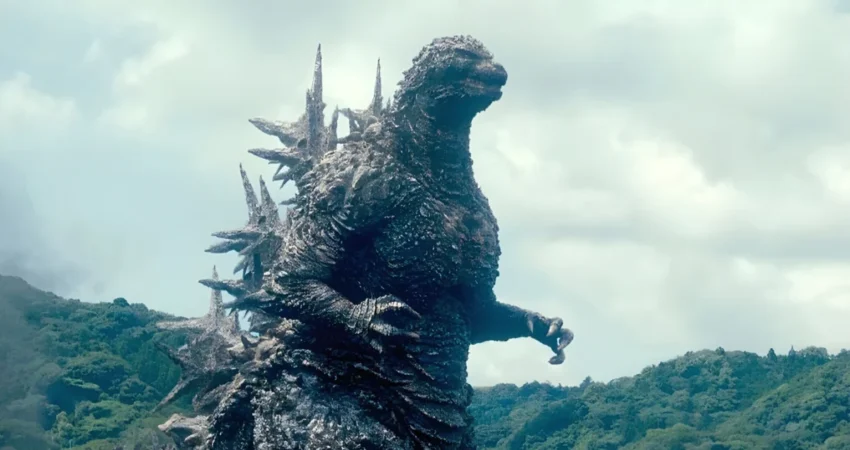
The cinematic world recently marked the 72nd anniversary of the inception of Godzilla, the radioactive behemoth that first emerged from the depths of the Pacific in 1954. This milestone arrives at a time when the franchise is experiencing a profound creative and commercial renaissance, spearheaded by the monumental success of Godzilla Minus One. Produced by Toho Studios and directed by Takashi Yamazaki, the film has not only garnered near-perfect critical ratings but has also served as a stark masterclass in filmmaking for the global industry, particularly Hollywood. As the narrative continues with the theatrical release of the sequel, Godzilla Minus Zero, in territories such as Mexico, the original masterpiece remains a focal point of discussion following its highly anticipated arrival on the Netflix streaming platform.
The Genesis of a Cultural Icon: Seven Decades of Terror and Metaphor
The legacy of Godzilla began on November 3, 1954, with the release of Ishirō Honda’s seminal film. At its core, the original Godzilla was never merely a "monster movie"; it was a somber, black-and-white allegory for the nuclear trauma suffered by Japan at the end of World War II. The creature represented the uncontrollable and devastating power of the atomic bomb, a physical manifestation of national grief and environmental anxiety. Over the subsequent 72 years, the character has undergone numerous transformations, appearing in over 30 Japanese films and several American iterations produced by TriStar and Legendary Pictures.
While the American "MonsterVerse" has leaned heavily into the "Titan" mythology—portraying Godzilla as a heroic protector or a neutral force of nature within a broader shared universe—Toho’s recent output has returned to the character’s darker, more metaphorical roots. Godzilla Minus One, released in 2023, represents the pinnacle of this return to form. By stripping away the bloated spectacle of modern blockbusters and focusing on the human cost of catastrophe, the film has redefined what a kaiju narrative can achieve in the 21st century.

Narrative Depth: The "Minus" in Post-War Japan
The title Godzilla Minus One refers to the state of Japan immediately following its surrender in 1946. The country was already at "zero," devastated by the firebombing of Tokyo and the nuclear strikes on Hiroshima and Nagasaki. The emergence of Godzilla at this specific juncture pushes the nation from zero into the "minus." The film’s narrative is anchored by Kōichi Shikishima, a failed kamikaze pilot struggling with survivor’s guilt and post-traumatic stress disorder.
Unlike many contemporary monster films where human characters serve as mere exposition delivery systems, Yamazaki’s script treats the human drama with the gravity of a prestige historical piece. The struggle of the citizenry to rebuild their lives in a vacuum of government leadership provides a poignant backdrop to the monster’s rampages. In this iteration, Godzilla is an unrelenting force of pure chaos, devoid of empathy or complex motivation, which serves to heighten the desperation of the human protagonists. This focus on social and political subtexts—specifically the failure of bureaucracy and the resilience of the common people—has been cited by critics as the primary reason for the film’s resonance.
Technical Innovation and Fiscal Discipline
One of the most discussed aspects of Godzilla Minus One is its production efficiency. In an era where Hollywood superhero films routinely exceed budgets of $200 million, Yamazaki—who also served as the film’s visual effects supervisor—delivered a visual masterpiece for an estimated $15 million. This achievement culminated in the film winning the Academy Award for Best Visual Effects, marking the first time in the franchise’s 70-year history that it received Oscar recognition.
The film utilized a hybrid approach, blending high-end CGI with practical sensibilities. The design of Godzilla itself was a nod to the classic "man-in-a-suit" aesthetic, characterized by a heavy, grounded gait and jagged dorsal fins, yet rendered with a level of detail that allowed for terrifyingly close-up shots of its destruction. The "Atomic Breath" sequence, in particular, was lauded for its visceral impact, depicting the vacuum and subsequent shockwave of a nuclear detonation with haunting accuracy. The financial success of the film—grossing over $113 million worldwide—demonstrates that narrative quality and technical ingenuity can outweigh sheer financial expenditure.

Comparative Analysis: Toho vs. Hollywood
The success of the Japanese production has sparked a broader debate regarding the direction of the "MonsterVerse." While films like Godzilla x Kong: The New Empire have found success through high-octane action and colorful spectacle, they often lack the emotional weight found in Toho’s work. Godzilla Minus One proved that audiences have a significant appetite for stakes-driven storytelling where the human characters are as compelling as the titular creature.
Industry analysts have noted that Godzilla Minus One achieved a rare feat: a 99% critic score and a 98% audience score on Rotten Tomatoes. This level of consensus is nearly unprecedented for the genre. Even legendary filmmaker Steven Spielberg reportedly viewed the film three times, praising its craftsmanship and emotional depth. This endorsement from the creator of Jaws and Jurassic Park underscores the film’s status as a landmark of creature-based cinema.
The Evolution of the Saga: Godzilla Minus Zero and the IMAX Experience
The momentum generated by Minus One has transitioned directly into the release of the sequel, Godzilla Minus Zero. Currently screening in Mexican theaters, this new chapter is designed specifically for the IMAX format, emphasizing the sheer scale of the conflict. The sequel is reported to be a direct continuation of the post-war narrative, further exploring the consequences of the initial attack and the world’s fragile recovery.
A significant draw for the new installment is the introduction of King Ghidorah, Godzilla’s most iconic rival. The three-headed dragon has historically represented an extraterrestrial or ancient threat that forces a shift in the global power dynamic. In the context of the "Minus" universe, the arrival of Ghidorah suggests an escalation from national tragedy to a potentially global existential threat. The decision to film specifically for IMAX indicates Toho’s intention to compete on the largest possible stage, offering a visual experience that rivals the most expensive Western productions.

Chronology of Modern Godzilla Milestones
To understand the current state of the franchise, one must look at the timeline of the last decade:
- 2014: The American "MonsterVerse" begins with Gareth Edwards’ Godzilla, reintroducing the character to global audiences with a grounded, realistic tone.
- 2016: Shin Godzilla is released in Japan. Directed by Hideaki Anno, it reimagines the creature as an ever-evolving biological nightmare and serves as a satire of Japanese bureaucracy following the Fukushima disaster.
- 2021: Godzilla vs. Kong brings the American franchise to a climax, focusing on massive scale and crossover appeal.
- 2023: Godzilla Minus One premieres, winning the hearts of critics and eventually an Academy Award.
- 2024: The franchise celebrates its 72nd anniversary with the streaming debut of Minus One on Netflix and the theatrical launch of Minus Zero.
Impact on the Streaming Landscape and Global Accessibility
The arrival of Godzilla Minus One on Netflix has democratized access to the film, allowing it to reach territories where its theatrical run may have been limited. Streaming data indicates that the film has consistently ranked in the top ten globally since its debut, proving that subtitles are no longer a barrier for high-quality genre cinema. This global reach has solidified Godzilla’s status not just as a Japanese icon, but as a pillar of international pop culture.
For viewers in Mexico and Latin America, the synergy between the Netflix release and the theatrical arrival of Minus Zero has created a unique cultural moment. It allows fans to revisit the foundational trauma of the first film before experiencing the expanded spectacle of the sequel in the highest possible fidelity.
Conclusion: The Future of the King of the Monsters
As Godzilla enters its eighth decade, the franchise appears more vital than ever. The success of the "Minus" series suggests a sustainable path forward for Toho: focusing on historical context, human-centric narratives, and technical precision. By maintaining a clear distinction between the "fun" spectacle of Hollywood versions and the "serious" drama of the Japanese originals, the brand is able to cater to multiple demographics simultaneously.

Godzilla Minus One is more than just a successful entry in a long-running series; it is a reminder of the power of cinema to reflect our deepest fears and our most resilient hopes. Whether through the lens of a 1940s survivor or a modern-day IMAX audience, the King of the Monsters continues to command respect, proving that even at 72 years old, his roar is as loud and relevant as ever. The lessons learned from this production—fiscal responsibility, narrative integrity, and a respect for the source material—will likely influence the industry for years to come.

0 Comments