
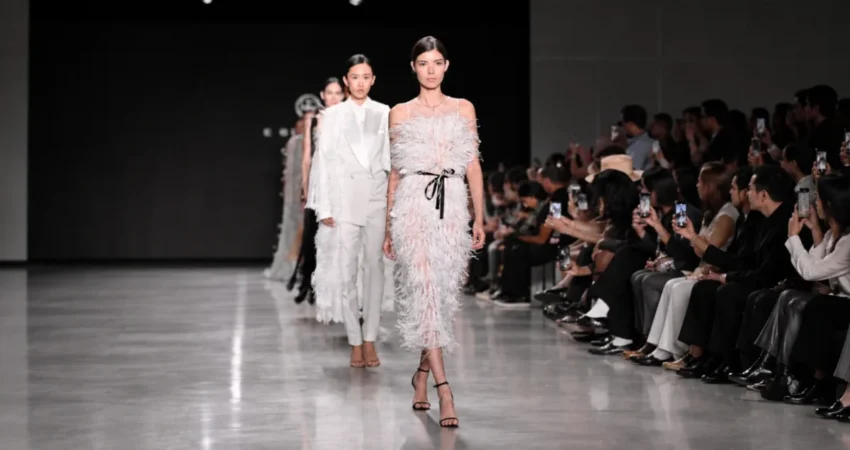
The global fashion landscape is currently witnessing a transformative shift as the Spring-Summer 2027 (SS27) season approaches, driven by the innovative efforts of the Global Fashion Collective (GFC). This platform, which has become a cornerstone for international creative exchange, continues to facilitate the convergence of emerging and established designers from diverse geographical backgrounds. By providing a bridge to the world’s most prestigious fashion capitals, including New York, Tokyo, London, Milan, and Paris, GFC is actively redefining the parameters of contemporary design and market accessibility for the next generation of industry leaders.
The Strategic Mission of the Global Fashion Collective
Since its inception in 2017, the Global Fashion Collective has operated as an expansion of Vancouver Fashion Week (VFW), a long-standing institution founded by Jamal Abdourahman. The primary objective of GFC is to identify designers with high growth potential and provide them with the logistical and promotional infrastructure necessary to showcase their work on a global stage. The SS27 season marks a significant milestone in this mission, as the collective emphasizes a more integrated approach to fashion that blends traditional craftsmanship with avant-garde technological applications.
The relationship between Vancouver Fashion Week and GFC serves as a critical pipeline for talent. While VFW acts as an incubator for local and international designers within the North American market, GFC serves as the vehicle for international exportation. This dual-platform strategy ensures that designers are not only discovered but are also mentored and placed in environments where they can attract international buyers, media attention, and strategic partnerships.

A Chronology of Global Expansion: 2017–2027
The trajectory of the Global Fashion Collective has been characterized by rapid expansion and a commitment to decentralizing the fashion industry. Understanding the timeline of GFC is essential to grasping its impact on the SS27 season:
- 2017: The Inception. GFC is launched to take the most promising designers from Vancouver Fashion Week to international runways, starting with showcases in New York and Tokyo.
- 2018–2019: European Penetration. The collective expands its footprint to include London, Milan, and Paris, completing the circuit of the "Big Four" fashion capitals. This period saw a 40% increase in the number of participating designers.
- 2020–2022: Resilience and Digital Adaptation. During the global pandemic, GFC pivoted to digital presentations and hybrid formats, ensuring that emerging designers maintained visibility despite travel restrictions and supply chain disruptions.
- 2023–2025: Focus on Sustainability and Inclusivity. The collective began prioritizing designers who utilized eco-friendly materials and those who represented underrepresented cultural identities, particularly from Latin America and Southeast Asia.
- 2026–2027: The Technological Frontier. For the SS27 season, the focus has shifted toward "Phygital" fashion—the intersection of physical garments and digital assets—as well as the integration of advanced material science.
Creative Pillars of the SS27 Collections
The SS27 season is defined by three primary creative pillars: experimentation with bio-materials, the exploration of cultural identity through modern silhouettes, and the marriage of ancestral artisanal techniques with 21st-century technology.
Material Science and Sustainability
The upcoming season showcases a marked departure from traditional textiles. Designers within the GFC roster are increasingly utilizing mycelium-based leathers, recycled ocean plastics, and lab-grown fibers. Data from industry analysts suggests that the sustainable apparel market is expected to grow at a compound annual growth rate (CAGR) of 9.1% through 2030, and GFC’s SS27 presentations reflect this trend. These materials are not merely used for their ecological benefits but are being manipulated to create textures and forms previously unattainable with natural or synthetic fabrics.
The Mexican Contingent and Cultural Identity
A highlight of the SS27 circuit is the strong presence of Mexican designers. These creators are bringing a unique aesthetic that synthesizes Mexico’s rich textile history—such as intricate embroidery and traditional weaving—with contemporary streetwear and high-fashion structures. This presence is indicative of a broader industry trend where designers from the "Global South" are no longer viewed as niche or "ethnic," but as central figures in the global fashion discourse. Their work explores themes of migration, heritage, and the modernization of tradition, providing a profound narrative depth to the runways of Paris and Milan.

Technology and Craftsmanship
The integration of 3D printing, laser cutting, and AI-assisted pattern making is prevalent across the SS27 collections. However, rather than replacing human skill, these technologies are being used to enhance traditional craftsmanship. For instance, several designers are using AI to optimize fabric usage, thereby reducing waste, while employing traditional hand-finishing techniques to maintain the artisanal quality of the garments.
Economic and Industry Implications
The role of platforms like GFC extends beyond aesthetics; they are vital economic engines for the fashion industry. The global apparel market, valued at approximately $1.7 trillion, is undergoing a period of fragmentation where consumers are increasingly seeking authenticity and uniqueness over mass-produced luxury.
Market Access for Emerging Talent
For an emerging designer, the cost of a solo show in a city like Paris or New York can exceed $50,000 to $100,000. GFC mitigates these financial barriers by providing a collective format that shares costs and maximizes media exposure. This democratization of the runway allows for a more meritocratic system where talent, rather than capital, dictates success.
Regional Economic Impact
The success of GFC designers often translates back to their home economies. By securing international orders, these designers are able to scale their manufacturing operations locally, often supporting small-scale artisanal communities. In Mexico, for example, the international exposure gained through GFC has led to a revitalized interest in domestic luxury production, contributing to the growth of the creative economy.

Official Perspectives and Industry Reaction
While official statements from the GFC organizing committee emphasize "creative freedom" and "global connectivity," industry analysts note that the collective’s influence is reshaping how traditional fashion houses perceive competition.
Inferred reactions from retail buyers indicate a growing interest in the GFC "discovery" model. Buyers from major department stores in London and Tokyo have noted that the collective provides a curated selection of "high-risk, high-reward" talent that allows retailers to differentiate their offerings in a crowded market.
Organizers have consistently stated that the goal for SS27 is to foster an environment where "the local becomes global." By stripping away the geographical limitations of the past, GFC is allowing designers to maintain their cultural specificity while speaking a universal language of design.
Analysis: The Future of Fashion in 2027
The SS27 season represents a pivot point for the industry. As we look toward 2027, several key trends identified in the GFC presentations are likely to become industry standards:

- Decentralized Fashion Hubs: While the "Big Four" remain important, the influence of cities like Tokyo and Vancouver is rising, creating a more polycentric fashion world.
- Hyper-Personalization: Through the use of digital tools showcased by GFC designers, the industry is moving toward a model where garments can be tailored to the individual’s digital and physical specifications.
- Ethical Transparency: The emphasis on identity and tradition in the SS27 collections is forcing a conversation about the ethical sourcing of cultural knowledge, moving the industry toward more equitable partnerships with artisanal communities.
The Global Fashion Collective’s SS27 showcases are more than just a series of runway events; they are a manifesto for a more inclusive, technologically advanced, and culturally aware industry. By connecting the disparate threads of global design, GFC is ensuring that the fashion of 2027 is as diverse as the world it seeks to clothe.
Strategic Outlook and Conclusion
As the fashion industry continues to navigate the complexities of a post-globalization world, the Global Fashion Collective stands as a model for strategic collaboration. The upcoming SS27 season will serve as a litmus test for the commercial viability of high-concept, sustainable, and culturally specific design on the world stage.
With a proven track record of elevating designers from obscurity to international recognition, GFC’s role as a gatekeeper and accelerator is undisputed. The data suggests that the designers participating in the SS27 circuit will not only define the aesthetic trends of the coming year but will also lead the charge in operationalizing sustainability and technological integration. For the industry at large, the message is clear: the future of fashion is no longer confined to a single capital or a single perspective, but is a collective, global endeavor.

0 Comments