
The recent evolution of the Spanish music market and the programming decisions for the prestigious LOS40 Music Awards Santander 2026 offer a compelling narrative of cultural integration and artistic transformation. What began as a routine lineup discussion for one of Spain’s most influential music events revealed a profound shift: the question "Which Spanish artist is going to perform?" was initially overlooked, a detail that surprised Vicent Argudo, director of music at Prisa Media, the parent company of the LOS40 group of radio stations. Instead, the initial lineup prominently featured international Latin American talent, including Puerto Rican artist Eladio Carrión, Argentina’s Emilia, and Colombia’s Carlos Vives, signaling a new era where Latin music has become an intrinsic, rather than an additive, component of the Spanish music landscape.
"That’s what I find most curious and exciting about what’s happening this year," Argudo shared with Billboard Español. "In earlier times, building the lineup would probably have started with the national artists. This time, Spaniards ended up being the minority without the team perceiving it as something exceptional – a sign of how naturally Latin American artists have integrated into the Spanish music market." This observation underscores a seismic change in audience preferences and artistic influence, a departure from a more insular past.
A Decade of Transformation: From Localized Programming to Global Appeal
Fifteen years ago, the musical programming of LOS40 stations across various territories was considerably more localized. While a select few U.S. artists and Latin stars with established global crossover appeal, such as Colombian superstar Shakira, managed to penetrate these markets, the separation between national and international music scenes was far more distinct. Today, this demarcation has significantly blurred. Argudo elaborates on this phenomenon: "I think that now, for example, a Spanish person feels that Camilo or Manuel Turizo [also from Colombia] are almost Spanish. In fact, for many of these artists, their first market is Spain, not their own country." This sentiment highlights the deep emotional and cultural connection Spanish audiences now feel with artists from across Latin America, fostering a sense of shared musical identity.
The growing prominence of Latin music has been meticulously tracked and reflected within the structure of the LOS40 Music Awards itself. In 2018, the awards ceremony did not yet feature dedicated categories for Latin music, although a modest three awards related to Latin music had been introduced. The significant expansion began in 2020, when the awards’ structure was reorganized into three principal segments: Spain, International, and Global Latin. By the 2026 edition, the Global Latin block had burgeoned to encompass seven specific awards, including accolades for Best Latin Artist or Group, Best Latin Song, and Best Latin Album, a testament to the genre’s overwhelming popularity and influence.
This strategic shift in award categories mirrored a broader transformation in radio programming. In April 2020, Ke Buena, another station within the PRISA Radio network, underwent a significant rebranding and was relaunched as LOS40 Urban. This new format was specifically designed to cater to the burgeoning demand for genres such as reggaeton, Latin trap, bachata, dembow, and urban and Latin pop, further solidifying the station’s commitment to Latin music’s diverse offerings.
Latin American Stars Headline the Global Stage
The increasing influence of Latin American artists, particularly within the urban music sphere, has been strikingly evident in the headline acts and major award recipients at the LOS40 Music Awards. Nicky Jam, an American artist with Puerto Rican and Dominican heritage, a pivotal figure in the reggaeton movement, headlined the event in 2019 and once again in the 2025 edition. Puerto Rican artist Ozuna emerged as one of the standout performers in both the 2020 and 2023 ceremonies, receiving a prestigious Golden Award for his contributions. In the 2023 edition, Colombian sensation Feid arrived with an impressive six nominations, delivered a memorable performance alongside Puerto Rican artist Young Miko, and concluded the night as one of the evening’s most decorated artists, securing three awards, a tie with fellow Colombian Manuel Turizo.
"In the past, you almost had to find a spot for some of these artists to see what would happen," Argudo recalled, reflecting on the earlier days of integrating Latin artists. "Then they started coming as major stars, as headliners, because you already knew they were the artists of the moment." The palpable difference between the past necessity to "find a spot" and the current status of these artists as prominent headliners encapsulates the profound evolution Argudo has witnessed and orchestrated. However, this transformative trend is not confined solely to urban music or reggaeton; it has permeated a wider spectrum of Latin genres.
Bachata and Merengue’s Resurgence on Spanish Airwaves
Genres that historically held a more marginal presence in the Spanish music market are now occupying prominent positions, reaching levels that were once unimaginable. "We never would’ve thought that a bachata could become No. 1 on LOS40, or a merengue," Argudo admitted, expressing his astonishment at the genre’s widespread acceptance.
This sentiment is supported by concrete chart data. In 2022, Manuel Turizo’s bachata track "La Bachata" enjoyed a three-week reign at the top of the LOS40 charts. Just a year later, his collaboration with Marshmello, "El Merengue," also ascended to the number one position. The 2026 edition of the awards saw bachata once again dominate the charts, with Romeo Santos and Prince Royce’s collaboration "Dardos" spending three non-consecutive weeks at number one. This success culminated in "Dardos" winning the award for Best Latin Song at the LOS40 Music Awards, while their collaborative album, Better Late Than Never, was honored as Best Latin Album.
Official data from PROMUSICAE (Productores de Música de España) corroborates this pervasive influence on general music consumption within Spain. In 2024, Latin American artists accounted for a significant 57% of the annual Top 100 songs. The following year, in 2025, these artists secured 56 positions within the Top 100 and held the coveted No. 1 spot for an impressive 33 weeks. Furthermore, of the 100 most-consumed songs in 2025, a remarkable 90 were in Spanish, with a notable 34 of those originating from Spanish artists, indicating that while Spanish-language music is dominant, much of it is now being produced and performed by artists from Latin America.
The 2026 LOS40 Music Awards: A Mirror to a New Era
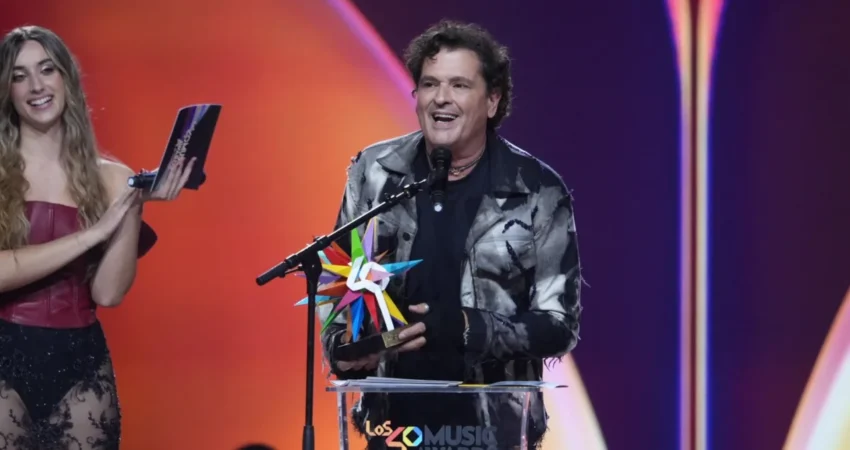
The 2026 edition of the LOS40 Music Awards Santander, held on November 20th in Barcelona, served as a powerful reflection of this evolving musical landscape. The nominees and winners within the Global Latin category featured an array of prominent artists including Romeo Santos, Prince Royce, Eladio Carrión, Ryan Castro, Manuel Turizo, Camilo, Kidd Voodoo, and Shakira. The ceremony also paid tribute to legends, with Romeo Santos and Carlos Vives being honored with Golden Awards, acknowledging their enduring impact and contributions to Latin music.
Argudo attributes the rise of genres that were previously less common on Spanish radio to a broader societal transformation within the country. He points to the increasing coexistence and integration of diverse nationalities, describing Spain as an increasingly "multi-accented" nation. "Genres as challenging as bachata have worked. And genres like merengue or salsa are now enjoying a new youth in Spain," he stated, emphasizing the cultural embrace of these rhythms. This social phenomenon has undoubtedly created fertile ground for musical cross-pollination and acceptance.
Bridging Continents: Opportunities for Spanish Artists in Latin America
The deepening connection between the Spanish and Latin American music markets is also fostering new avenues of opportunity for Spanish artists seeking to expand their reach into Latin America. Argudo highlights the success of Spanish singer Ana Mena, who began to gain significant traction on LOS40 Argentina before embarking on her inaugural tour there. Similarly, Aitana’s participation in the LOS40 Music Awards has likely amplified her visibility and appeal across the Atlantic, demonstrating a reciprocal flow of artistic influence.
While streaming figures are a crucial consideration in the modern music industry, Argudo maintains that the editorial judgment of LOS40 in Spain remains paramount in music selection. "Many times record labels tell me, ‘It has a million streams, five million streams.’ And I tell them, ‘Perfect, but that’s over there. I’m in a different place’," he explained. "It’s absolutely a human and manual process." This commitment to curated programming, informed by an understanding of the local audience and cultural nuances, ensures that LOS40 continues to serve as a relevant and influential tastemaker within the Spanish market, even as it embraces the global dominance of Latin music.
Looking toward the future, Argudo’s strategic vision involves expanding the LOS40 brand’s presence in the Americas beyond its established radio network. This expansion aims to replicate the successful model implemented in Spain, which includes concerts, awards shows, festivals, and other immersive fan experiences. "It’s true that we have a good position in radio in Mexico, Argentina, Colombia, Chile, and the Dominican Republic," Argudo noted. "But I think we have the opportunity to go further with the experience, because radio is no longer just a radio." This forward-thinking approach signals LOS40’s ambition to evolve into a comprehensive entertainment platform, leveraging its strong brand recognition and deep understanding of the Latin music ecosystem to connect artists and fans across continents. The ongoing narrative of Latin music’s ascendance in Spain, as exemplified by the LOS40 Music Awards, is a testament to the power of cultural exchange and the ever-evolving definition of musical success.

0 Comments