
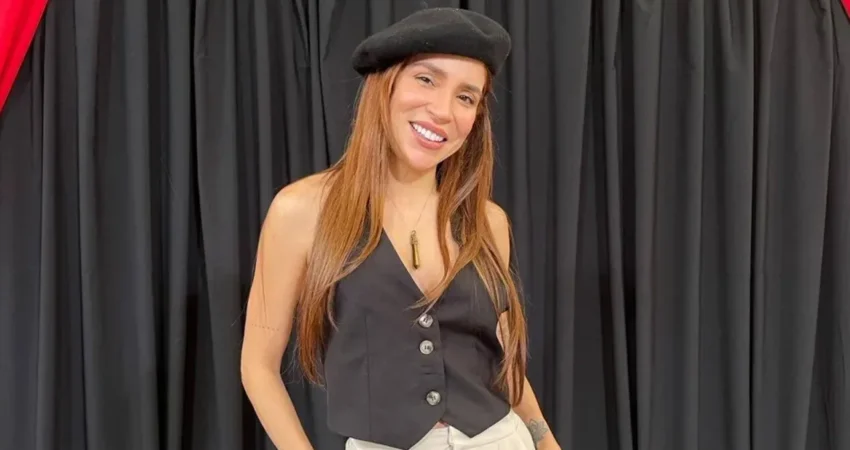
Colombian actress Valentina Lizcano, widely recognized for her compelling performances in popular productions such as "La Reina del Flow," has publicly denounced a distressing incident of harassment she experienced at the hands of a taxi driver in Medellín. The actress detailed the unsettling encounter on her social media platforms, describing how the driver’s inappropriate comments during a journey left her feeling profoundly uncomfortable and fearful. The experience was so unnerving that Lizcano stated she felt a pervasive sense of unease throughout the entire ride until she reached her destination.
The incident reportedly occurred as Lizcano was returning from the José María Córdova International Airport in Rionegro. Due to a tunnel closure, the taxi driver opted for the Vía Las Palmas, a route known for its stretches that are less frequented, particularly after dark. It was during this segment of the journey that the actress recounted the driver initiating a series of remarks that made her feel increasingly uneasy.
Specific comments that Lizcano recalled included the driver remarking, "You’re so pretty and traveling alone." Furthermore, she alleged that the driver made intrusive comments about her personal life and even suggested that her husband should be more vigilant in protecting her. Lizcano expressed her bewilderment and indignation at such remarks, questioning the driver’s assumptions and unsolicited observations. "If I don’t trust you, why do you have to start, as they say, flirting?" she reportedly asked, vehemently rejecting the notion that her appearance or attire could in any way justify such intrusive commentary. "You don’t have to tell me if I’m pretty. I don’t need you to tell me that," she stated, emphasizing her discomfort with the unsolicited and objectifying remarks.
The Journey of Fear: A Chronology of Harassment
The unsettling experience began as the taxi navigated the Vía Las Palmas, a road that, while a necessary alternative route, carries a degree of inherent vulnerability due to its reduced visibility and traffic, especially during nighttime hours. Lizcano’s initial unease likely escalated as the driver’s comments shifted from seemingly innocuous observations to more personal and suggestive remarks.
According to Lizcano’s account, the driver’s inappropriate discourse intensified, touching upon her marital status and implying a need for her husband’s oversight. This pattern of escalating commentary is a common characteristic of harassment, where initial boundary-pushing can evolve into more overt expressions of disrespect and control. The actress’s internal reaction, as described, was one of growing apprehension, a feeling that she was not in a safe or comfortable environment.
The critical turning point, as recounted by Lizcano, was the realization that her personal space and safety were being compromised by the driver’s words. Her explicit statement, "That thing constitutes harassment," underscores her clear understanding and condemnation of the driver’s behavior as a form of sexual harassment, which by definition involves unwelcome sexual advances, requests for sexual favors, and other verbal or physical conduct of a sexual nature.
Strategies for Safety Amidst Fear
Faced with a situation that made her feel unsafe, Lizcano employed proactive measures to ensure her well-being. Recognizing the potential risks associated with being alone with a perceived aggressor in a less populated area, she took immediate steps to alert others to her situation. She contacted a trusted individual, identified as Santi, and shared her real-time location with several friends. This act of sharing her location is a common safety strategy employed by individuals, particularly women, when they feel vulnerable during transportation. It creates a digital trail and alerts a support network to their whereabouts, allowing them to monitor the journey and intervene if necessary.
The presence of friends who were aware of her situation and monitoring her progress provided Lizcano with a crucial sense of security. It meant that if anything were to happen, there would be witnesses and a record of her location, potentially deterring further escalation from the driver and ensuring that help could be summoned swiftly. This collective vigilance underscores the importance of community support and the utilization of available technology for personal safety.

A Public Stand Against Harassment
Lizcano’s decision to share her experience publicly was not merely a personal catharsis but a deliberate act of advocacy. She expressed her regret that women are often compelled to feel insecure during routine activities, such as utilizing public transportation. By making her story public, she aimed to shed light on a pervasive issue that affects numerous individuals daily within the city.
The actress also preemptively addressed potential criticisms or questions regarding her actions during the incident, specifically why she did not immediately exit the vehicle or confront the driver directly. She explained that, in her judgment, engaging in a confrontation with the driver on a dark, sparsely populated road would have been more perilous. Her rationale highlights the complex calculations individuals make when assessing their safety in potentially threatening situations, often prioritizing de-escalation and a controlled exit over direct confrontation. "Why shouldn’t I get into a fight with a man who is driving on a dark, little-trafficked road?" she questioned, articulating the inherent risks involved in such a scenario.
Contextualizing the Incident: Broader Patterns of Insecurity
Lizcano’s experience is not an isolated incident but occurs within a broader context of rising concerns about women’s safety in public transportation in Medellín. In September of the previous year, authorities prosecuted a 24-year-old man accused of four counts of theft and sexual assault against women who had used taxi services in the city. This case, along with numerous viral reports of harassment on buses and the Metro system in recent years, paints a disturbing picture of ongoing safety challenges.
Data from the Public Health Surveillance System (Sivigila) for 2024 indicates that 392 cases of sexual harassment were reported in Medellín. However, authorities acknowledge that this figure may be an underestimation, as the normalization of such offenses can lead to underreporting. This statistic, while alarming, likely represents only a fraction of the actual incidents, underscoring the widespread nature of the problem.
The implications of these incidents extend beyond individual discomfort and fear. They contribute to a climate of insecurity that can limit women’s freedom of movement and their ability to engage fully in public life. The constant need for vigilance and the potential for harassment can create significant psychological burdens and restrict opportunities.
Official Responses and Safety Recommendations
In response to these ongoing concerns, authorities consistently emphasize the importance of preventative measures and reporting mechanisms. For individuals who find themselves in precarious situations during transportation services, the recommended actions include:
- Sharing Real-Time Location: Continuously sharing one’s live location with a trusted friend or family member.
- Documenting Vehicle Information: Notating the license plate number and any other identifying details of the vehicle.
- Reporting to Authorities: Contacting the police immediately via the emergency line (123) or reporting to the nearest Auxiliary Police Station (CAI).
- Formal Reporting: If the situation warrants, filing a formal complaint with the Prosecutor’s Office (Fiscalía) to initiate legal proceedings.
These recommendations are designed to empower individuals and provide them with concrete steps to take when their safety is compromised. They also aim to ensure that incidents are properly documented and investigated, contributing to a more robust system for addressing harassment and assault.
Nuance in Denunciation: Avoiding Generalizations
Crucially, Valentina Lizcano was careful to contextualize her denunciation, emphasizing that her intent was not to generalize about all taxi drivers or men. She explicitly stated, "It’s not all taxi drivers, it’s not all taxi drivers from the airport, clearly not, but it happens." This nuanced approach is vital in public discourse surrounding sensitive issues. It acknowledges that while systemic problems exist, attributing blame to entire groups can be counterproductive and inaccurate. Her statement aims to highlight a specific problem without casting a shadow over the vast majority of service providers who operate ethically and professionally.
The broader impact of Lizcano’s public statement lies in its potential to foster greater awareness and encourage more effective interventions. By sharing her personal experience, she has contributed to a vital conversation about safety, consent, and respect in public spaces. Her courage in speaking out serves as a reminder that every individual has the right to feel safe and respected, regardless of their circumstances, and that collective action is essential in combating harassment and promoting a more secure environment for all.

0 Comments