
 Raisa Andriana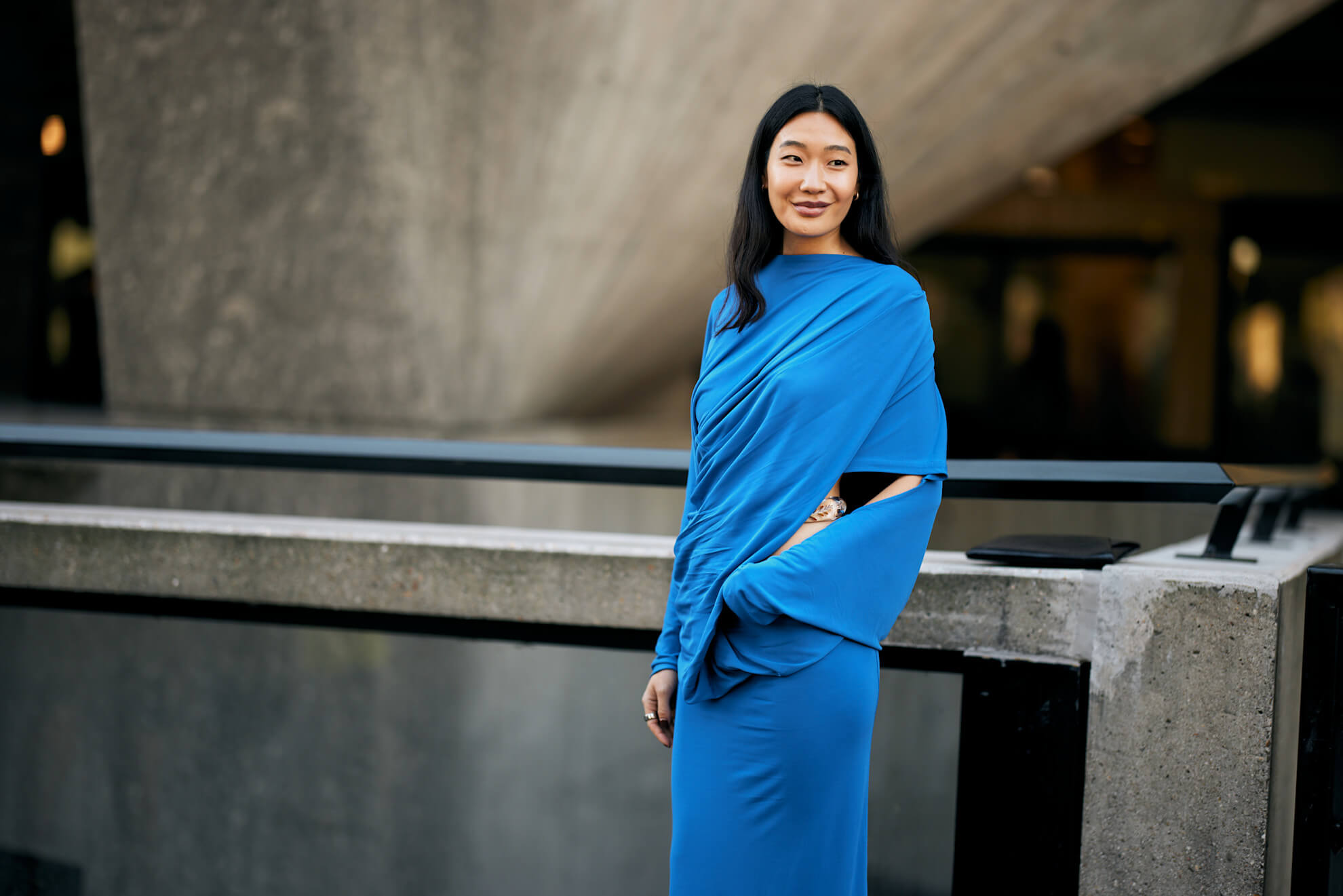
The Evolution of a Trend: From Runway to Reality
The ascent of blue was not an overnight phenomenon but a calculated shift observed during the September 2025 previews for the SS26 collections. Designers across Milan, Paris, and London utilized the color to signal a departure from the "Barbiecore" pinks and "Cherry Reds" that had saturated previous cycles. Instead, the industry has embraced a palette that evokes stability, serenity, and a connection to the natural world.

Ermanno Scervino was among the first to signal this shift, presenting lace tops paired with 1970s-inspired suede two-piece sets in varying azure shades. This approach blended bohemian textures with a sophisticated color story. In contrast, Jennifer Blom utilized the depth of cobalt blue for draped evening gowns, positioning the color as a primary choice for gala wear and formal celebrations.
The romantic sector of the industry, led by houses like Dior, integrated blue through feminine silhouettes featuring oversized bows and delicate embroidery, emphasizing a soft, ethereal aesthetic. Conversely, Celine took a more structured approach, utilizing tonal layering of blues in sharp blazers and pleated trousers. This provided a blueprint for the "masculine-meets-feminine" tailoring that has become a staple of contemporary professional wardrobes.

Chronology of the SS26 Blue Dominance
The trajectory of the blue trend follows a standard but accelerated fashion lifecycle:
- September 2025 (The Genesis): Initial reveals during Spring-Summer 2026 Fashion Weeks. Designers showcase blue as a foundational color in their collections.
- December 2025 (The Red Carpet Phase): Early adopters and celebrities begin wearing "runway-exclusive" blue pieces at film festivals and year-end galas, generating social media buzz.
- January – February 2026 (The Street Style Validation): During the subsequent Fall-Winter 2026 shows, attendees and "it-girls" are photographed in blue SS26 pieces, proving the color’s versatility in transitional weather.
- March 2026 (Market Saturation): High-street retailers like Stradivarius and Lefties release "Cloud Dancer" white and blue-centric collections, making the trend accessible to the general public.
Technical Analysis of the Season’s Key Shades
The SS26 season does not favor a single blue but rather a curated selection of six distinct tones, each serving a specific sartorial purpose.

1. Baby Blue and the Pastel Reset
Baby blue represents the season’s move toward "soft dressing." Often associated with infant wear, this shade has been reclaimed by designers to convey a sense of modern innocence and calm. In the current market, it is primarily seen in structured shirts and lightweight linen suits. The most prominent pairing for this shade is "baby pink," a combination that reinforces the season’s romantic, pastel-heavy aesthetic.
2. Klein Blue and the Return of Maximalism
Named after the French artist Yves Klein, this deep, matte pigment is the season’s answer to those seeking high-impact visibility. Market data suggests that bold pigments like Klein blue perform exceptionally well in the accessory sector, particularly in leather handbags and footwear. To balance its intensity, stylists recommend pairing it with camel or tan. The warmth of the earth-toned camel provides a sophisticated anchor for the electric energy of the blue.

3. Sky Blue: The New Corporate Standard
Sky blue has transitioned from a basic office staple to a fashion-forward necessity. It is the cornerstone of the "Quiet Luxury" movement that continues to influence 2026. When combined with light beige or cream, it creates a neutral, professional look that is both approachable and refined. This shade is expected to be a top performer in the "invitada" (guest) market, appearing in pleated skirts and satin blouses for spring weddings.
4. Turquoise and Mediterranean Bohemia
Reflecting the colors of the Balearic Sea, turquoise is the quintessential summer shade. While it often appears in bohemian, "Ibiza-style" dresses, the SS26 iteration is more avant-garde. The industry has seen a surprising but effective pairing of turquoise with slate grey. This contrast between a vibrant tropical hue and a somber urban neutral creates a sophisticated balance suitable for city environments.

5. Cobalt and the Electric Evening
Cobalt blue serves as the high-fashion alternative to navy. It is deeper than sky blue but more luminous than midnight. This shade is particularly effective in monochromatic "total looks," where different textures—such as silk, wool, and leather—are all rendered in the same cobalt hue. For the SS26 season, it is frequently paired with "Cloud Dancer" white, a specific off-white shade that enhances the blue’s depth without the harsh contrast of pure optical white.
6. Color-Blocking with Celeste
The lightest of the blues, celeste, is being used as a canvas for the "color-block" revival. Moving away from safe neutrals, the SS26 trend encourages pairing celeste with contrasting warm tones like orange, mustard yellow, or deep purple. This approach appeals to a younger demographic looking for "dopamine dressing" options that reflect a sense of optimism.

Supporting Data and Market Implications
The industry’s pivot to blue is backed by both consumer psychology and economic factors. According to color theory, blue is universally perceived as the most "trustworthy" color, a sentiment that resonates during periods of global economic and social transition.
From a retail perspective, blue is a "safe" investment for brands. Unlike more polarizing colors like neon green or fuchsia, blue has a high sell-through rate across all age demographics. Textile manufacturers have reported a 15% increase in the production of indigo and synthetic blue dyes for the 2026 cycle, anticipating the demand for everything from "total denim" looks to high-end silk gowns.

Furthermore, the rise of the "total denim" trend—often referred to as the Canadian Tuxedo—has provided a seamless entry point for blue into the casual market. With the resurgence of Western-wear influences, denim in various washes (from acid-wash celeste to deep raw indigo) allows consumers to participate in the blue trend through durable, everyday pieces.
Official Responses and Industry Sentiment
While major fashion houses rarely issue formal statements on color choices, the consensus among creative directors is clear. Sources close to the Dior design team suggest that the choice of blue for the SS26 collection was intended to evoke a "new dawn," moving away from the aggressive reds of the previous year.

Retail analysts have noted that the "Blue Wave" of 2026 is also a response to the "Quiet Luxury" fatigue. While the silhouette remains minimalist and high-quality, the introduction of varied blues allows for more personality and visual interest than the beige and grey palettes of 2024 and 2025.
Broader Impact and Future Outlook
The dominance of blue in Spring-Summer 2026 is expected to have a lasting impact on the secondary market and sustainable fashion. Because blue is a timeless color, pieces purchased this season are predicted to have a higher resale value and a longer closet life than more "faddy" color trends.

As we approach the official start of spring on March 20, the transition is nearly complete. The "Blue Season" is no longer just a prediction from the runways of Milan and Paris; it is a lived reality on the streets. Whether through a subtle sky-blue accessory or a head-to-toe cobalt ensemble, the color provides a versatile, sophisticated, and calming framework for the fashion landscape of 2026. The integration of this color across all market levels—from haute couture to mass-market retail—ensures that blue will remain the primary protagonist of the sartorial narrative for the foreseeable future.



 Jia Lissa
 Eva Lovia
 Julia Chirkova
 Nila Kartika Wati
 Lana Rhoades