
 Julia Prastini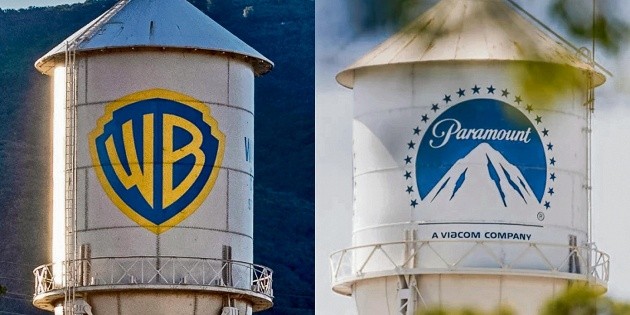
In one of the most significant and transformative operations to reshape the entertainment industry in recent memory, Paramount Skydance Corporation and Warner Bros. Discovery (WBD) have officially signed a definitive merger agreement. This landmark deal, valued at an staggering $110 billion, formalizes the acquisition of Warner Bros. Discovery by the consortium operating as Paramount Skydance Corporation. The news, confirmed yesterday, has sent reverberations across Hollywood and the global audiovisual market, signaling that the ongoing reordering of forces within the media landscape is far from reaching its conclusion.
Details of the Monumental Transaction
The comprehensive understanding reached between the two media giants stipulates that Paramount Skydance Corporation will acquire all outstanding shares of Warner Bros. Discovery at a cash price of $31 per share. This premium represents a significant valuation for WBD, reflecting the strategic importance of its extensive content library, production capabilities, and global distribution networks. The proposed operation has received unanimous approval from the boards of directors of both companies, underscoring a shared vision for the combined entity’s future trajectory. Barring unforeseen complications, the merger is projected to close during the third quarter of 2026. However, prior to its finalization, the transaction must navigate and secure the necessary regulatory authorizations from antitrust bodies worldwide, as well as obtain the crucial endorsement of Warner Bros. Discovery’s shareholders, whose decisive vote is anticipated in early spring of the same year.
To provide a layer of financial security and certainty for investors amidst the inherent complexities of such a large-scale merger, the agreement incorporates a specific compensation mechanism for WBD shareholders in the event of delays. Should the transaction not be completed by September 30, a commission of $0.25 per share will be disbursed for each additional quarter until the definitive closing occurs. This clause is a strategic move designed to mitigate investor apprehension and offer a measure of predictability in an era marked by heightened antitrust scrutiny and extended regulatory review periods for major corporate consolidations within the media sector. Such provisions are becoming increasingly common as regulators worldwide adopt a more cautious approach to mergers that could significantly alter competitive landscapes.
Strategic Vision: Forging a "First-Tier" Global Powerhouse
Beyond the impressive financial figures, the fundamental ambition underpinning this merger is to establish the combined entity as an undisputed "first-tier" player in the global media and entertainment arena. This new conglomerate aims for an integrated presence across all critical facets of the industry, encompassing film and television studios, cutting-edge streaming platforms, and traditional linear television channels. The consolidation will bring together an unparalleled portfolio of strategic assets and intellectual properties.
Prominent among these are the iconic Warner Bros. Studios, a century-old bastion of cinematic excellence responsible for some of Hollywood’s most beloved franchises; the formidable HBO Max streaming platform, renowned for its prestige television and extensive film catalog; and globally recognized cable networks such as CNN, a titan in news broadcasting, alongside a myriad of other valuable properties. This unified structure promises to create a synergy that could redefine content creation, distribution, and consumption on a global scale, leveraging the strengths of each legacy company to build a more resilient and competitive enterprise.
Commitment to Theatrical Distribution: A Nod to Tradition
One of the most sensitive yet significant aspects of the agreement addresses the future of cinematic distribution, a topic that has been at the epicenter of industry debate, particularly since the acceleration of streaming services during the pandemic. The merged company has made an explicit and robust commitment to ensuring that every film produced by Warner Bros. Discovery will receive a full theatrical release. This commitment includes a minimum exclusive window of 45 days globally before the titles become available on video-on-demand (VOD) platforms.
Furthermore, the declared intention is to extend this theatrical window to between 60 and 90 days—or even longer—for its most successful and anticipated blockbuster titles. This strategy is specifically designed to maximize audience engagement and box office performance before films transition to subscription streaming platforms. This decision signals a clear reassurance to cinema exhibitors and creators alike, emphasizing the enduring value of the big-screen experience. It also represents a strategic pivot, recalibrating the balance between theatrical exclusivity and the rapid deployment of content to streaming, a balance that has been fiercely contested in recent years.
Aligning with traditional industry standards, the combined entity projects an annual production slate of at least 30 films specifically destined for cinematic exhibition. This robust production commitment serves as a powerful message to the entire ecosystem—from talent and production houses to theater owners—that the theatrical model remains a cornerstone of the new conglomerate’s content strategy. The debate surrounding "windows" of commercial exploitation has once again returned to the forefront, and this merger’s stance firmly champions the continued relevance and economic importance of cinema exhibition in the evolving entertainment landscape.
Competitive Landscape and the Streaming Wars
This monumental merger arrives at a critical juncture in the global entertainment industry, often characterized by the intense "streaming wars" and a relentless drive for scale. The deal was finalized just two days after Netflix, a primary competitor in the streaming space, notably withdrew its bid for Warner Bros. Discovery’s assets. Netflix had previously submitted an offer valuing WBD’s studios and direct-to-consumer streaming businesses at $27.75 per share, as part of a preliminary alliance that estimated these assets at $72 billion and an enterprise value close to $82.7 billion. Paramount Skydance Corporation’s superior counteroffer ultimately tipped the scales, securing the prize.
Netflix’s withdrawal, coupled with ongoing uncertainties surrounding the management of intermediate distribution windows, had fueled concerns within the sector regarding the future of cinematic revenue models and the long-term sustainability of movie theaters. The explicit commitment to broad theatrical releases by the new entity aims to assuage some of these anxieties. However, fundamental questions persist regarding how such a significant concentration of power will impact content diversity, the landscape for independent creators, and the negotiating conditions for talent and independent producers. The potential for fewer, larger players to dictate content pipelines and distribution terms remains a key area of scrutiny.
The consolidation further intensifies the competition among a shrinking number of global media conglomerates. The combined entity will immediately become a formidable rival to established players like The Walt Disney Company (with Disney+, Hulu, ESPN), Amazon (Prime Video, MGM Studios), Apple (Apple TV+), and the aforementioned Netflix. The battle for subscriber retention, new user acquisition, and exclusive, high-quality content is set to become even more cutthroat, potentially leading to further industry consolidation or strategic alliances as companies strive to remain competitive.
Financial Implications and Shareholder Value
The $110 billion valuation of this merger underscores the enormous financial stakes involved. Warner Bros. Discovery, since its formation from the spin-off of WarnerMedia from AT&T and its subsequent merger with Discovery, has grappled with significant debt. While the acquisition price of $31 per share in cash provides a clear valuation for WBD shareholders, the overall financial architecture of the deal, including how the acquisition will be financed and its impact on the combined entity’s balance sheet, will be a focal point for investors and analysts. Synergy targets—projected cost savings and revenue enhancements from combining operations—will be critical to justifying the substantial investment and demonstrating long-term shareholder value.
Analysts will closely examine how the new company plans to manage and potentially reduce WBD’s existing debt, which was a considerable burden. The strategic rationale for the merger will likely emphasize economies of scale, optimized content spending, reduced overhead, and the ability to cross-promote intellectual property across a unified ecosystem. The success of these financial integration efforts will be paramount to the long-term health and growth of the newly formed entertainment giant.
Regulatory Hurdles and Antitrust Scrutiny
Given the immense scale and market influence of the companies involved, the merger is expected to face rigorous scrutiny from antitrust regulators across multiple jurisdictions, including the U.S. Department of Justice (DOJ) and the Federal Trade Commission (FTC), as well as European Union competition authorities. The key concern for these bodies will be the potential for reduced competition in various segments of the entertainment industry, from content production and acquisition to distribution across streaming and linear platforms.
Regulators will assess whether the combined entity would possess undue market power, potentially leading to higher prices for consumers, fewer choices, or stifled innovation. Historical precedents, such as the lengthy and complex review process for AT&T’s acquisition of Time Warner, or even Disney’s acquisition of 21st Century Fox assets, suggest that this merger could encounter significant challenges and potentially require divestitures of certain assets to gain approval. The commitment to a Q3 2026 closing reflects an acknowledgment of the extensive time required to navigate these regulatory complexities.
Background and Chronology
The journey to this merger is embedded in a broader narrative of media companies seeking scale and synergy in a rapidly evolving digital landscape. Warner Bros. Discovery itself was the product of a massive consolidation, with Discovery Inc. merging with WarnerMedia after AT&T’s ill-fated foray into media ownership. This move was largely driven by the imperative to compete with streaming giants like Netflix and Disney+ by building a robust, diversified content library and direct-to-consumer platform.
Paramount Global, controlled by Shari Redstone’s National Amusements, has also been actively seeking strategic partners and pathways to growth amidst challenges to its linear TV business and the significant investments required for its Paramount+ streaming service. The involvement of Skydance Media, led by David Ellison, in a consortium aiming to acquire National Amusements’ stake in Paramount Global, further complicated and ultimately facilitated this larger merger. While the original article refers to "Paramount Skydance Corporation" as the buyer, it is understood to represent this strategic alignment or eventual combined entity arising from Skydance’s efforts to take control of Paramount Global, thus enabling this ambitious acquisition of WBD. This two-tiered consolidation strategy underscores the high stakes and complex financial engineering involved in today’s media landscape.
Industry Reactions and Analyst Insights
Following the announcement, industry analysts have begun weighing in on the potential ramifications. Many see the merger as a necessary step for both companies to achieve the scale required to compete effectively in a market dominated by a few well-capitalized players. Synergies in content production, technology infrastructure, and marketing are expected to yield significant cost savings. However, concerns about integration challenges, potential cultural clashes between two large organizations, and the sheer volume of debt involved are also frequently cited.
Investment banks and media consultancies will be issuing detailed reports analyzing the deal’s financial models, projected synergies, and potential impact on shareholder value. The immediate market reaction will be closely watched, particularly the stock performance of both WBD (post-announcement) and Paramount Global, as investors process the implications of this new colossal player.
Future Outlook and Challenges
Paramount Skydance Corporation has announced that it will host a conference call and live webcast on March 2 to elaborate on the scope of the agreement and address questions from investors and analysts. This event will offer further clarity on the strategic rationale, financial projections, and integration plans for the combined entity.
Until then, the merger already poses a fundamental question for the industry and for audiences worldwide: Will the creation of such a global entertainment behemoth genuinely expand options for the public, fostering more diverse and innovative content? Or will it, conversely, deepen the concentration of power in a market increasingly dominated by a handful of players with the unparalleled capacity to shape which stories reach global screens—and how they are told? The answer to this profound question will determine the ultimate legacy of this monumental $110 billion merger.
CT



 Raisa Andriana
 Eva Lovia
 Julia Chirkova
 Nila Kartika Wati
 Lana Rhoades
 Jia Lissa