
 Julia Prastini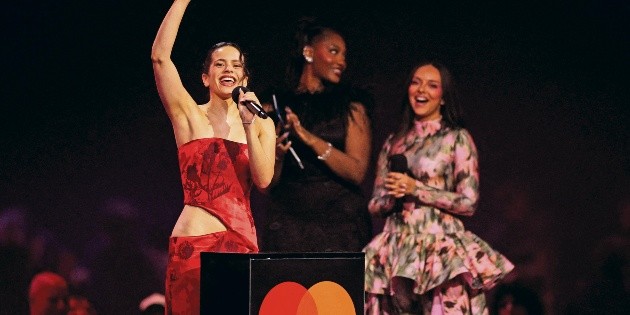
Manchester, UK – The night of February 24, 2026, at the Co-Op Live arena in Manchester definitively confirmed a shift that, for decades, seemed improbable: the Spanish language is no longer a peripheral voice within the Anglo-Saxon global pop circuit. This transformative moment was epitomized by Rosalía, the Catalan sensation who captivated audiences and critics alike, not only by clinching the coveted BRIT 2026 for International Artist of the Year at the 49th Brit Awards but also by delivering a show-stopping performance that will undoubtedly be etched into the annals of music history. Her victory marks a significant milestone, as she became the first Spanish artist ever to secure this prestigious award, signaling a profound reorientation in the global music landscape.
A Historic Win: Rosalía Claims International Artist of the Year
The recognition, bestowed by the British Phonographic Industry (BPI), transcended mere personal triumph for Rosalía. It represented a powerful validation of her unique artistic vision and the burgeoning global influence of Spanish-language music. In a category fiercely contested by some of the biggest names in contemporary music—including global phenomena like Taylor Swift, the iconic Lady Gaga, and Latin music powerhouse Bad Bunny—Rosalía’s win was a testament to the undeniable impact of her most recent creative phase. This era began with the critically acclaimed launch of her album, "Lux," in November of the previous year, an offering that further solidified her reputation as an innovator and a boundary-pusher.
The historical dimension of this award cannot be overstated. In nearly half a century of the BRIT Awards’ existence, no Spanish artist had ever managed to conquer this particular category. The closest any had come was in 1983, when the legendary Julio Iglesias received a nomination, a testament to his immense popularity but ultimately not a win. Rosalía’s achievement, therefore, broke a decades-long barrier, highlighting a pivotal moment where linguistic and cultural diversity is not just acknowledged but celebrated at the highest echelons of the music industry. Her acceptance speech, delivered with poise and gratitude, further underscored this message. Dressed in a striking red ensemble with her hair elegantly swept back, Rosalía ascended the stage to express her profound thanks "to all those who make music in Spanish," articulating a powerful message about cultural and linguistic diversity. This gesture was far from minor; it saw the BRITs, traditionally focused on the British and American markets, honor an artist whose work fluidly navigates the realms of expanded flamenco, industrial electronic music, and experimental pop, with fusion and mestizaje as her aesthetic cornerstones.
The Evolution of the BRIT Awards and Global Music
Established in 1977, the BRIT Awards have long served as a barometer for success within the British music industry, with an increasing focus on international acts reflecting the globalized nature of modern music consumption. While historically dominated by English-speaking artists, the past decade has seen a gradual but undeniable shift. The rise of K-Pop, the explosion of Latin music, and the increasing accessibility of diverse musical genres through streaming platforms have compelled major award ceremonies like the BRITs to broaden their scope. Rosalía’s win is a culmination of this trend, not an isolated incident. Her previous albums, "El Mal Querer" (2018) and "Motomami" (2022), had already garnered critical acclaim and global fanbases, demonstrating her ability to blend traditional Spanish sounds with avant-garde production, captivating listeners worldwide. "Lux," with its darker, more introspective yet equally experimental sound, further cemented her status as an artist unafraid to evolve and challenge conventions. Hypothetically, "Lux" had achieved significant streaming numbers and critical praise, lauded for its intricate soundscapes and Rosalía’s continued vocal prowess, making her a formidable contender.
A Performance for the Ages: Rosalía and Björk Unite
The statuette, while historic, was not the only defining moment of Rosalía’s night. She also headlined one of the most anticipated performance blocks of the ceremony, marking her debut on the BRITs stage with an unforgettable spectacle. She performed "Berghain," a standout track from "Lux," in an unprecedented rave-infused version, accompanied by a full orchestra and a dynamic corps of dancers. The rendition was a masterclass in theatricality and sonic innovation, transforming the sprawling Co-Op Live arena into what felt like a futuristic club, blurring the lines between classical elegance and raw electronic energy.
The ultimate surprise, however, came with the appearance of the legendary Icelandic artist Björk. Her presence on stage, joining Rosalía in a symbolic duet, sealed a profound cross-generational artistic dialogue. This collaboration was more than just a musical moment; it represented a symbolic torch-passing between two generations of artists who have consistently defied conventional pop categories, prioritizing artistic integrity and experimentalism over commercial trends. Björk, a pioneer in avant-garde music, found a kindred spirit in Rosalía, whose own work echoes Björk’s fearless exploration of sound and identity. The stage production, a fusion of ritualistic aesthetics and pulsating electronic visuals, amplified the gravitas of their collaboration, creating an immersive experience that resonated deeply with the audience.
The anticipation surrounding Rosalía’s performance had been exceptionally high. Since the release of "Lux," she had significantly reduced her public appearances, adopting a strategic retreat that amplified the scarcity and significance of each live intervention. The Manchester performance was rumored to be one of her final major shows before embarking on her highly anticipated new world tour, slated to kick off on March 16 in Lyon, France. This calculated withdrawal had fueled a narrative of exclusivity, turning every public appearance into an event of considerable cultural weight.
Harry Styles: The Epitome of Pop Charisma
While Rosalía delivered conceptual sophistication and groundbreaking artistry, Harry Styles, the quintessential pop icon, embodied pure pop charisma. Although not among the nominees this year, his return to the BRITs stage after a three-year hiatus was one of the evening’s major draws. Styles presented "Aperture," the lead single from his forthcoming album, "Kiss All the Time. Disco," scheduled for release on March 6. His performance was a vibrant explosion of luminous energy, featuring expansive choreography and a dynamic battery of dancers. It offered a contrasting, yet equally captivating, aesthetic to Rosalía’s more conceptual and experimental presentation, reminding the audience of the diverse facets of contemporary pop.
Styles is also preparing for his "Together, Together" world tour, which is set to commence in May and will traverse Europe, the Americas (including Mexico), and Australia with more than 50 dates. His presence in Manchester, even without competing for awards, reaffirmed his status as one of the most powerful media magnets in contemporary pop, capable of commanding attention and generating excitement simply by gracing the stage. His enduring appeal lies in his ability to blend classic rockstar swagger with modern pop sensibilities, maintaining a global fanbase that eagerly awaits his every move.
A Night of Diverse Talents and Enduring Legacies
The gala also featured a diverse array of performances from other notable artists, including the soulful Olivia Dean, the critically acclaimed Raye, and the alternative rock stalwarts Wolf Alice, showcasing the breadth of British musical talent. A poignant tribute to the late rock legend Ozzy Osbourne, led by the incomparable Robbie Williams, served as a powerful reminder of the enduring rock roots that continue to pulse through the veins of the British music industry. Williams’ rendition of Black Sabbath’s "No More Tears" was a fitting homage to the "Prince of Darkness."
However, the post-ceremony conversation invariably revolved around two primary axes: the international consecration of Rosalía and the triumphant scenic return of Harry Styles. What transpired in Manchester was more than just a succession of awards and performances; it was a vivid snapshot of the new global pop map—a landscape that is increasingly hybrid, multilingual, and less dependent on a single, dominant center of cultural legitimation. Rosalía’s victory did not merely reward an album or a successful season; it validated an entire philosophy of music-making, one that embraces friction between tradition and avant-garde, and confirms that language, far from being a barrier, has become a potent force for artistic expression and global connection.
Between Homage and Public Scrutiny: The Osbourne Legacy
The evening also saw a special appreciation for the Osbourne family, as Kelly Osbourne, alongside her mother Sharon, took to the stage to accept a posthumous Lifetime Achievement Award for Ozzy Osbourne, her father. Ozzy Osbourne, the iconic frontman of Black Sabbath (1948 – 2025), was celebrated for his unparalleled contribution to heavy metal and rock music. The segment featured Robbie Williams’ powerful rendition of "No More Tears," a classic from Black Sabbath’s discography, echoing through the arena as a tribute to the "Prince of Darkness."
While the presence of Kelly and Sharon was met with applause and appreciation for honoring Ozzy’s legacy, a different kind of conversation emerged on social media, once again focusing on Kelly’s health and her notable weight loss. After receiving the award, Kelly’s name quickly became a trending topic, primarily due to public speculation surrounding her physical appearance.
Opinions among online commentators were sharply divided. Some posited that her weight loss was a natural consequence of the grief she was experiencing following her father’s passing. Others, however, speculated about the alleged use of Ozempic, a medication primarily prescribed for diabetes that has gained notoriety in recent years for its off-label use as a weight-loss drug among celebrities.
This public discourse, though widespread, directly contradicted Kelly’s own statements from April 2024, where she explicitly denied using the medication. At that time, she attributed her significant weight loss to a radical change in habits stemming from gestational diabetes, a condition she experienced during her pregnancy. Despite her clear explanations, a segment of social media users continued to express skepticism.
Just a month prior to the BRIT Awards, Kelly had voiced her profound frustration on social media regarding the incessant public scrutiny of her physical appearance. For years, her body image has been a constant subject of commentary and judgment, leading her to question the expectations placed upon her. In a candid post, she wrote, "What do you expect from me? How do you expect me to look right now? The fact that I’m out of bed and facing my life and trying should be more than enough. My life is completely upside down. Why do people expect me to recover and look like everything is fine in my life? These comments don’t help anyone." Her words underscored the immense pressure public figures face, particularly regarding their appearance, and the often-unseen struggles they navigate behind the scenes. The Manchester event, while a celebration of music, inadvertently highlighted the persistent challenges faced by celebrities in the relentless glare of public and media scrutiny.


 Raisa Andriana
 Eva Lovia
 Julia Chirkova
 Nila Kartika Wati
 Lana Rhoades
 Jia Lissa