
 Nila Kartika Wati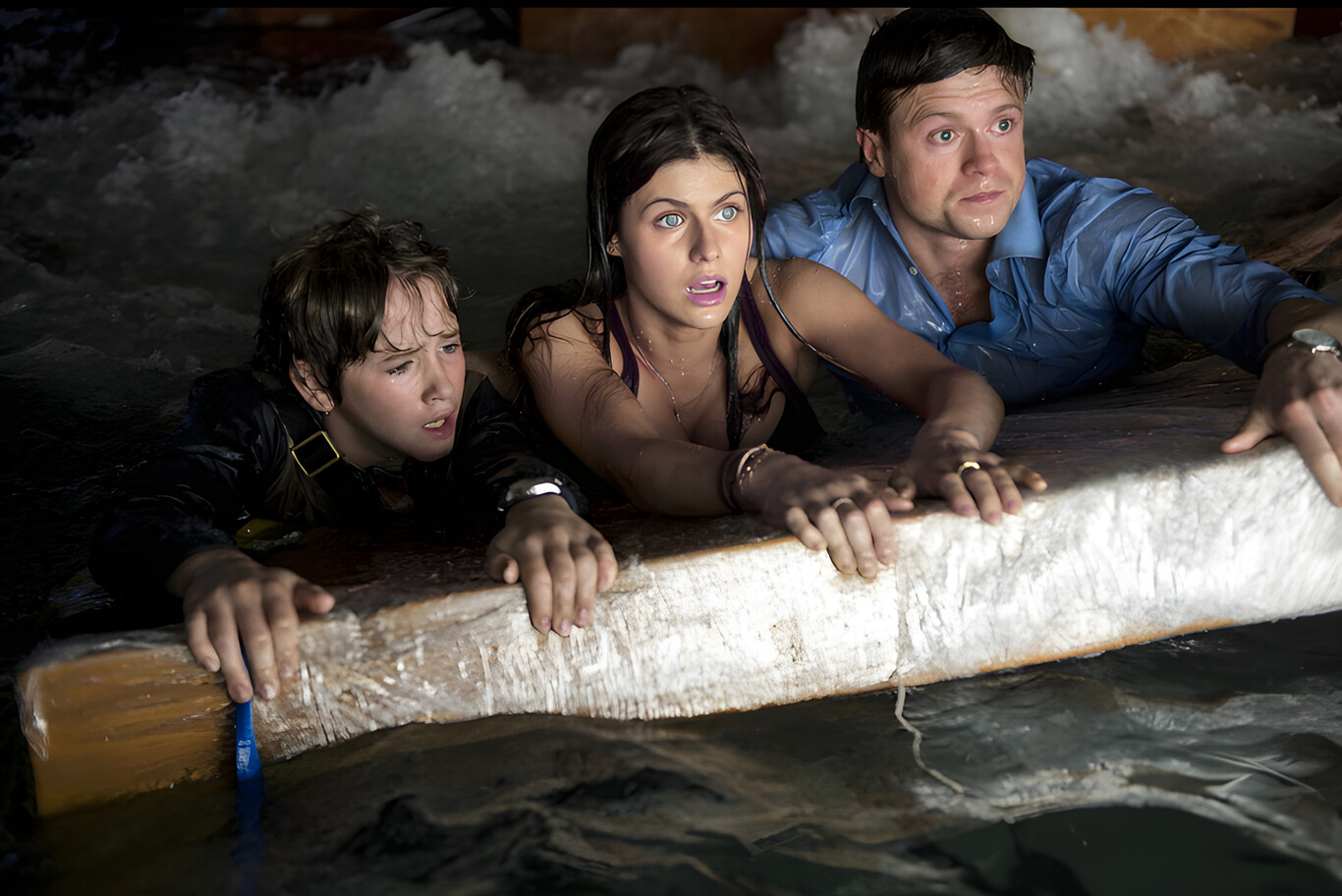
The cinematic landscape of the mid-2010s was defined by a specific brand of high-octane spectacle that prioritized visual immersion over scientific rigidity, a trend exemplified by the 2015 blockbuster San Andreas. Directed by Brad Peyton and starring Dwayne "The Rock" Johnson, the film has recently seen a significant resurgence in viewership following its availability on the Max streaming platform. While critics at the time of its release were divided over its adherence to geological realism, the film’s commercial success and enduring popularity highlight a persistent public fascination with "disaster porn"—a subgenre of action cinema that utilizes cutting-edge visual effects to simulate large-scale natural catastrophes. San Andreas centers on Ray Gaines, a Los Angeles Fire Department search-and-rescue helicopter pilot, who must navigate the total collapse of the California coastline following a series of unprecedented seismic events triggered by the titular fault line.
Narrative Overview and Production Background
The plot of San Andreas follows a traditional disaster-movie structure, beginning with a localized incident that foreshadows a global or regional catastrophe. The story commences at the Hoover Dam, where a previously unknown fault triggers a massive earthquake, leading to the dam’s destruction and the death of a Caltech seismologist. This event serves as the catalyst for Dr. Lawrence Hayes (Paul Giamatti) to discover that the entire San Andreas Fault is shifting. As the tectonic activity moves north, it levels Los Angeles and eventually San Francisco. Amidst this chaos, Ray Gaines (Johnson) must rescue his estranged wife, Emma (Carla Gugino), in Los Angeles before the duo travels to San Francisco to locate their daughter, Blake (Alexandra Daddario), who is trapped in a collapsing skyscraper.
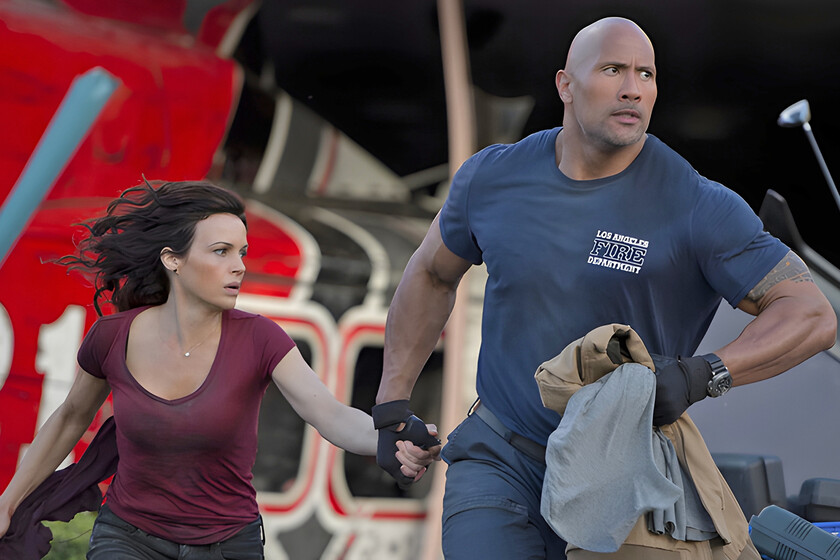
The production of San Andreas was a massive undertaking for New Line Cinema and Village Roadshow Pictures. With a production budget estimated at $110 million, the film relied heavily on sophisticated digital artistry. Principal photography began in April 2014 in Queensland, Australia, utilizing the facilities at Village Roadshow Studios. Additional filming took place in Los Angeles and San Francisco to capture the authentic urban geography that would later be digitally decimated. The film employed multiple visual effects houses, including Cinesite and Scanline VFX, to create the sequences of crumbling skyscrapers and the massive tsunami that enters the Golden Gate Bridge.
Chronology of Development and Release
The journey of San Andreas from concept to screen spanned several years, reflecting the complex logistics required for high-budget disaster films.
- 2011: New Line Cinema began developing the script, initially written by Jeremy Passmore and Andre Fabrizio. The goal was to revitalize the disaster genre, which had seen a lull since the release of Roland Emmerich’s 2012.
- 2012: Brad Peyton was attached to direct, marking his second collaboration with Dwayne Johnson after Journey 2: The Mysterious Island.
- 2014 (March – July): Principal photography occurred. The production faced challenges in simulating the physical movement of earthquakes, necessitating the use of large-scale hydraulic gimbals to shake entire sets.
- 2015 (May 29): San Andreas premiered in North America in 2D and 3D formats. It arrived during a competitive summer corridor but managed to dominate the box office during its opening weekend.
- 2020 – Present: The film transitioned through various streaming licenses, eventually becoming a staple on Max (formerly HBO Max), where it consistently ranks among the most-watched action titles during periods of regional environmental concern or renewed interest in the disaster genre.
Financial Performance and Global Market Impact
San Andreas proved to be a significant financial triumph for Warner Bros. Pictures. According to data from Box Office Mojo, the film earned $155.1 million in the United States and Canada and $318.8 million in other territories, for a worldwide total of $474 million. This performance solidified Dwayne Johnson’s status as a premier "bankable" lead capable of carrying original IPs (intellectual properties) without the support of established superhero franchises.

The international market played a crucial role in the film’s profitability. In China, the film grossed approximately $103 million, illustrating the universal appeal of large-scale visual spectacles that transcend language barriers. The film’s success led to immediate discussions of a sequel, which, while still in development hell for years, has remained a topic of interest for the studio due to the original’s high return on investment.
Scientific Consultation and Critical Reception
One of the more controversial aspects of San Andreas was its relationship with scientific fact. During the promotional tour, Dwayne Johnson and the production team emphasized that they had consulted with specialists and seismologists from the California Institute of Technology (Caltech). The goal was to ground the film’s tectonic movements in a semblance of reality. However, following the release, the scientific community offered a more nuanced critique.
Dr. Lucy Jones, a renowned seismologist with the U.S. Geological Survey (USGS), famously live-tweeted her reactions to the film, pointing out several inaccuracies. For instance, the San Andreas Fault is a "strike-slip" fault, meaning the plates slide past each other horizontally. Such a fault cannot displace enough water to create a tsunami of the magnitude shown in the film. Furthermore, the film suggests a 9.6 magnitude earthquake is possible on the fault; however, scientists argue that the San Andreas is not long or deep enough to support a quake larger than roughly an 8.2.
Despite these scientific discrepancies, the film was praised for its technical execution. Variety noted that while the "narrative logic is as shaky as the ground," the film succeeded as a "purely visceral experience." On the review aggregator Rotten Tomatoes, the film holds a 50% critic score but a higher audience score, indicating a disconnect between professional analysis and general viewer satisfaction.
Broader Implications for the Disaster Genre
The success of San Andreas signaled a shift in how Hollywood approaches the disaster genre. It moved away from the ensemble-cast "disaster epics" of the 1970s (such as The Towering Inferno) and toward hero-centric narratives. This model allows for a more personal emotional core—usually a fractured family reconciling through crisis—amidst the wide-scale destruction.
The film also serves as a precursor to the modern "climate-anxiety" cinema. While San Andreas focuses on tectonic rather than meteorological events, it taps into the same primal fear of a world that has become suddenly and violently unpredictable. This theme has been further explored in subsequent films like Geostorm, Moonfall, and the 2024 hit Twisters. The recurring popularity of these films on streaming platforms suggests that audiences use these hyperbolic scenarios as a form of catharsis, processing real-world anxieties about natural disasters through the safety of an exaggerated cinematic lens.
Streaming Longevity and Cultural Legacy
As of late 2024, San Andreas continues to perform exceptionally well on digital platforms. The transition to Max has allowed the film to reach a new generation of viewers who may have missed its theatrical run. Its presence in the "Top 10" lists often coincides with news cycles regarding seismic activity in the Pacific Ring of Fire, demonstrating how real-world events can drive interest in fictionalized accounts of those same dangers.
The film’s legacy is defined by its contribution to the "Spectacle Era" of the 2010s. It represents a peak in the collaboration between director Brad Peyton and Dwayne Johnson, a partnership that would later produce Rampage (2018). While it may not be remembered for its contributions to the field of seismology, San Andreas remains a benchmark for visual effects-driven action. It successfully demonstrated that the "man against nature" trope remains one of the most durable and profitable formulas in the history of motion pictures.
In conclusion, San Andreas stands as a testament to the power of the blockbuster. By combining a charismatic lead, state-of-the-art CGI, and a primal survival narrative, it overcame critical skepticism to become a definitive entry in the disaster movie canon. Its current availability on HBO Max ensures that its portrayal of a collapsing California continues to captivate audiences, offering a high-octane escape into a world where the impossible becomes a terrifying, if entertaining, reality.


 Jia Lissa
 Raisa Andriana
 Eva Lovia
 Julia Chirkova
 Lana Rhoades