
 Lana Rhoades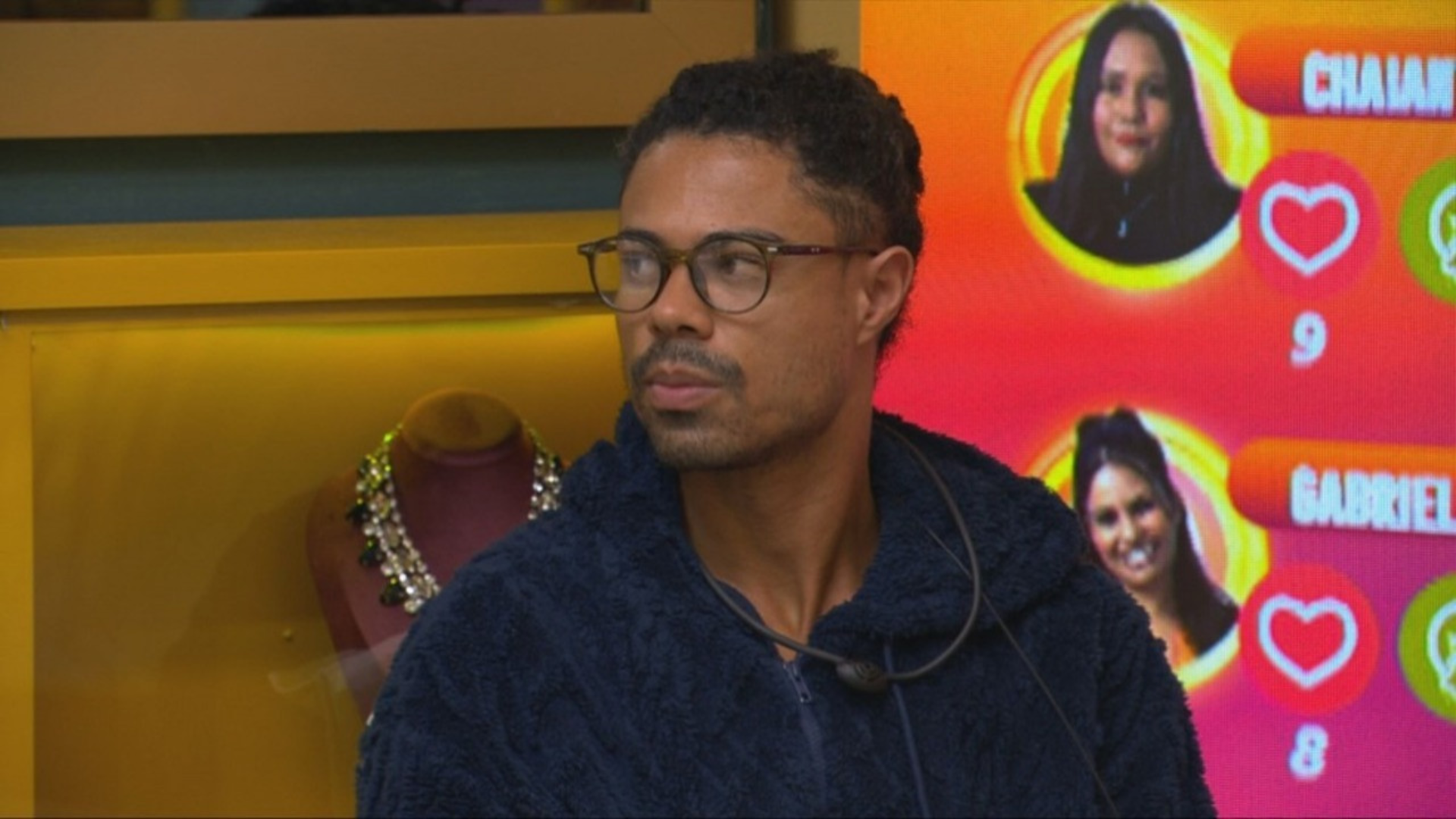
The atmosphere within the Big Brother Brasil 26 house escalated significantly following the isolation of contestant Breno in the newly introduced "Exiled" dynamic, a mechanism designed to intensify gameplay and expose vulnerabilities among participants. Having been deliberately overlooked by his peers during a crucial live selection, Breno was relegated to a restricted outdoor area, marking the commencement of a period of severe limitations expected to profoundly influence the strategic landscape of the reality competition. This pivotal decision, unfolding under the watchful eyes of millions, did not merely pass as a routine game move; it immediately ignited a firestorm of reactions among the housemates, particularly casting a harsh spotlight on Alberto Cowboy, whose rationale for his choices became the epicenter of a burgeoning conflict.
The Genesis of the "Exiled" Dynamic: A Strategic Game Changer
The "Exiled" dynamic, while potentially novel in its specific iteration for BBB26, draws parallels to various isolation or banishment mechanics that have historically been deployed across numerous global Big Brother franchises. Such dynamics are invariably introduced by production to disrupt established alliances, test individual resilience, and force contestants to make difficult, often unpopular, strategic choices. The fundamental premise typically involves a contestant being removed from the main house environment, thereby losing access to communal amenities, private spaces, and often, direct interaction with the majority of their housemates. This enforced separation is not merely punitive; it serves as a powerful strategic lever, compelling the isolated individual to observe the house from a distance, potentially gaining a new perspective, while simultaneously making them a target or a wildcard upon their eventual return. The rules governing such exile are meticulously crafted to maximize discomfort and strategic disadvantage, often impacting immunity challenges, nominations, or even access to basic necessities beyond a stipulated minimum. In the context of BBB, where social bonds and constant interaction are paramount to survival, an exile can be an emotionally taxing and strategically debilitating experience, often leading to shifts in power dynamics and the forging or breaking of alliances.
A Night of Deliberation and Division
The events leading to Breno’s exile began during a tension-filled live broadcast, where host Tadeu Schmidt unveiled the new dynamic. The housemates were presented with a task requiring them to select individuals to remain within the main house, effectively casting votes for exclusion rather than inclusion. This reverse psychology mechanism is a classic reality television tactic, forcing contestants to publicly reveal their strategic priorities and, in many cases, their perceived rivals. As the selections progressed, a palpable tension built in the living room, each choice weighing heavily on the social fabric of the house. When the final votes were tallied, Breno found himself as the sole remaining contestant, unchosen by any of his colleagues. This public rejection, a stark declaration of his low standing or perceived threat among the group, instantaneously shifted his status from a regular player to the season’s inaugural "Exiled."
Alberto Cowboy’s Justification and the Immediate Backlash
Central to the escalating drama was Alberto Cowboy, whose actions and subsequent attempts at justification fueled much of the house’s discontent. During the live program, Alberto articulated his strategic rationale, endeavoring to frame his choices as purely game-driven. "Nothing personal, brother. Just game. I thought, if there’s any consequence, it could be related to vetoing from today’s challenge, that kind of thing. It’s game, nothing personal at all," he asserted. This declaration, a common refrain in high-stakes competitive environments, aims to depersonalize decisions that inherently carry significant personal weight. However, within the emotionally charged confines of the BBB house, such disclaimers are often met with skepticism, if not outright scorn, especially when the impact is felt directly.
The immediate and cutting rebuttal came from Milena, a contestant who had previously displayed a propensity for direct confrontation. Her sarcastic retort, "Nothing personal, huh, Breno?", instantly highlighted the perceived hypocrisy in Alberto’s statement. This was not merely a rhetorical question; it was an accusation, implying a deeper, more personal motivation behind Alberto’s actions. Breno, visibly impacted by his isolation, quickly adopted Milena’s ironic tone, responding, "My vote won’t be personal either, it’s the game." This exchange signaled an immediate and unequivocal intent for retribution, establishing a clear line of impending conflict.
Milena, not one to let an opportunity for exposing perceived inconsistencies pass, further intensified her attack on Alberto. She pointedly referenced previous interactions, stating, "Against me, there are so many personal things, and he put me in his group, right? So, I have nothing against you, that’s why I’ll leave you for it." This statement was a direct challenge to Alberto’s "nothing personal" narrative, suggesting that his strategic moves were selectively impersonal, conveniently aligning with his personal biases. Later, in a private moment that encapsulated her seething resentment, Milena unleashed a torrent of frustration: "I don’t like this guy. It will be the happiest day of my life when he leaves here. ‘Nothing personal.’ Clown." This candid outburst underscored the profound personal animosity that had been simmering beneath the surface, now brought to a boil by the "Exiled" dynamic.
The Rules of Exile: A Life of Restriction

During the live broadcast, host Tadeu Schmidt meticulously outlined the stringent conditions governing Breno’s exile, ensuring that both the housemates and the viewing public fully grasped the severity of his situation. "Breno was left over. Nobody chose you to stay in the house. Therefore, Breno, you are the exiled. You will go to the party, you can enjoy, have fun, eat and drink. Everything normal at the party, but your exile begins now," Schmidt explained. This initial phase, allowing Breno a final reprieve before the full impact of his isolation, cleverly adds a layer of psychological complexity, offering a taste of normalcy before a plunge into deprivation.
Schmidt further elaborated on the restrictions that would take full effect after the festivities concluded: "If you need anything in the bedroom, you ask someone to get it. You cannot go there. Food and drink only at the party. Otherwise, only what production delivers to you and your water bottle. Tomorrow, after the party is dismantled, you begin serving your exile in the external part of the house and will receive new instructions." These rules are designed to strip Breno of his autonomy and reliance on the comforts of the main house. The inability to access his personal belongings in the bedroom, a sanctuary for many contestants, represents a significant psychological challenge. Furthermore, the limited access to food and drink, outside of what is provided by production or consumed at designated events, introduces an element of physical hardship. The "external part of the house" typically refers to areas like the garden or a specially constructed annex, often exposed to the elements and lacking the amenities of the main living quarters. This enforced isolation is intended to test Breno’s mental fortitude, resilience, and strategic acumen under duress.
Strategic Implications and House Dynamics in Flux
Breno’s exile is poised to have multifaceted repercussions for the entire BBB26 ecosystem. For Breno himself, the immediate challenge lies in maintaining his morale and strategic focus while physically and socially distanced from the main group. This isolation, while physically restrictive, could paradoxically offer him a unique vantage point to observe house dynamics and alliances without direct involvement, potentially allowing him to formulate new strategies or identify weaknesses in his rivals. However, the psychological toll of being ostracized, coupled with the physical discomfort, could equally erode his resolve. His public declaration of "my vote won’t be personal either" serves as a clear warning shot, indicating that his period of exile will be followed by a period of aggressive gameplay, undoubtedly targeting those he perceives as responsible for his predicament, particularly Alberto Cowboy.
Alberto Cowboy’s "nothing personal, just game" defense, while a staple in reality TV, has demonstrably backfired in this instance. Milena’s impassioned rejection of this narrative, echoing the sentiments of many viewers who often perceive such statements as disingenuous, has painted Alberto in a potentially unfavorable light. His attempt to mitigate friction has instead ignited a direct and personal feud with Milena, a contestant who has shown herself to be a formidable and vocal opponent. This conflict is likely to polarize the house, forcing other housemates to align themselves, either overtly or subtly, with one side or the other. Those who perceive Alberto as manipulative or hypocritical might gravitate towards Milena, strengthening her position. Conversely, those who prioritize strategic pragmatism might view Alberto’s move as a legitimate, albeit harsh, game play.
Milena’s aggressive stance against Alberto is a significant development. Her willingness to openly challenge his motivations and express profound personal dislike ("It will be the happiest day of my life when he leaves here. ‘Nothing personal.’ Clown.") positions her as a strong, uncompromising player. This could solidify her alliances with individuals who share her sentiments or have pre-existing grievances with Alberto. However, such open animosity also carries risks, potentially making her a target for those aligned with Alberto or those who prefer a less confrontational approach. Her actions underscore the inherent difficulty of maintaining a purely strategic facade in a high-pressure environment where personal emotions invariably bleed into gameplay.
Broader Impact and the Road Ahead
The "Exiled" dynamic and its immediate fallout have undoubtedly reset the strategic clock within the BBB26 house. The incident serves as a stark reminder to all contestants that every decision, no matter how strategically justified, carries significant social and emotional consequences. The prospect of Breno’s "revenge" looms large, promising a period of heightened tension and potentially direct confrontations. His return to the main house, whenever it occurs, will be a critical moment, likely triggering a cascade of strategic shifts. Will he target Alberto directly in a nomination? Will he attempt to rally support from disgruntled housemates? The implications for future nominations, immunity challenges, and power plays are immense.
Furthermore, the public’s perception of these events will be crucial. Viewers often empathize with the isolated or the perceived underdog, potentially garnering sympathy for Breno. Conversely, Alberto’s justification, deemed disingenuous by Milena, could negatively impact his public image, a vital factor in a show decided by popular vote. The dynamic interplay between the house’s internal conflicts and external audience reactions forms the core of Big Brother’s appeal, and this incident has certainly provided ample fodder for both.
As the season progresses, the ripples from Breno’s exile and the subsequent clash between Alberto and Milena are expected to shape alliances, spark new rivalries, and dictate the trajectory of the game. The house is now a powder keg, and the "Exiled" dynamic has merely lit the fuse, promising an era of sharper strategies, more defined battle lines, and an increased intensity that will undoubtedly captivate audiences in the weeks to come. The question now is not if, but when, the promised revenge will be exacted, and what further dramatic turns it will unleash upon Big Brother Brasil 26.




 Raisa Andriana
 Eva Lovia
 Julia Chirkova
 Nila Kartika Wati
 Jia Lissa