
 Julia Chirkova
The period between February 23rd and 27th in the popular Spanish drama "Sueños de Libertad" was marked by a relentless surge of tension, primarily centered around the character of Gabriel. The week’s narrative arc saw Beatriz leverage a damaging piece of information, culminating in a violent street assault and a series of revelations that have placed Gabriel in an increasingly precarious position. These dramatic developments have not only escalated the central conflict but also sent ripples of instability throughout the intertwined lives of the characters, impacting both the grand household and the factory operations.
Beyond Gabriel’s immediate crisis, the week’s events underscored the fragility of Damián’s new business venture, which faced its most critical juncture. Personal relationships were strained to their breaking point, with simmering resentments and carefully guarded secrets threatening to erupt and fundamentally alter the established dynamics within the family and the wider community. The narrative effectively wove together threads of personal vendettas, financial distress, and the perilous consequences of hidden truths, creating a gripping week of television that kept viewers on the edge of their seats.
Beatriz Escalates Pressure, Pushing Gabriel to the Brink
From the outset of the week, Beatriz proved to be a formidable antagonist, initiating a calculated campaign of blackmail against Gabriel. Armed with evidence that could irrevocably damage his reputation and that of his family, she demanded a substantial sum of money in exchange for her silence. Gabriel, finding himself cornered, attempted to navigate the crisis through a combination of manipulation and negotiation, even resorting to the idea of setting a trap for Beatriz. However, his efforts were met with Beatriz’s unwavering resolve, revealing her determination to pursue her demands without compromise.
Driven by desperation, Gabriel took a drastic and ultimately self-defeating step. He orchestrated an attack on Beatriz, dispatching an individual with the intention of stealing the incriminating documentation. This plan, however, backfired spectacularly. The assault not only failed to achieve its objective but also inadvertently placed Begoña in a compromised and dangerous situation, highlighting the chaotic and uncontrolled nature of Gabriel’s response. The confrontation reached a dramatic climax when Beatriz, undeterred and escalating her tactics, confronted Gabriel directly within his own home, this time in the presence of Begoña. Her forceful appearance served as a stark declaration that she had no intention of fading into the background and would continue to exert her influence on their lives.
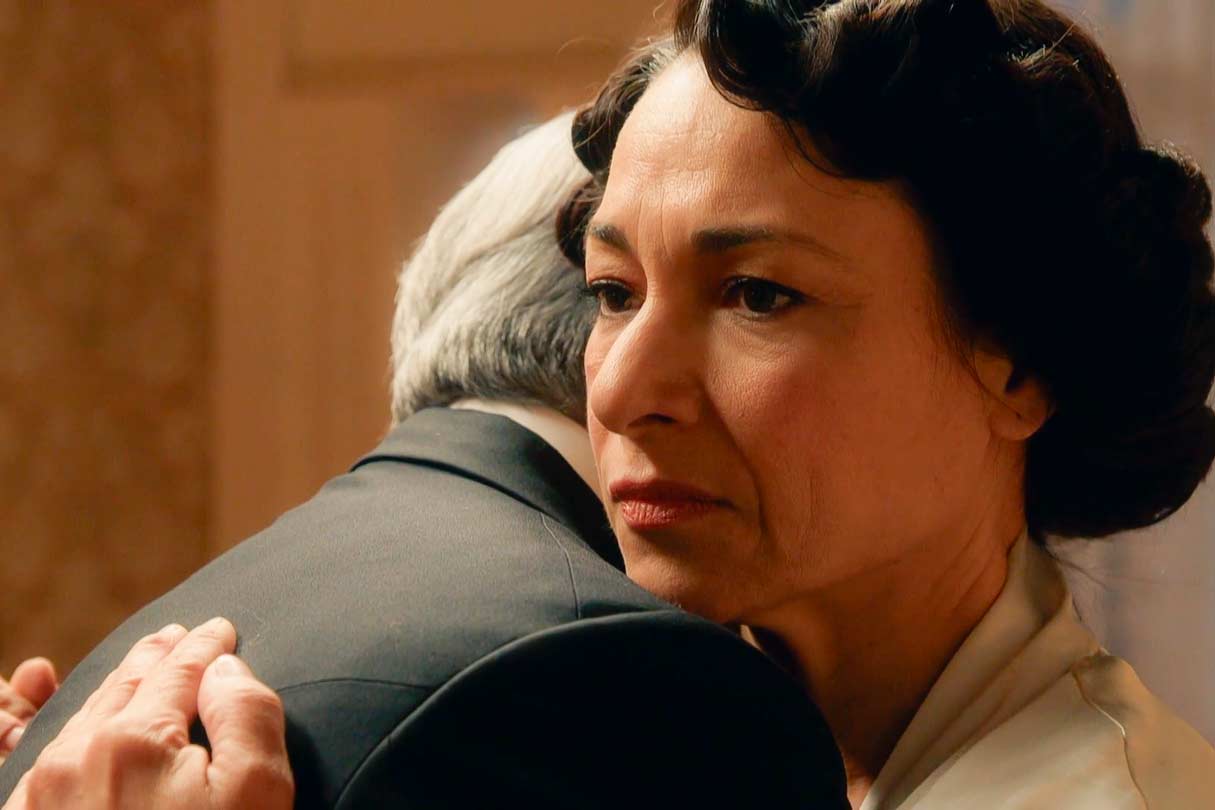
This sequence of events represents a significant escalation in the series’ central conflict. Beatriz’s calculated blackmail, coupled with Gabriel’s increasingly desperate and violent counter-measures, has moved the narrative from a stage of veiled threats to open confrontation. The failed assault underscores Gabriel’s diminishing control and his willingness to resort to extreme actions, a trait that could have far-reaching consequences for his character and his relationships. The visual of Beatriz confronting Gabriel and Begoña in their home signifies a direct challenge to Gabriel’s authority and Begoña’s perceived safety, setting the stage for further dramatic confrontations.
Marta and Cloe Form an Alliance Against Gabriel
The pressure on Cloe intensified as Gabriel followed through on his threat to discredit her by enlisting Don Agustín’s influence. However, Digna’s timely intervention managed to thwart the priest’s efforts, though Gabriel’s maneuver did not go unnoticed and its impact lingered. In a pivotal moment of solidarity, Marta made the decisive choice to stand alongside Cloe, directly confronting Gabriel and issuing a clear warning that he would not be able to act against them with impunity. This united front marked a significant shift in the power dynamics, as Marta, previously more reserved, asserted her protective instincts.
The escalating tension compelled Marta to make a profound personal confession to Damián, revealing her romantic relationship with Cloe. Damián’s reaction was not one of outright rejection, but rather a deep concern, stemming from his awareness of Gabriel’s knowledge of their secret. Fearing the repercussions and aiming to shield his daughter from potential scandal and gossip, Damián proposed a strategic measure: the temporary return of Pelayo to Spain. This plan suggests a desire to create a buffer, perhaps to deflect Gabriel’s attention or to provide a more stable environment for Marta and Cloe.
This storyline delves into themes of forbidden love, societal judgment, and the lengths to which parents will go to protect their children. Marta’s confession signifies a breaking point, moving her relationship with Cloe from the shadows into the open, at least within the family circle. Damián’s nuanced reaction, prioritizing protection over condemnation, highlights his complex character and his underlying familial loyalty. The decision to bring Pelayo back, while seemingly a minor plot point, could serve as a significant narrative device, potentially introducing new conflicts or resolutions as the characters navigate the fallout from these revelations and Gabriel’s continued machinations.
Damián’s Financial Struggles and Business Setbacks
On the commercial front, Damián faced an unprecedented downturn. His new business enterprise struggled to gain traction, encountering significant resistance from financial institutions. Repeated denials of credit left him in a dire liquidity crisis, pushing him to the brink of failure. The weight of these setbacks visibly impacted his demeanor, transforming him into an irascible figure and creating palpable anxiety within the family. His public persona as a capable businessman was being eroded by private financial ruin.
Tasio, despite his efforts to stabilize the situation, found himself overwhelmed by the mounting challenges. The growing distance between him and Carmen became increasingly evident, exacerbated by the stress of their shared predicament. Paula emerged as a steadfast pillar of support for Tasio, offering him solace amidst the turmoil, though their closeness did not go unnoticed by others, potentially sowing seeds of future complications.
Meanwhile, Andrés grappled with the immense pressure exerted by Salazar. He diligently worked to optimize routes and reduce operational costs, demonstrating a commitment to protecting the workforce from the drastic measures that Salazar seemed inclined to implement. Andrés’s resistance to potentially harmful austerity measures showcased his ethical stance and his dedication to the well-being of the factory’s employees, positioning him as a counterpoint to more ruthless business strategies.
The financial woes of Damián’s venture highlight the precariousness of entrepreneurial endeavors, particularly in a period of economic uncertainty. The series effectively portrays the psychological toll of financial failure, demonstrating how it can strain personal relationships and alter an individual’s character. Tasio’s struggle and Paula’s supportive role add layers of personal drama to the business crisis. Andrés’s principled stand against harsh cost-cutting measures emphasizes the ongoing tension between profit-driven objectives and the welfare of the working class, a recurring theme in the series.
Jealousy, Secrets, and Relationships on the Brink
The week was characterized by a pervasive atmosphere of interpersonal turmoil. Mabel and Salva’s deepening connection at the cantina did not escape Claudia’s notice, fueling her burgeoning jealousy. Adding to Claudia’s discomfort, she was forced to share living quarters with a new roommate, an arrangement that fostered an undeniably awkward and tense environment.
Salva’s past began to resurface through a series of mysterious letters, which ultimately led to his involvement in a physical altercation with Esteban. Esteban, meanwhile, continued to be a disruptive force, causing significant problems at both the dispensary and the cantina, his disruptive behavior escalating.
Miguel found himself increasingly frustrated by the persistent complaints from patients regarding his perceived cold demeanor. The constant criticism led him to contemplate abandoning his role at the dispensary. Luz attempted to offer guidance and support, but the recurring incidents continued to complicate Miguel’s professional standing and personal morale.
The intertwining of romantic entanglements, unresolved pasts, and professional challenges created a complex web of relationships. Claudia’s jealousy, fueled by Mabel and Salva’s growing intimacy, illustrates the emotional toll of perceived romantic competition. Salva’s encounter with his past through the letters suggests that hidden histories are poised to play a significant role in the unfolding narrative. Esteban’s persistent troublemaking serves as a catalyst for conflict, impacting multiple characters and settings. Miguel’s struggle with patient relations highlights the difficulties of maintaining empathy and professionalism under pressure, with Luz’s attempts to guide him underscoring the importance of mentorship in navigating professional crises.
A Week Concluding with a Dangerous Confrontation
The climax of the week arrived on Friday with a particularly shocking incident: Begoña and Beatriz were ambushed in broad daylight. This orchestrated assault, a desperate gambit by Gabriel to recover a document that could expose him, underscored the extreme lengths to which he was willing to go to safeguard his image and his relationship with Juan. The sheer violence of the attack served as a stark testament to Gabriel’s increasingly compromised moral compass and his fear of exposure.
Concurrently, Don Agustín intensified his pressure on Digna, urging her to formalize her relationship with Damián. His leverage in this matter was Cloe’s personal life, suggesting a pattern of manipulation and coercion involving the younger characters. The week concluded with a palpable sense of escalating threats and suffocating secrets, creating an increasingly untenable atmosphere for all involved.
This dramatic culmination of the week’s events serves as a powerful illustration of the escalating stakes. The street attack, directly linked to Gabriel’s desperation, elevates the narrative to a new level of peril. The scene emphasizes the physical danger faced by the characters and highlights Gabriel’s willingness to employ violence to maintain his secrets. Don Agustín’s pressure on Digna, using Cloe’s life as a bargaining chip, further illustrates the pervasive nature of manipulation and control within the narrative. The final moments of the week leave the audience with a sense of foreboding, indicating that the intertwined conflicts are far from resolved and are likely to intensify in the coming episodes. The interwoven threads of personal vendettas, financial ruin, and the pursuit of power have created a volatile environment where the consequences of past actions are now being confronted with potentially devastating results.



 Jia Lissa
 Raisa Andriana
 Eva Lovia
 Nila Kartika Wati
 Lana Rhoades