
 Nila Kartika Wati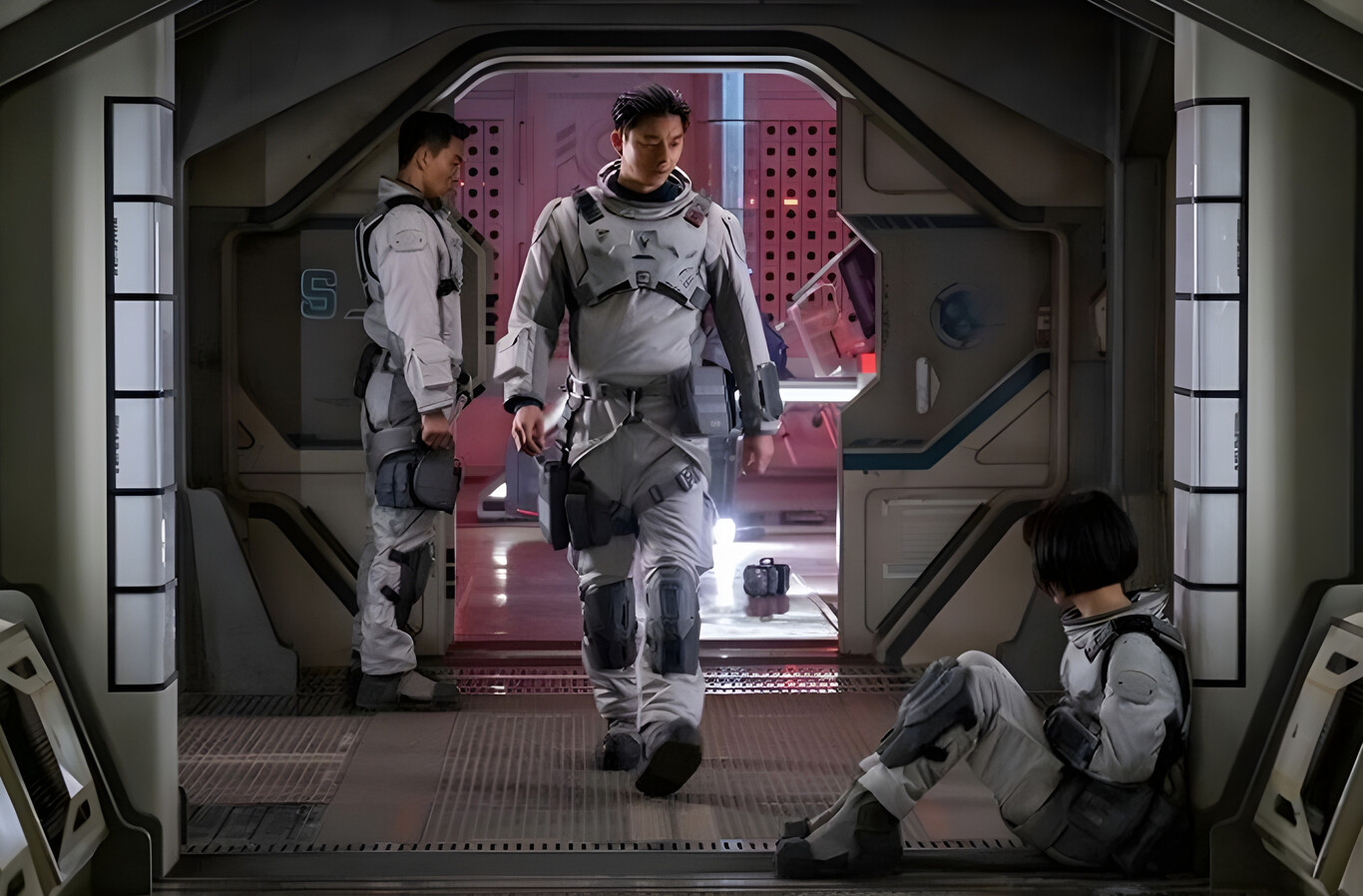
The Silent Sea, released globally on Netflix in December 2021, represents a significant milestone in the expansion of South Korean entertainment into the high-budget science fiction genre. Directed by Choi Hang-yong and written by Park Eun-kyo, the eight-episode miniseries transitioned from a 2014 short film titled The Sea of Tranquility into a sophisticated exploration of environmental collapse and lunar mystery. Set in a dystopian future where Earth suffers from extreme desertification and a critical shortage of potable water, the narrative follows a specialized team of astronauts and scientists dispatched to the abandoned Balhae Lunar Research Station. Their objective is to retrieve a mysterious sample that holds the potential to ensure human survival, though the mission quickly devolves into a claustrophobic thriller as the secrets of the base and the true nature of the sample are revealed.
Chronology of Development and Production
The origins of The Silent Sea date back to director Choi Hang-yong’s graduation project at the Korea National University of Arts. The original 2014 short film garnered critical acclaim for its atmospheric tension and minimalist approach to space horror. Recognizing the potential for a long-form adaptation, Netflix greenlit the project in 2019 as part of its aggressive strategy to invest in South Korean content following the international success of series such as Kingdom and the burgeoning anticipation for Squid Game.
Production faced the dual challenges of the COVID-19 pandemic and the technical demands of recreating a lunar environment. Principal photography took place throughout 2020 and early 2021, utilizing five massive sound stages covering approximately 9,000 square meters. To achieve a realistic depiction of the moon’s surface and the Balhae Station’s interiors, the production team employed advanced visual effects (VFX) and LED wall technology, similar to the virtual production techniques popularized by Western productions like The Mandalorian. This ensured that the "silent" aspect of the lunar landscape remained visually immersive while allowing the actors to interact more naturally with their environment.

Narrative Framework and World-Building
The series is set in the year 2075, a period defined by a global water crisis that has fundamentally restructured human society. The world-building establishes a rigid class system based on water allocation; citizens are granted "water cards" that dictate their daily rations based on their social and professional status. This socioeconomic backdrop provides the necessary stakes for the mission, as the pursuit of "Lunar Water" is not merely a scientific endeavor but a desperate geopolitical necessity.
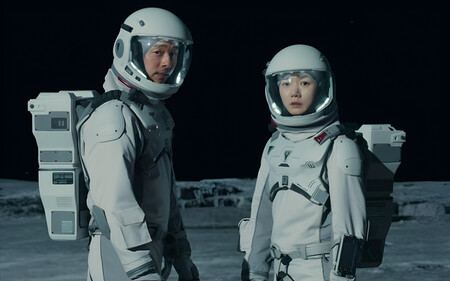
The mission is led by Captain Han Yun-jae, portrayed by Gong Yoo, and Dr. Song Ji-an, an astrobiologist played by Bae Doona. Upon arriving at the Balhae Station—where 117 researchers reportedly died five years prior due to a radiation leak—the team discovers discrepancies between the official government reports and the physical evidence on-site. The narrative employs a dual-layered mystery: the immediate survival of the crew against an unknown biological threat and the slow uncovering of a conspiracy involving human experimentation and government cover-ups.
Technical Execution and Atmospheric Horror
The Silent Sea distinguishes itself through its commitment to atmospheric horror, often drawing comparisons to Ridley Scott’s Alien (1979) and James Cameron’s Aliens (1986). However, unlike those films, which rely heavily on external extraterrestrial threats, the South Korean miniseries focuses on a "silent" horror—a biological anomaly that consumes the human body from within. This approach emphasizes the fragility of human life in the vacuum of space, where the environment itself is as much an antagonist as the biological mystery.
The sound design plays a critical role in maintaining this tension. By emphasizing the muffled acoustics of space suits and the echoing silence of the abandoned station, the series heightens the psychological strain on both the characters and the audience. The cinematography utilizes a palette of cold blues, greys, and stark whites to reinforce the isolation of the lunar setting, contrasting sharply with the dusty, sepia-toned visuals of the dying Earth.

Performance Data and Audience Reception
Upon its release on December 24, 2021, The Silent Sea quickly ascended the Netflix global charts. According to data from FlixPatrol, the series reached the Top 10 in over 80 countries within its first week of release. It performed particularly well in Asian markets, including South Korea, Japan, and Taiwan, while also maintaining a steady presence in the United States and Europe.
Critical reception was generally positive, with reviewers praising the high production values and the performances of the lead actors. Variety noted the series’ "visual ambition" and its ability to ground high-concept sci-fi in a "heavy dramatic weight." On review aggregator platforms, the series maintained an audience score that reflected a strong appreciation for its pacing and the depth of its environmental commentary. While some critics noted that the eight-episode format felt slightly stretched compared to the original short film, the consensus highlighted the show as a successful proof-of-concept for South Korean space epics.
Supporting Cast and Industry Implications
The series benefited immensely from the global recognition of its cast. Gong Yoo, already an international icon due to Train to Busan (2016) and his cameo in Squid Game, provided a grounded, stoic presence as the mission commander. Bae Doona, known for her work in the Wachowskis’ Sense8 and Bong Joon-ho’s The Host, delivered a nuanced performance as a scientist driven by personal grief and a search for the truth.
The inclusion of Heo Sung-tae, who gained notoriety as the villainous Jang Deok-su in Squid Game, further bolstered the show’s visibility. The synergy between these high-profile actors and the burgeoning "K-Content" wave allowed The Silent Sea to reach audiences who might have otherwise bypassed a non-English language science fiction series. This success has had a broader impact on the industry, encouraging further investment in South Korean sci-fi projects such as Jung_E and Space Sweepers.
Ethical Themes and Socio-Political Analysis
Beyond its merits as a thriller, The Silent Sea engages with complex ethical questions regarding the survival of the species versus the sanctity of the individual. The revelation that the "Lunar Water" requires human hosts to stabilize its properties serves as a critique of utilitarian ethics. The series asks whether a civilization that sacrifices its humanity to survive is truly worth saving.
The environmental subtext is equally potent. By depicting a world where water is more valuable than currency, the show reflects contemporary anxieties regarding climate change and resource scarcity. The "Mar de la Tranquilidad" (Sea of Tranquility) serves as a bitter irony; while the location on the moon is named for peace, it becomes a site of violence and existential dread, mirroring the chaos of the Earth the characters left behind.
Legacy and Conclusion
Years after its initial debut, The Silent Sea remains a benchmark for science fiction on streaming platforms. It demonstrated that South Korean studios could produce space-bound narratives that rival Hollywood productions in terms of visual effects and narrative complexity. The decision to limit the series to eight episodes allowed for a focused, "bingeable" experience that avoids the narrative bloat often found in traditional broadcast television.
For Netflix, the series solidified its partnership with South Korean creators, proving that the region’s output was not limited to romantic dramas or historical thrillers. The Silent Sea opened the door for more experimental and genre-defying content, ensuring that the "silent" lunar base would be remembered as a pivotal setting in the history of modern television sci-fi. As the global demand for high-quality, diverse storytelling continues to grow, the series stands as a testament to the power of reimagining local stories for a global stage, proving that even in the vastness of space, the most compelling stories remain deeply human.


 Raisa Andriana
 Eva Lovia
 Julia Chirkova
 Lana Rhoades
 Jia Lissa