
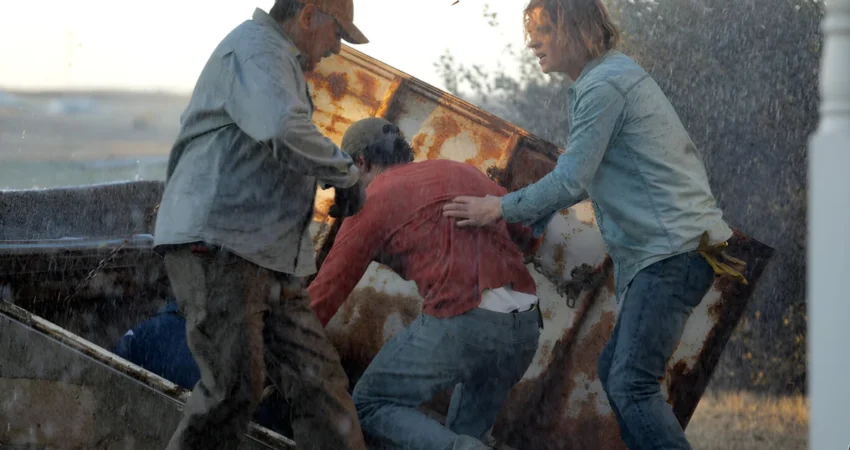
The landscape of modern cinema is increasingly defined by a curious phenomenon often referred to as the streaming second life. In this digital ecosystem, films that were once considered commercial failures or critical disappointments are finding massive, global audiences years after their initial release. The latest beneficiary of this trend is the 2021 disaster drama 13 Minutes, known in various markets as En la tormenta. Despite a theatrical run that resulted in negligible returns and a reception from critics that could be described as lukewarm at best, the film has recently surged into the Netflix Top 10, capturing the attention of millions of subscribers worldwide. This resurgence highlights a growing shift in consumer behavior and the enduring popularity of the disaster genre, regardless of a film’s initial pedigree.
The Narrative Core: Beyond the Storm
Directed by Lindsay Gossling, 13 Minutes centers on the fictional town of Minninnewah, Oklahoma. While the primary antagonist is a massive, life-threatening tornado, the film attempts to distinguish itself from traditional "disaster porn" by weaving in complex social narratives. The plot follows four distinct families whose lives intersect during the lead-up to the catastrophic weather event. These families represent a cross-section of modern American life, touching on themes of undocumented immigration, religious fundamentalism, abortion rights, and the struggles of the LGBTQ+ community.
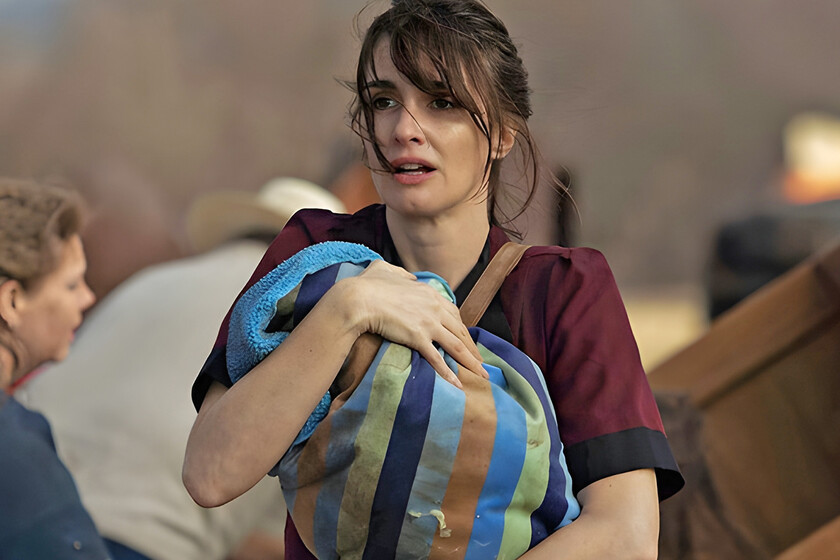
The film’s title is derived from a stark reality of meteorology in the United States. According to data from the National Oceanic and Atmospheric Administration (NOAA) and the National Weather Service, 13 minutes is the average lead time residents have to seek shelter once a tornado warning is officially issued. By focusing on this narrow window of time, the film attempts to create a high-stakes environment where long-standing social prejudices must be set aside in favor of basic survival. The cast includes veteran actors such as Thora Birch, Amy Smart, and the late Anne Heche, alongside Paz Vega, who provides a perspective on the undocumented immigrant experience during a natural disaster—a demographic often overlooked in mainstream Hollywood disaster films.
A Chronology of a Theatrical Failure
To understand the magnitude of the film’s current success on Netflix, one must look at the context of its original release. 13 Minutes arrived in theaters in late 2021, a period when the global film industry was still grappling with the aftershocks of the COVID-19 pandemic. Theatrical attendance was inconsistent, and smaller, independent productions often struggled to find space between delayed blockbuster releases.
The film’s financial performance was, by any metric, a disaster of its own. It recorded a global box office gross of approximately $67,413. The vast majority of these earnings came from international markets, specifically the United Arab Emirates and Portugal, while the North American domestic box office was virtually non-existent. Limited marketing budgets and a lack of "star power" compared to tentpole disaster films like 2014’s Into the Storm or the 1996 classic Twister left 13 Minutes adrift in a crowded marketplace.
Furthermore, the critical reception did little to help its prospects. On the review aggregator site Rotten Tomatoes, the film currently holds a 24% approval rating from critics. Many reviews pointed toward a perceived imbalance between the film’s heavy-handed social commentary and the visceral action expected of the genre. Audiences were slightly more forgiving, giving it a 57% rating, yet the film quickly faded from public consciousness—until its recent acquisition by Netflix.
Supporting Data: The Enduring Appeal of Disaster Cinema
The sudden popularity of 13 Minutes on streaming services is not an isolated event. Market analysis suggests that disaster films possess a unique "shelf life" due to their universal themes and visual spectacle. The resurgence of 13 Minutes coincides with a broader cultural interest in extreme weather, likely bolstered by the 2024 release of Twisters, the high-budget sequel to the 1996 original. As audiences sought out similar content to satisfy their interest in storm-chasing narratives, 13 Minutes became a primary beneficiary of the "if you liked this, you might like" algorithms utilized by streaming platforms.

Data from streaming analytics firms indicates that "survivalist" content often performs better in a home-viewing environment than in theaters. At home, viewers are more willing to engage with mid-budget films that they might not have paid for in a cinema. In the case of 13 Minutes, the 108-minute runtime and its blend of melodrama and catastrophe make it ideal "passive" viewing for a broad demographic. Its presence in the Netflix Top 10 alongside high-profile original productions like the Mexican series La Captura or the thriller Un Hijo Propio underscores the platform’s ability to equalize the playing field between big-budget hits and forgotten indies.
Social and Scientific Context: The 13-Minute Window
A significant factor in the film’s renewed interest is its grounding in real-world stakes. The National Weather Service (NWS) has spent decades working to increase the lead time for tornado warnings. In the 1980s, the average lead time was less than five minutes. With the advent of Doppler radar and advanced meteorological modeling, that time increased to the current average of 13 to 15 minutes.
The film utilizes this statistic to drive its pacing. By grounding the narrative in a factual scientific constraint, it taps into a primal fear shared by many in the "Tornado Alley" region of the United States. Analysts suggest that this sense of realism, despite the film’s melodramatic tendencies, provides a level of tension that resonates with viewers. The film’s exploration of how a 13-minute warning affects marginalized communities—such as those who may not have access to storm shelters or who fear interacting with emergency services due to their immigration status—adds a layer of contemporary relevance that traditional disaster movies often ignore.
Reactions and Implications for the Industry
The rise of 13 Minutes has prompted discussions among industry insiders regarding the future of film distribution. For independent studios, the "Netflix Effect" represents a vital safety net. While a theatrical failure once meant the end of a film’s earning potential, the streaming era offers a second window for profitability through licensing deals.

Statements from streaming analysts suggest that Netflix’s curation strategy is increasingly focused on acquiring library content that fits specific genre niches. "Disaster movies are a safe bet for streaming platforms," notes one industry consultant. "They have high re-watchability and appeal to a global audience because the threat of nature is a universal concept. It doesn’t matter if the critics hated it; if there’s a tornado on the poster, people will click on it."
Furthermore, the success of 13 Minutes may influence how future disaster films are written. The integration of social issues into the plot of 13 Minutes, while criticized by some for being "preachy," has clearly not deterred the general public. This suggests that there is a market for "socially conscious" disaster films that attempt to provide more than just digital destruction.
Broader Impact: The Future of the "Streaming Second Chance"
As 13 Minutes continues to hold its position in the streaming charts, it serves as a case study for the unpredictability of modern media consumption. A film that was seen by fewer than a few thousand people in theaters is now being discussed by millions. This shift challenges the traditional definition of a "successful" film. If a movie fails to make money in 2021 but becomes a cultural talking point in 2024, is it still a failure?
For the cast and crew of 13 Minutes, this resurgence is a validation of their work. For Netflix, it is a testament to the power of their recommendation engine. For the audience, it is a reminder that hidden gems—or at least interesting experiments—are often buried in the vast libraries of digital content, waiting for a second chance to be seen.

The broader implication for the film industry is clear: the theatrical window is no longer the final word on a movie’s legacy. As long as platforms like Netflix continue to breathe new life into forgotten titles, the "box office flop" may become a temporary status rather than a permanent label. 13 Minutes has successfully navigated its way through a theatrical storm to find a calm, profitable harbor in the world of streaming, proving that in the digital age, survival is always possible.

0 Comments