
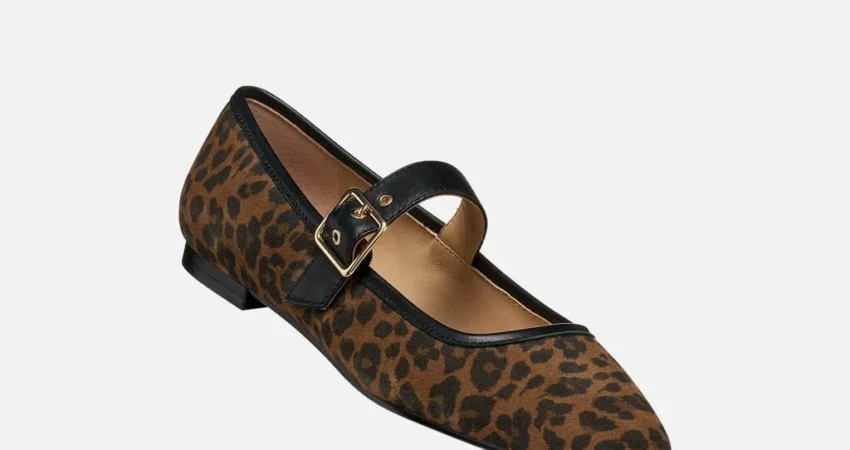
The fashion landscape for the Autumn/Winter 2026-27 season is witnessing a definitive resurgence of animal motifs, with leopard print emerging as the primary protagonist in the footwear sector. While the pattern has historically fluctuated between being a staple and a seasonal highlight, its current iteration focuses on the intersection of comfort and maximalism. Specifically, the ballet flat—a silhouette that has dominated the global market for several consecutive seasons—has become the preferred canvas for this bold aesthetic. Industry analysts suggest that this trend reflects a broader consumer shift toward "expressive basics," where traditional silhouettes are revitalized through high-impact textures and prints to provide a sense of novelty without sacrificing daily utility.

The Historical Context and Cyclical Resurgence
Leopard print has long held a complex position in the fashion lexicon. Originally popularized in the mid-20th century by couturiers such as Christian Dior, who featured the "Panthère" print in his 1947 debut collection, the pattern has evolved through various cultural lenses. It transitioned from a symbol of high-society luxury in the 1950s to a hallmark of rock-and-roll rebellion in the 1970s and 1980s, eventually finding a place in the "indie sleaze" and minimalist movements of the early 21st century.
The 2026-27 revival is distinct in its application. Unlike previous years where leopard print was often relegated to statement coats or evening wear, it is now being integrated into the "quiet luxury" framework that has dominated the mid-2020s. By applying the print to the humble ballet flat, designers are offering a middle ground: a shoe that functions as a neutral while providing enough visual interest to elevate standard denim and knitwear combinations. This strategic move by major European fashion houses and accessible luxury brands alike aims to capture a demographic that seeks longevity in their purchases but is fatigued by the monochromatic palettes of previous winters.

Market Trends and the Evolution of the Ballet Flat
The global footwear market in 2026 has seen a sustained decline in the demand for high heels, with a 14% increase in the sales of flat shoes compared to the 2024 fiscal year. This shift is largely attributed to the "Balletcore" aesthetic, which initially prioritized soft pastels and satin finishes. As the trend matures, it is adopting more "rugged" and "wild" influences. Leopard print ballet flats represent the apex of this evolution, blending the hyper-feminine structure of the ballerina shoe with the assertive nature of animalia.
Retail data from the third quarter of 2026 indicates that leopard print accessories are currently outperforming other seasonal patterns, such as houndstooth or tartan, by a margin of nearly 2:1. This performance has prompted a diverse range of brands—from high-street giants like H&M to artisanal labels like Gaimo—to release specialized collections centered on this specific footwear category.

A Comprehensive Review of the Season’s Key Models
The current market offers a spectrum of leopard print flats, ranging from minimalist designs to those featuring heavy hardware and architectural shapes. The following eight models have been identified by industry experts as the defining pieces of the Autumn/Winter 2026-27 cycle.
1. Geox: The Fusion of Sophistication and Technology
The Italian brand Geox has approached the trend with a focus on formal elegance. Their "Azlea" model features a slightly pointed toe and a black trim that provides a structured frame for the leopard print. The inclusion of a large gold buckle adds a layer of sophistication, making the shoe suitable for corporate environments. From a technical standpoint, the shoe utilizes Geox’s proprietary breathable sole technology, addressing the consumer demand for climate-controlled footwear during the transitional autumn months.

2. H&M: Democratizing High-Impact Style
H&M’s contribution to the trend is a minimalist leather ballerina that strips away ornamentation to allow the print to remain the focal point. Priced at approximately 69.99 euros, this model is designed for high-volume retail, targeting the younger professional demographic. The silhouette is classic and unembellished, serving as a versatile staple that pairs effectively with the burgundy and deep red accessories that are also trending this season.
3. Unisa: The Return of the Mary Jane
Spanish label Unisa has merged two major trends—leopard print and the Mary Jane silhouette. The addition of a thin strap across the instep introduces a romantic, vintage-inspired element that contrasts with the "wild" nature of the print. This model, the "Bryson," is positioned as a transitional piece, often styled by fashion editors with sheer or wool socks as temperatures drop, demonstrating the seasonal versatility of the flat shoe.

4. Martinelli: Innovation in Chromatic Variations
Breaking away from traditional tan and brown tones, Martinelli has introduced a version of the leopard print that incorporates deep burgundy (Rioja) hues. This "Rubicone" model reflects the industry’s move toward "stealth leopard," where the pattern is visible but muted through a darker color palette. This design caters to consumers who find the standard leopard print too vibrant for their personal style but wish to participate in the trend.
5. Sézane: The French Minimalist Standard
Sézane’s "Low Matilda" ballerina remains a favorite for its refined, low-cut silhouette. The French brand’s version is characterized by a clean aesthetic and a focus on material quality. By avoiding heavy hardware, Sézane positions the leopard flat as a "new neutral," suggesting it can be worn with everything from camel coats to navy tailored trousers.

6. Lodi: The Edgy Interpretation
For the more daring consumer, Lodi has released a model that incorporates metallic studs and an extra-large (XL) buckle. The "Isq5670P" features a more aggressive, pointed toe, moving the ballet flat away from its "sweet" connotations and into the realm of "rocker chic." This model exemplifies the "maximalist" side of the 2026-27 season, where texture and hardware are used to create a high-fashion statement.
7. Gaimo: Artisanal Craftsmanship and Natural Textures
Gaimo, known for its traditional manufacturing processes, has utilized natural hair-on-hide leather for its leopard flats. The "Alaia" model features a slightly squared toe, a shape that has gained significant traction in the 2026 luxury market. The use of natural textures adds a tactile dimension to the print, emphasizing the artisanal value of the footwear.

8. Gioseppo: Prioritizing Foot Health and Aesthetics
The "Barefoot" movement has influenced Gioseppo’s latest collection. Their leopard print flat is designed to mimic the natural shape of the foot, offering a wider toe box and a flexible sole. This model proves that trend-driven fashion can coexist with podiatric health, a growing concern for the modern consumer who prioritizes ergonomic design in their daily wardrobe.
Industry Statements and Economic Implications
Fashion analysts suggest that the proliferation of leopard print ballet flats is a calculated response to the "Lipstick Effect"—an economic theory where consumers, facing financial uncertainty, invest in small, high-impact luxury items rather than large-scale purchases. At price points ranging from 70 to 160 euros, these shoes offer a way for consumers to refresh their wardrobes for the new season without the commitment of a high-priced designer handbag or coat.

"We are seeing a return to ‘personality dressing,’" says Marcus Thorne, a retail strategist specializing in European footwear. "After years of very sterile, minimalist trends, the consumer is looking for items that feel curated and expressive. Leopard print, especially in a practical format like a flat shoe, satisfies that urge for flair while remaining grounded in reality."
Stylistic Integration and Future Outlook
The current consensus among stylists is that the leopard print flat should be treated as a neutral. For the Autumn/Winter 2026-27 season, the most prevalent styling involves pairing these shoes with:

- Straight-leg denim: To ground the boldness of the print.
- Monochromatic knitwear: Specifically in shades of cream, charcoal, and the season’s viral "oxblood" red.
- Oversized tailoring: To create a contrast between masculine proportions and feminine footwear.
As the industry moves toward the Spring 2027 collections, early indicators suggest that leopard print will not disappear but will instead transition into lighter fabrics and more open silhouettes, such as slingbacks and mules. The current success of the 8 models highlighted—from Geox to Gioseppo—serves as a robust validation that leopard print has successfully shed its "dated" reputation, reclaiming its status as a sophisticated and essential component of the contemporary woman’s wardrobe.
The resurgence of leopard print in the 2026-27 season is more than a fleeting fad; it is a reflection of a fashion cycle that values the intersection of heritage, comfort, and bold self-expression. By reimagining this classic print through the lens of modern footwear technology and diverse aesthetic preferences, brands have ensured that the leopard flat remains a cornerstone of seasonal style for years to come.

0 Comments