
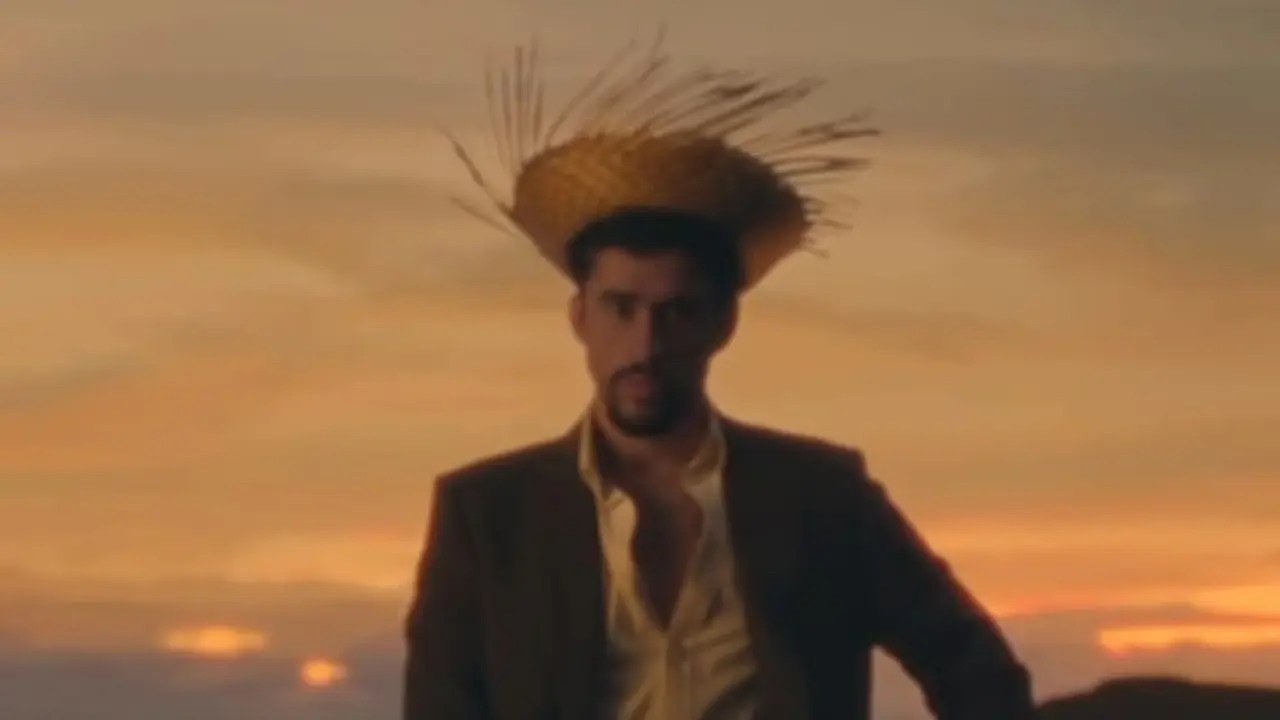
The global music phenomenon Bad Bunny is set to embark on his most significant cinematic venture to date, taking on the leading role in "Porto Rico," an ambitious historical drama helmed by fellow Puerto Rican artist Residente. This marks a pivotal moment in the career of Benito Antonio Martínez Ocasio, professionally known as Bad Bunny, as he transitions from acclaimed musician to the central figure in a major motion picture. The film, described as an epic "Caribbean Western," is deeply rooted in the tumultuous history of Puerto Rico, promising a narrative that is both emotionally resonant and historically significant.
The production boasts a formidable international cast, with Oscar winners Viggo Mortensen and Javier Bardem slated to appear alongside acclaimed actor Edward Norton, who is also serving as a producer on the project. This ensemble, coupled with the directorial vision of Residente and the involvement of Oscar-winning screenwriter Alexander Dinelaris (known for "Birdman"), positions "Porto Rico" as a highly anticipated cinematic event. The film aims to illuminate pivotal episodes of Puerto Rican history, particularly focusing on the island’s colonial past and its transition from Spanish rule to American control at the turn of the 20th century.
A New Chapter for a Global Icon
At 31 years old, Bad Bunny is no stranger to the silver screen. He has previously made appearances in supporting roles in films such as "Bullet Train," "Caught Stealing," and the upcoming "Happy Gilmore 2." However, "Porto Rico" represents a significant leap forward, placing him at the forefront of a narrative that extends beyond conventional entertainment. This leading role signifies a deliberate artistic expansion for an artist who has consistently used his platform to champion Puerto Rican culture and identity. His foray into such a historically charged project underscores a desire to engage with his heritage on a deeper, more profound level, leveraging his immense global reach to bring Puerto Rican stories to a wider audience.
The decision to cast Bad Bunny in such a prominent role is a testament to his burgeoning influence not just in music but also in popular culture at large. His ability to connect with millions worldwide, coupled with his outspoken advocacy for his homeland, makes him an ideal candidate to embody the complexities of a historical narrative centered on Puerto Rico. This casting choice is likely to generate considerable international interest, drawing audiences who may be less familiar with the island’s history but are captivated by Bad Bunny’s star power.
Unearthing Puerto Rican History: The Colonial Era
"Porto Rico" is set to delve into the island’s colonial period, specifically the transformative years between the late 19th and early 20th centuries. This era was marked by profound geopolitical shifts, most notably Puerto Rico’s transition from being a Spanish colony for over four centuries to becoming a territory under United States control following the Spanish-American War in 1898. The film intends to explore the socio-political, cultural, and economic ramifications of these changes, offering a nuanced portrayal of a period that has indelibly shaped Puerto Rican identity.
The narrative is expected to weave together dramatic storytelling with meticulously researched historical events. Residente, whose musical work often tackles social and political themes, has expressed a deep personal connection to the project. He co-wrote the screenplay with Alexander Dinelaris, aiming to create a story that is both compelling as a film and authentic in its historical representation. The involvement of Oscar-winning Mexican director Alejandro G. Iñárritu as an executive producer further amplifies the project’s artistic pedigree and international appeal.
Residente elaborated on the film’s significance, stating, "I have dreamed of making a film about my country since I was a child. The true history of Puerto Rico has always been surrounded by controversy. This film is a reaffirmation of who we are, told with the intensity and honesty that our history deserves." This statement highlights the film’s ambitious goal: to present an unvarnished account of Puerto Rican history, challenging prevailing narratives and celebrating the island’s resilience and cultural richness.
A Stellar Ensemble: Bridging Worlds
The presence of Hollywood heavyweights like Viggo Mortensen, Javier Bardem, and Edward Norton in "Porto Rico" elevates the film beyond a regional project, positioning it as a major international production. Mortensen, an Academy Award nominee known for his powerful performances in films like "The Lord of the Rings" trilogy and "Green Book," brings a wealth of experience in historical and epic dramas. Javier Bardem, an Academy Award winner for "No Country for Old Men" and a celebrated actor with a diverse filmography, adds significant gravitas to the cast. Edward Norton, an acclaimed actor and director known for his intellectual and intense performances in films such as "American History X" and "Fight Club," also contributes his talents as a producer, indicating a strong belief in the project’s artistic merit and potential impact.
Norton has spoken about the unique synergy between Residente and Bad Bunny, suggesting that their collaboration could yield a cinematic experience that is both artistically profound and culturally significant. The casting of such respected actors alongside a global music icon like Bad Bunny creates an intriguing dynamic, promising a rich tapestry of performances that can effectively convey the historical weight and emotional depth of the story. The interplay between these established actors and Bad Bunny, who is venturing into a leading dramatic role, will be a key element to watch.
The "Caribbean Western" Genre: A Unique Vision
The film’s classification as an "epic Caribbean Western" suggests a bold stylistic approach. While Westerns are typically associated with the American frontier, this descriptor hints at a narrative that incorporates elements of adventure, conflict, and the exploration of a rugged, often untamed landscape, transposed to the unique setting of colonial Puerto Rico. This genre fusion implies a visually striking film that captures the island’s distinct geographical beauty while exploring themes of power, resistance, and identity in a historical context.
The colonial period in Puerto Rico was a time of significant upheaval and cultural exchange, often marked by conflict and the struggle for self-determination. A "Caribbean Western" framework could effectively portray these dynamics, using the genre’s inherent dramatic tension to explore the island’s complex past. The "epic" nature of the film suggests a grand scope, likely encompassing sweeping landscapes, significant historical events, and a broad cast of characters representing various facets of Puerto Rican society during that era.
Residente’s Vision: A Personal Mandate
For Residente, "Porto Rico" represents the culmination of a lifelong ambition. His directorial debut, combined with his role as a screenwriter and producer, underscores his deep commitment to bringing this specific story to life. Residente, born René Pérez Joglar, has long been an outspoken advocate for Puerto Rican independence and cultural preservation. His music often critiques social injustices and political corruption, and his involvement in this film suggests that "Porto Rico" will be more than just a historical retelling; it will likely be a powerful statement on national identity and historical memory.
His collaboration with Alexander Dinelaris, who was instrumental in crafting the screenplay for the Oscar-winning film "Birdman," adds another layer of cinematic expertise. Dinelaris’s experience in developing complex, character-driven narratives will be crucial in translating historical events into a compelling cinematic story. The executive production by Alejandro G. Iñárritu, a director celebrated for his visually stunning and thematically rich films such as "Amores Perros," "Babel," and "The Revenant," further guarantees a high level of artistic ambition and technical execution. Iñárritu’s involvement suggests a commitment to the film’s critical and artistic aspirations, aiming for a production that stands out in the global cinematic landscape.
Supporting Data and Context
Puerto Rico’s history during the late 19th and early 20th centuries is a period of profound transformation. Following the Spanish-American War, Spain ceded Puerto Rico, along with Cuba and Guam, to the United States under the Treaty of Paris in 1898. This marked the end of over 400 years of Spanish colonial rule and the beginning of American administration, which brought about significant changes in the island’s political, economic, and social structures. The Foraker Act of 1900 established a civilian government in Puerto Rico, but it also declared the island an unincorporated territory of the United States, meaning that the U.S. Constitution did not apply in its entirety.
This period saw the rise of new economic systems, the introduction of American currency, and shifts in land ownership, often leading to significant social stratification and unrest. The cultural impact was also profound, with the imposition of English as the language of instruction in schools and the introduction of American cultural norms. The film "Porto Rico" is poised to explore these complex dynamics, potentially highlighting the struggles of ordinary Puerto Ricans caught between competing colonial powers and the burgeoning sense of a distinct national identity.
Broader Impact and Implications
The production and eventual release of "Porto Rico" carry significant implications, both for the artists involved and for the broader conversation about Puerto Rican history and identity. For Bad Bunny, this role could solidify his transition into a respected dramatic actor, expanding his artistic repertoire and influence. His participation is likely to attract a massive global audience to a story that might otherwise remain niche, fostering greater international awareness and understanding of Puerto Rican heritage.
For Residente and the filmmaking team, the project represents an opportunity to shape the narrative surrounding a crucial period in Puerto Rican history. By presenting a historically grounded yet artistically rendered account, they aim to challenge colonial perspectives and affirm a Puerto Rican narrative. The film’s success could pave the way for more high-profile productions that explore the rich and often untold stories of the Caribbean and Latin America, encouraging a more diverse representation of global histories in cinema.
The involvement of a star like Bad Bunny also brings a unique economic dimension. His massive fanbase translates into guaranteed audience interest, which can attract further investment in Latin American cinema and productions that authentically represent cultural narratives. This can create a virtuous cycle, encouraging more creators to explore similar themes and contributing to the growth of the film industry in the region.
Future Prospects and Anticipation
While specific details regarding shooting schedules and release dates for "Porto Rico" have not yet been officially announced, the project is already generating considerable buzz. Its potential to be a major cinematic event in 2026 is high, given the caliber of talent involved and the compelling historical backdrop. The combination of a potentially groundbreaking screenplay, an international A-list cast, and the unique vision of Residente as director positions "Porto Rico" as a film that could resonate deeply with audiences worldwide, offering a powerful and visually stunning exploration of a pivotal moment in Puerto Rican history. This venture represents not just a career milestone for Bad Bunny but also a significant cultural contribution that promises to illuminate a vital chapter of the island’s past for a global audience.

0 Comments