
The 48th edition of Cinéma du Réel, the prestigious international documentary film festival hosted in the heart of Paris, has officially unveiled its competitive selection, highlighting a robust and politically charged presence from Latin America. Scheduled to take place from March 21 to March 28, the festival serves as a global stage for non-fiction storytelling, and this year’s lineup underscores the region’s commitment to exploring historical memory, environmental degradation, and the complexities of the diaspora. The selection includes two short films and four minority co-productions that reflect the diverse aesthetic and thematic concerns of contemporary Latin American filmmakers.
The Prestige of Cinéma du Réel: A Historical Context
Founded in 1978 by the Bibliothèque publique d’information (Bpi) at the Centre Pompidou, Cinéma du Réel has long been regarded as one of the most influential documentary festivals in the world. Its mission has always been to bridge the gap between ethnographic research and cinematographic art, providing a platform for films that challenge conventional narratives. For Latin American filmmakers, being selected for the official competition is not merely an artistic achievement but a significant opportunity for international distribution and critical recognition.
The 48th edition arrives at a time when global documentary filmmaking is shifting toward more hybrid forms—blending archival research with personal essay and experimental aesthetics. The Latin American contingent this year exemplifies this trend, moving away from traditional observational styles to embrace "impronta política" (political imprint) through innovative visual languages.
Colombian Memory and Archival Exploration
A central figure in this year’s selection is Colombian filmmaker and producer Diana Bustamante. Her short film, "El león" (The Lion), marks her return to the director’s chair following her 2022 feature debut, "Nuestra película." Bustamante has established herself as a vital voice in Colombian cinema, known for her work as a producer on internationally acclaimed films such as Apichatpong Weerasethakul’s "Memoria."
In "El león," Bustamante continues her deep dive into Colombia’s recent political memory. By utilizing meticulously selected archival footage, the film reconstructs fragments of a national history often obscured by violence and institutional silence. The work arrives in Paris with significant momentum, having had its world premiere in the Forum Expanded section of the Berlin International Film Festival. Bustamante’s approach suggests that cinema is not just a tool for recording history but a medium for interrogating it, forcing audiences to confront the ghosts of the past through the very images that recorded them.
Complementing this exploration of Colombian identity is Guillermo Quintero, who returns to Cinéma du Réel with his third feature film, "Relicto." This work serves as the final installment of a trilogy focused on the disappearance of the Colombian jungle, following his previous acclaimed documentaries "Homo Botanicus" and "Río Rojo." Supported by the Colombian Film Development Fund (FDC) and the French National Center for Cinema and the Moving Image (CNC), "Relicto" addresses the urgent environmental crisis in South America. Quintero’s trilogy provides a scientific yet poetic record of biodiversity loss, positioning the Colombian landscape as a protagonist in a tragic narrative of industrial encroachment.
The Chilean-Palestinian Diaspora and Identity
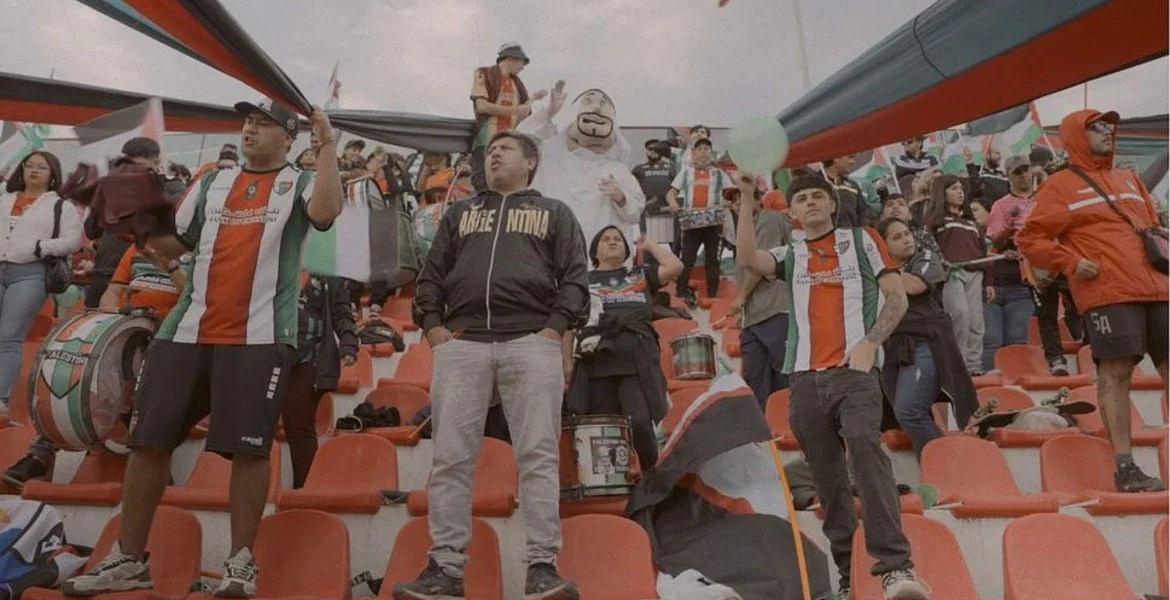
One of the most culturally significant entries in the short film competition is "Baisanos," a collaborative effort between Chile, Palestine, and Spain. Directed by Andrés Khamis Giacoman and Francisca Khamis Giacoman, the film offers an intimate portrait of the supporters of Club Deportivo Palestino, a professional football club based in Santiago, Chile.
The context of this film is deeply rooted in historical data: Chile is home to the largest Palestinian community outside of the Middle East, with estimates suggesting over 500,000 people of Palestinian descent reside in the country. Club Deportivo Palestino serves as more than just a sports team; it is a symbol of identity and resistance for the diaspora. Through the lens of the "hinchada" (the fans), the directors construct a dialogue between two geographically distant but emotionally connected lands. The film arrives in Paris after a successful run at the Locarno Film Festival, offering a vision of a "victorious future" that transcends the immediate tragedies of conflict.
Further representing the Chilean experience is René Ballesteros with "Los niños sin tierra" (The Children Without Land). Ballesteros, a Chilean filmmaker based in France, is a familiar name at Cinéma du Réel, having previously presented "Los sueños del castillo" and "La quemadura." His latest feature follows two children adopted in Europe who return to Chile to search for their biological roots. This production, a collaboration between the French company Les Films d’Ici and the Chilean outfits La Madre and La Ballesta, touches on the sensitive history of international adoptions in Chile—a topic that has seen increased scrutiny and legal investigation in recent years.
Transnational Collaborations and Global Solidarity
The selection is rounded out by two works that highlight the strength of minority co-productions, demonstrating how Latin American themes are increasingly integrated into global cinematic dialogues.
"An Incomplete Calendar," directed by Iranian artist Sanaz Sohrabi, is a feature-length project that involves a unique partnership between Canada, Iran, Turkey, and Venezuela. Produced by Fol Films in co-production with the Central University of Venezuela (UCV), the film recontextualizes oil not merely as a global commodity but as a political lever for liberation struggles. Specifically, Sohrabi examines the role of oil in Palestinian liberation and the construction of pan-Arab solidarity during the 1960s and 1970s. The inclusion of Venezuela in this production is historically pertinent, given the country’s foundational role in OPEC and its long-standing geopolitical ties to the Middle East. International sales for the film are being handled by Kino Rebelde, a boutique agency specializing in creative and political documentaries.
Finally, the festival features "Rose Moderne, Huancor, Pakatnamu Prémonition, Trois Formes Courtes," a short film by Marseille-based artist Louidgi Beltrame. This co-production between France and Peru explores archaeological and mystical sites in Peru, blending contemporary art practices with documentary observation. Beltrame’s work often investigates how ancient sites and modern architecture intersect, providing a meditative look at the Peruvian landscape.
Chronology and Event Logistics
The 48th Cinéma du Réel is structured to maximize engagement between filmmakers and the Parisian public. The timeline for the Latin American screenings is as follows:
- March 21: Opening ceremonies and inaugural screenings at the Centre Pompidou.
- March 22–25: Official competition screenings for "El león" and "Baisanos," followed by Q&A sessions with the directors.
- March 26: World premiere of "Los niños sin tierra" and "Relicto," highlighting the feature-length co-productions.
- March 27: Screening of "An Incomplete Calendar" and the experimental short by Louidgi Beltrame.
- March 28: Awards ceremony, where the Grand Prix and various specialized awards (such as the SCAM International Award) will be announced.
Supporting Data and Industry Implications
The presence of four minority co-productions out of the six selected works reflects a growing trend in the Latin American film industry: the reliance on European partnerships to secure funding and international visibility. According to data from the European Audiovisual Observatory, co-productions between Latin America and Europe (particularly France and Spain) have seen a 15% increase in the last five years. These partnerships are often facilitated by funds such as the CNC’s "Aide aux cinémas du monde," which was instrumental for several films in this year’s selection.
Furthermore, the focus on "political memory" and "environmentalism" aligns with current global funding priorities. Documentary festivals are increasingly prioritizing films that act as archives for human rights and ecological preservation. The selection of Bustamante and Quintero suggests that Colombia remains at the forefront of this movement, utilizing its internal conflicts and natural wealth as catalysts for high-level cinematic discourse.
Official Responses and Artistic Impact
While official statements from the festival organizers emphasize the "diversity and urgency" of this year’s selection, industry analysts suggest that the Latin American focus at Cinéma du Réel serves as a barometer for the region’s socio-political climate. The themes of displacement (Ballesteros), diaspora (Khamis Giacoman), and resource politics (Sohrabi) mirror the contemporary challenges facing Latin American nations.
Critics argue that the inclusion of these films in a "First World" festival like Cinéma du Réel is crucial for "de-territorializing" Latin American cinema. By presenting these stories in Paris, the filmmakers move beyond local audiences to engage with a global intelligentsia, potentially influencing international policy and cultural perception.
As the 48th edition of Cinéma du Réel progresses, the impact of these six films will likely extend beyond the festival circuit. For the directors involved, the exposure in Paris is a gateway to further commissions, educational distribution, and a permanent place in the global documentary canon. The festival continues to prove that while the "reality" captured on film may be localized, its resonance is undeniably universal.

0 Comments