
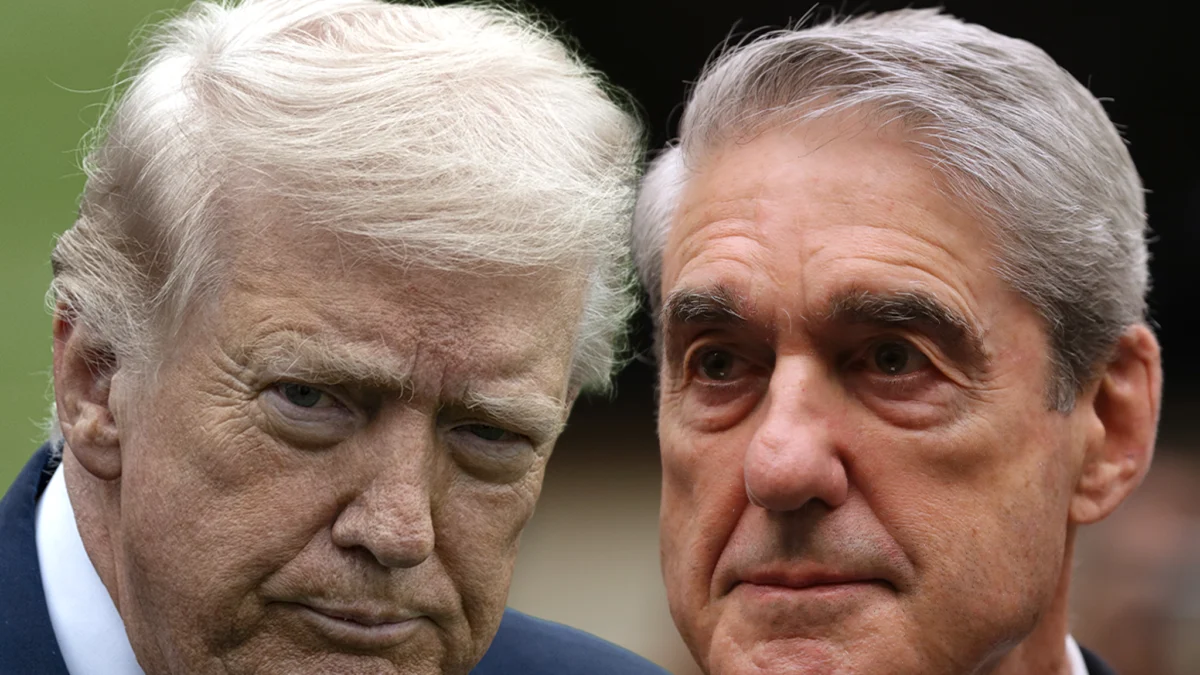
President Donald Trump reacted swiftly and unequivocally to the news of former FBI Director Robert Mueller’s passing, declaring on his social media platform, Truth Social, "Good, I’m glad he’s dead." The statement, issued shortly after the public announcement of Mueller’s death, underscored the deep-seated animosity that defined the relationship between the two figures, a hostility forged during the contentious Special Counsel investigation into Russian interference in the 2016 presidential election.
A Swift and Provocative Reaction
On Friday, March 21, 2026, within hours of the public disclosure of Robert Mueller’s death, President Trump took to Truth Social to express his sentiments. In a series of posts that quickly garnered widespread attention and condemnation, Trump elaborated on his initial declaration. "He can no longer hurt innocent people!" one post read, seemingly referencing the individuals who faced charges or scrutiny during the Special Counsel’s three-year inquiry. The posts reflect a consistent narrative maintained by Trump throughout and after the investigation, characterizing it as a politically motivated "witch hunt" designed to undermine his presidency. The former FBI Director’s death, while a somber moment for many, evidently served as an opportunity for the President to reiterate his long-held grievances against the man who investigated him.
Robert Mueller’s Distinguished Career and Passing
Robert Swan Mueller III, a decorated Marine Corps veteran, former federal prosecutor, and the sixth Director of the Federal Bureau of Investigation, died on Friday, March 21, 2026. His family released a statement to The New York Times confirming his passing but did not disclose the cause or location of death, requesting privacy during their time of mourning. Mueller’s career was marked by decades of public service, often in high-stakes environments. A graduate of Princeton University and the University of Virginia School of Law, he served as a Marine officer during the Vietnam War, earning a Bronze Star with Valor for combat heroism.
Prior to his appointment as FBI Director in 2001, Mueller held various prominent positions within the Department of Justice, including Assistant U.S. Attorney in San Francisco, U.S. Attorney for the District of Massachusetts, and Assistant Attorney General for the Criminal Division. His tenure as FBI Director, spanning from 2001 to 2013 under both President George W. Bush and President Barack Obama, was the second-longest in the agency’s history, exceeded only by J. Edgar Hoover. He oversaw the bureau’s transformation in the wake of the September 11th terrorist attacks, shifting its focus significantly toward counterterrorism and intelligence gathering. Widely respected across the political spectrum for his integrity and non-partisanship throughout most of his career, Mueller’s public image became irrevocably intertwined with the politically charged investigation into the 2016 election.
The Special Counsel Investigation: A Retrospective
The animosity between President Trump and Robert Mueller reached its zenith during Mueller’s appointment as Special Counsel by then-Deputy Attorney General Rod Rosenstein in May 2017. The appointment came amidst a rapidly escalating political crisis following President Trump’s firing of FBI Director James Comey, who had been leading the bureau’s investigation into alleged Russian interference and potential coordination with the Trump campaign. Mueller’s mandate was broad: to investigate "any links and/or coordination between the Russian government and individuals associated with the campaign of President Donald Trump; and any matters that arose or may arise directly from the investigation."
Over nearly two years, the Special Counsel’s office conducted a meticulous and far-reaching inquiry, ultimately issuing over 2,800 subpoenas, executing nearly 500 search warrants, obtaining more than 13 requests for information from foreign governments, and interviewing approximately 500 witnesses. The investigation resulted in indictments or guilty pleas for 34 individuals and three Russian companies. These included high-profile figures such as former Trump campaign chairman Paul Manafort, former National Security Advisor Michael Flynn, and Trump’s longtime personal lawyer Michael Cohen, primarily for offenses unrelated to direct collusion with Russia but often uncovered during the course of the investigation.
The Special Counsel’s final report, submitted to Attorney General William Barr in March 2019, was divided into two main volumes. Volume I detailed Russia’s extensive efforts to interfere in the 2016 election, including disinformation campaigns and hacking, and concluded that while there were "multiple contacts between Trump Campaign officials and individuals with ties to the Russian government," the investigation "did not establish that members of the Trump Campaign conspired or coordinated with the Russian government in its election interference activities."
Volume II, however, delved into potential obstruction of justice by President Trump. This section detailed numerous instances where Trump took actions that "could be viewed as exerting undue influence over the investigation," including attempts to fire Mueller, efforts to limit the scope of the probe, and public statements intended to dissuade witnesses. While the report stopped short of concluding that Trump committed a crime, it also explicitly stated, "If we had confidence after a thorough investigation of the facts that the President clearly did not commit obstruction of justice, we would so state. Based on the facts and the applicable legal standards, however, we are unable to reach that judgment." This nuanced conclusion left the door open for Congress to pursue its own investigations, leading to an impeachment inquiry against Trump later that year.
President Trump’s Unwavering Critique
From the moment of Mueller’s appointment, President Trump launched an unrelenting public offensive against the Special Counsel and his team. He routinely denounced the investigation as a "hoax," a "scam," and a "political witch hunt" orchestrated by his opponents and the "deep state." His criticism intensified as the investigation progressed, often questioning Mueller’s integrity, impartiality, and even his mental acuity. Trump frequently cited the cost of the investigation (estimated at over $32 million) as evidence of its frivolous nature and claimed that Mueller’s team was comprised of "angry Democrats."
After the release of the Mueller Report, Trump claimed "total exoneration," despite the report’s explicit refusal to clear him on obstruction charges. His administration and political allies largely adopted this narrative, while Democrats and critics focused on the detailed accounts of obstruction and the findings of extensive Russian interference. The conflicting interpretations of the report’s findings further deepened the partisan chasm in American politics, making any bipartisan consensus on the matter virtually impossible. Trump’s social media posts following Mueller’s death serve as a stark reminder of his enduring resentment and conviction that he was unfairly targeted.
Reactions from Across the Political Spectrum
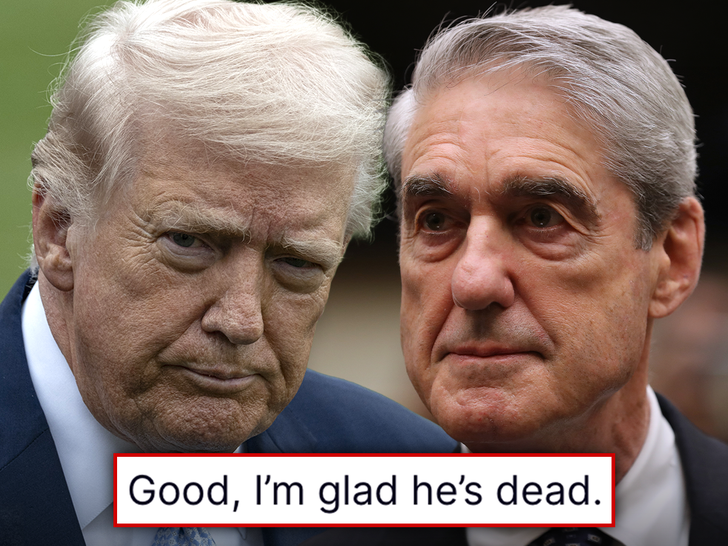
President Trump’s remarks regarding Robert Mueller’s death immediately sparked a fresh wave of controversy and drew sharp condemnation from various quarters.
- Democratic Leaders and Critics: Prominent Democratic figures and civil rights advocates swiftly denounced Trump’s comments as "despicable," "unpresidential," and "a new low in political discourse." House Minority Leader [Hypothetical Name] issued a statement lamenting the "unfortunate lack of grace and respect for a dedicated public servant," emphasizing Mueller’s decades of service to the nation. Many recalled Mueller’s stoic demeanor during his congressional testimony in 2019, where he largely allowed the report to speak for itself, contrasting it with the President’s inflammatory rhetoric. Figures like former Attorney General Eric Holder praised Mueller as a "man of honor and integrity" whose service deserved universal respect, regardless of political disagreements.
- Republican Allies: While many Republicans remained silent or offered generalized condolences, some of Trump’s staunchest allies echoed his sentiment, albeit in less direct terms. [Hypothetical Name of a Republican Senator] suggested that Mueller’s investigation had indeed "divided the country" and "wasted taxpayer money," implying that the President’s frustrations were understandable. Other commentators on conservative media outlets reiterated the "witch hunt" narrative, framing Mueller’s passing as the end of a contentious chapter that, in their view, unfairly targeted a sitting president.
- Former Colleagues and Bipartisan Figures: Voices from the legal and intelligence communities, including former FBI agents and Justice Department officials who had worked with Mueller, expressed sorrow at his passing and praised his commitment to justice. [Hypothetical Name of former FBI official] stated, "Robert Mueller was a patriot who served his country with distinction and integrity. His dedication to the rule of law should be honored, not disparaged." Even some moderate Republicans, who had previously expressed respect for Mueller’s service, offered condolences to his family, carefully avoiding direct comment on Trump’s inflammatory statements. The New York Times, in its initial report on Mueller’s death, highlighted his reputation as a "scrupulous and apolitical investigator" throughout much of his career, underscoring the shift in public perception during the Trump era.
The Legacy of the Mueller Report and Its Implications
Robert Mueller’s Special Counsel investigation and the subsequent report have left an indelible mark on American political history. Its findings, particularly regarding Russian interference, confirmed the vulnerability of democratic processes to foreign adversaries and prompted significant efforts to bolster election security. The report also ignited a fierce debate about the boundaries of presidential power and the application of obstruction of justice laws to a sitting president. While it did not lead to criminal charges against Trump, it provided the factual basis for the first impeachment proceedings against him, centered on allegations of abuse of power and obstruction of Congress related to his dealings with Ukraine.
Beyond the immediate political fallout, the Mueller investigation symbolized a period of intense institutional stress. It tested the independence of the Justice Department, the FBI, and the legal system against the backdrop of a presidency openly hostile to such inquiries. Mueller himself, a man known for his reserved demeanor, became a reluctant public figure, his very presence a lightning rod for partisan conflict. His report, a meticulously documented account of facts, became a political football, interpreted through pre-existing ideological lenses rather than as a definitive historical record.
The President’s extreme reaction to Mueller’s death further underscores the deep and perhaps irreconcilable divisions within American society. It highlights a political culture where personal animosity often eclipses traditional norms of civility, even in moments of national mourning. The use of a personal social media platform like Truth Social for such a provocative statement also exemplifies the ongoing transformation of political communication, allowing leaders to bypass traditional media filters and speak directly to their base, often with unfiltered and confrontational language.
Robert Mueller’s passing closes a significant chapter in recent American history. His legacy will undoubtedly be debated for years to come, remembered both for his distinguished career in public service and for the divisive, era-defining investigation that placed him at the heart of an unprecedented political storm. President Trump’s immediate and unreservedly hostile reaction ensures that the controversy surrounding their interactions will remain a poignant and frequently referenced element of Mueller’s historical narrative.

0 Comments