
 Rifan Muazin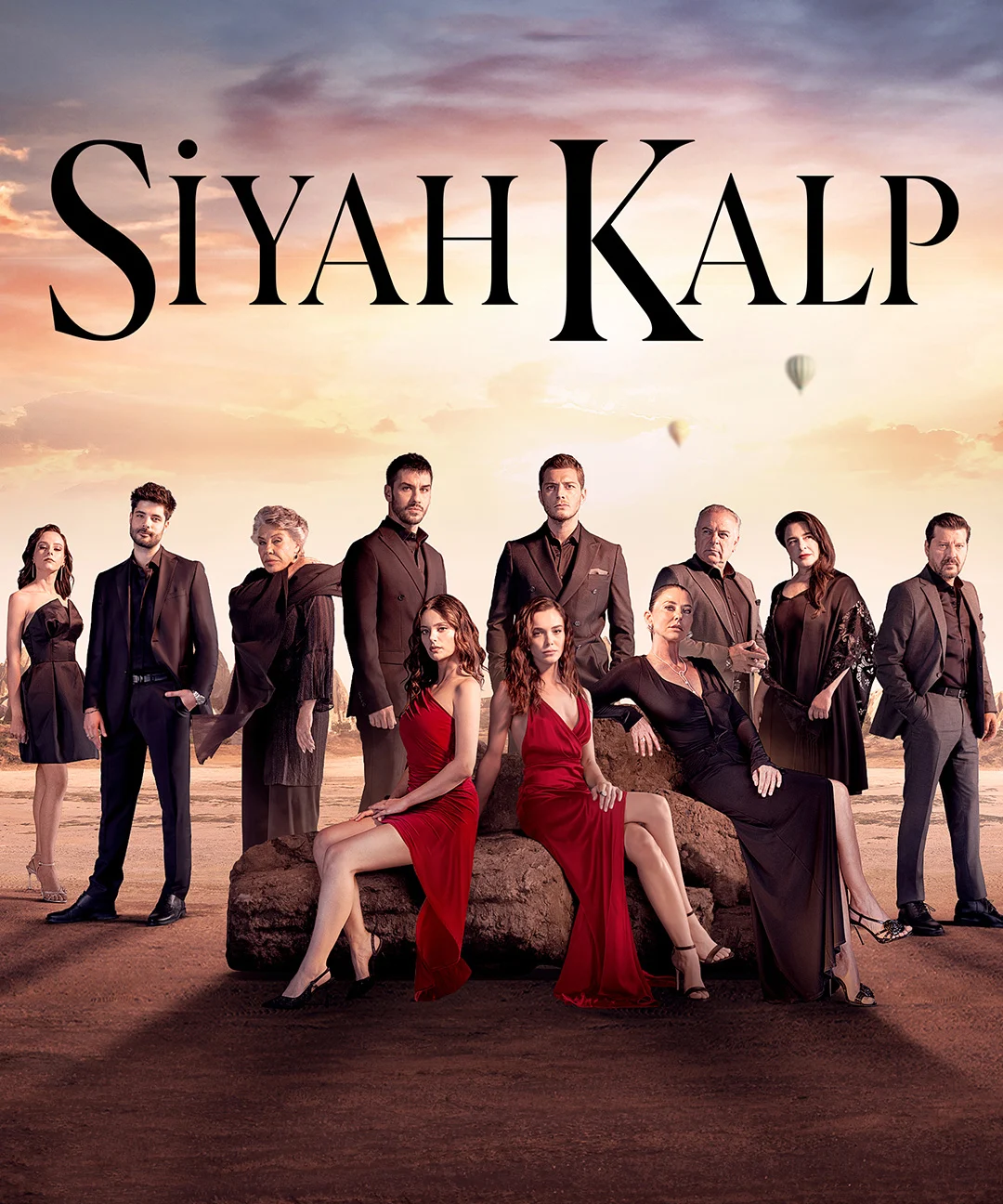
Valley of Hearts (Siyah Kalp), a highly anticipated new Turkish drama, is set to premiere on Show TV on September 12, 2024, concluding its 34-episode run on May 29, 2025. Produced by the renowned Tims&B Productions, known for its high-quality and globally successful series, the show delves into complex family dynamics, long-buried secrets, and the arduous journey of love and revenge. Directed by Murat Saracoglu and Evren Karabiyik Gunaydin, with a screenplay penned by Yildiz Tunc, the series promises a gripping narrative against the stunning backdrop of Nevşehir, Turkey, particularly the picturesque region of Cappadocia. The drama, also known internationally as La Notte Nel Cuore and Pod Istim Nebom, is classified within the family and drama genres, with each episode running a substantial 120-150 minutes, a standard length for Turkish television productions.
A Past Unveiled: The Core Narrative
At the heart of Valley of Hearts lies the poignant and often painful story of Sumru (Ece Uslu), a woman who, in her youth, made the devastating decision to abandon her newborn twins, never even holding them. This act, shrouded in mystery and trauma, forms the foundational secret upon which her seemingly perfect new life is built. Fleeing her past, Sumru relocated to Cappadocia with her mother, Nihayet (Isil Yucesoy), and soon married Samet (Burak Sergen), a powerful and wealthy figure in the local tourism industry.
Years later, Sumru inhabits the opulent Sansalan Mansion, leading a life of privilege and social standing. She is perceived as a devoted wife to Samet, a loving mother to her two biological children, Esat (Genco Ozak) and Harika (Derin Ince), and even a caring stepmother to Samet’s son, Cihan (Burak Tozkoparan). The twins she left behind are a ghost she refuses to acknowledge, a chapter of her life she has meticulously erased from public memory and even from her conversations with her own mother. To the outside world, her life is immaculate, a testament to her ability to bury a dark truth beneath a veneer of domestic bliss.
However, the past has a relentless way of resurfacing. The abandoned twins, Nuh (Aras Aydin) and Melek (Hafsanur Sancaktutan), were raised by their grandmother while their father endured a prison sentence. Their upbringing was far from easy, marked by hardship and a deep-seated resentment towards the mother who forsook them. As their grandmother neared her death, she unveiled the truth about their mother’s identity, a revelation that ignited a burning desire for answers and justice within the siblings. Following their grandmother’s passing, Nuh and Melek embark on a transformative journey to Cappadocia, drawn by the irresistible pull of their origins.
Upon their arrival, Nuh and Melek seek to confront Sumru, believing they have a rightful place in the family she built. Their initial encounter with Sumru is characterized by a shocking coldness; she vehemently denies any connection to them. A few days later, in a clandestine meeting, Sumru offers them money, a desperate attempt to buy their silence and ensure their permanent disappearance from her life. Her chilling words, "Giving birth doesn’t make me your mother," leave Nuh and Melek stunned and heartbroken. The twins, who had perhaps harbored a flicker of hope for remorse or an apology, are met instead with stark rejection and indifference, deepening their pain as they witness Sumru’s seemingly happy life with her other children.
Intrigue within the Sansalan Mansion and Emerging Connections
Simultaneously, tensions begin to escalate within the grand Sansalan mansion. Hikmet (Esra Dermancioglu), Sumru’s widowed sister-in-law, arrives with her daughter, Sevilay (Leyla Tanlar). Hikmet and Samet harbor a secret agenda: to orchestrate a marriage between Sevilay and Cihan, aiming to consolidate the family’s wealth and power within their trusted circle. This arranged union becomes a central point of conflict, intertwining with the lives of the newly arrived twins.
As fate would have it, life in Cappadocia takes an unexpected turn for the younger generation. Cihan, Sumru’s stepson, crosses paths with Melek, and an undeniable connection sparks between them. Simultaneously, Sevilay, despite being groomed for marriage to Cihan, finds herself inexplicably drawn to Nuh, Melek’s brother. These burgeoning, innocent feelings are immediately overshadowed by the weight of the pre-arranged marriage, setting the stage for a complex web of forbidden love, loyalty, and societal expectations.
Undeterred by Sumru’s attempts to buy them off, Melek and Nuh resolve to stay in Cappadocia and expose the truth to Sumru’s family. Melek secures employment at the Sansalan mansion, subtly embedding herself within the family’s orbit and developing close friendships. Meanwhile, Nuh forms an alliance with Tahsin (Ilker Aksum), a long-standing adversary of the Sansalan family. United by a shared sense of bitterness and a desire for retribution, Nuh and Tahsin begin to plot their revenge, promising to unravel the carefully constructed facade of the Sansalan empire.
As emotions intensify and the intricate plots unfold, new relationships blossom amidst the chaos. Melek and Cihan grow closer, their connection deepening despite the familial complexities. Similarly, Nuh and Sevilay find themselves increasingly drawn to each other, challenging the pre-ordained path set for Sevilay. The series thus explores the profound struggles of these young individuals, caught between nascent love, unwavering loyalty, and the explosive secrets that threaten to shatter their worlds. Valley of Hearts promises to be a gripping exploration of whether Melek and Nuh can uncover the truth, reclaim their rightful place, understand Sumru’s past actions, and navigate the treacherous waters of love and family amidst a brewing storm of revenge.
Key Characters and Their Intricate Worlds
The success of a drama often hinges on the depth and complexity of its characters, and Valley of Hearts appears to be meticulously crafted in this regard.
-
Sumru Sansalan (Ece Uslu): Portrayed by the esteemed Ece Uslu, Sumru is the enigmatic matriarch whose life is a testament to denial. She has built a life of luxury and social standing upon a foundation of buried truths, refusing to acknowledge her abandoned twins even when they stand before her. Her public persona as a loving wife and mother sharply contrasts with the coldness she displays towards Melek and Nuh, hinting at profound secrets. The crucial revelation that she was raped by her fiancé, leading to the twins’ birth and her subsequent abandonment of them, adds a layer of tragic complexity to her character. This backstory doesn’t excuse her actions but provides a harrowing context, challenging viewers to grapple with her trauma and the extreme choices she made. Her journey will likely explore themes of guilt, repression, and the possibility of redemption, or further descent into denial.
-
Cihan Sansalan (Burak Tozkoparan): As Samet’s biological son and Sumru’s stepson, Cihan is an outsider within his own family. Having lived abroad, he returns to Cappadocia due to his father’s illness, carrying a quiet sense of exclusion. Kind-hearted and thoughtful, he finds himself perpetually torn between loyalty to his family and the burgeoning, undeniable feelings for Melek. His attraction to Melek serves as a catalyst for a quiet rebellion against the pre-determined path set for him, particularly the arranged marriage to his cousin, Sevilay. Cihan represents the moral compass and the potential for genuine connection in a world riddled with deceit and calculated alliances. His story arc will explore self-discovery, challenging familial expectations, and the pursuit of authentic love.
-
Melek Cakirca (Hafsanur Sancaktutan): Hafsanur Sancaktutan embodies Melek as a resilient, compassionate, and dignified young woman driven by an unshakeable need for truth. Despite a challenging upbringing marked by abandonment, she maintains a grace that contrasts with the bitterness her circumstances could easily foster. Unlike her brother Nuh, Melek seeks answers and closure more than revenge, hoping for a connection with her birth mother. Her developing relationship with Cihan offers her a glimpse of hope and belonging, a stark contrast to the rejection she has known. Melek’s journey is one of healing, seeking identity, and navigating the complexities of love and forgiveness in the face of profound betrayal.
-
Nuh Cakirca (Aras Aydin): Aras Aydin portrays Nuh as a strong-willed, emotionally charged young man, profoundly shaped by abandonment and hardship. Raised without a father and rejected by his mother before he could know her, Nuh harbors a deep sense of betrayal that fuels his desire for revenge. Protective of his twin sister Melek, he struggles to balance his moral compass with the anger that has defined much of his life. His bond with Tahsin, whom he considers an elder brother, further solidifies his path towards retribution. However, his interactions with Sevilay reveal a hidden tenderness, suggesting a capacity for love that could challenge his vengeful inclinations. Nuh’s arc will explore the corrosive nature of anger, the complexities of justice, and the transformative power of love.
-
Sevilay (Leyla Tanlar): Leyla Tanlar brings to life Sevilay, a seemingly naive and vulnerable young woman who, beneath the surface, possesses a growing determination to forge her own destiny. Though her family attempts to dictate her future, particularly through the arranged marriage to Cihan, Sevilay proves to be more than just a privileged pawn. Her unexpected connection with Nuh forces her to confront the harsh realities of love, class divisions, and the true meaning of freedom. Sevilay’s character offers a perspective on the constraints faced by women in such societal structures and her journey will be one of awakening, self-assertion, and challenging the status quo.
Production Excellence and Thematic Resonance
Tims&B Productions, the force behind Valley of Hearts, has an impressive track record of delivering internationally acclaimed Turkish dramas, including "Magnificent Century" and "Bir Zamanlar Çukurova" (Bitter Lands). Their involvement signals a commitment to high production values, compelling storytelling, and a strong visual aesthetic. Directors Murat Saracoglu and Evren Karabiyik Gunaydin are expected to bring their seasoned expertise to navigate the complex emotional landscapes and intricate plot points of the series, ensuring a cinematic quality typical of major Turkish productions. Yildiz Tunc, as the screenwriter, is tasked with weaving together the multi-layered narrative, ensuring character depth, and maintaining the suspense that will keep audiences engaged through the lengthy episodes.
The choice of Nevşehir, particularly the breathtaking region of Cappadocia, as the primary filming location is strategic. Cappadocia, with its unique "fairy chimney" rock formations, ancient cave dwellings, and stunning valleys, offers a visually spectacular and historically rich backdrop. This iconic landscape is not merely a setting but is expected to become an integral part of the series’ atmosphere, contrasting the timeless beauty of nature with the raw, often ugly, human emotions of betrayal, revenge, and forbidden love. The mystical and ancient aura of Cappadocia could symbolically represent the deep-rooted secrets and the long shadows of the past that permeate the Sansalan family.
The Global Appeal of Turkish Dramas
Turkish dramas, or ‘dizi,’ have carved out a significant niche in the global entertainment market, captivating audiences across the Middle East, North Africa, the Balkans, Latin America, and increasingly, Europe and Asia. Their appeal lies in their high production quality, compelling storylines often centered on family values, intricate romantic plots, and exploration of social issues, all delivered with strong emotional performances. The characteristic long episode lengths allow for extensive character development and complex narrative arcs, drawing viewers deeply into the fictional worlds.
Valley of Hearts fits squarely within this successful genre, leveraging popular tropes such as long-lost family members, forbidden love across class divides, and intricate revenge plots. However, the unique element of a mother abandoning twins due to a traumatic event like rape adds a profound psychological layer, setting it apart from more conventional family dramas. This particular narrative choice allows the series to delve into sensitive themes of trauma, societal stigma, the long-term impact of difficult decisions, and the complex path to forgiveness or, conversely, the perpetuation of cycles of pain. The series is poised to explore not just external conflicts but also the internal struggles of its characters, particularly Sumru, Melek, and Nuh, as they confront their pasts and futures.
Anticipated Reception and Broader Implications
Given the strong cast, reputable production company, and a compelling, emotionally charged premise, Valley of Hearts is anticipated to garner significant attention both domestically and internationally. Show TV, a major broadcast network in Turkey, provides a robust platform for its premiere. The extensive social media presence already established for "Siyah Kalp" (Instagram, Twitter, Facebook, YouTube) indicates a proactive approach to audience engagement and hints at the potential for a dedicated fan base even before its broadcast.
The series is likely to resonate with audiences who appreciate dramas that explore the darker facets of human nature alongside the enduring power of love and family. Its exploration of themes such as abandonment, identity, social class, and the moral ambiguities of revenge and forgiveness will offer viewers rich material for discussion. The central conflict between Melek and Nuh’s desire for truth and Sumru’s steadfast denial, coupled with the blossoming but complicated romances, suggests a narrative rich in emotional tension and moral dilemmas.
Valley of Hearts (Siyah Kalp) is more than just a family drama; it is a profound exploration of the consequences of past choices, the enduring human need for connection, and the relentless pursuit of truth. As the series unfolds against the stunning vistas of Cappadocia, viewers can expect a tale filled with heartbreak, passion, and the eternal struggle between fate and free will, making it a potentially significant addition to the global Turkish drama phenomenon.


 Eva Lovia
 Julia Chirkova
 Julia Prastini
 Nila Kartika Wati
 Jia Lissa
 admin
admin