
 Lana Rhoades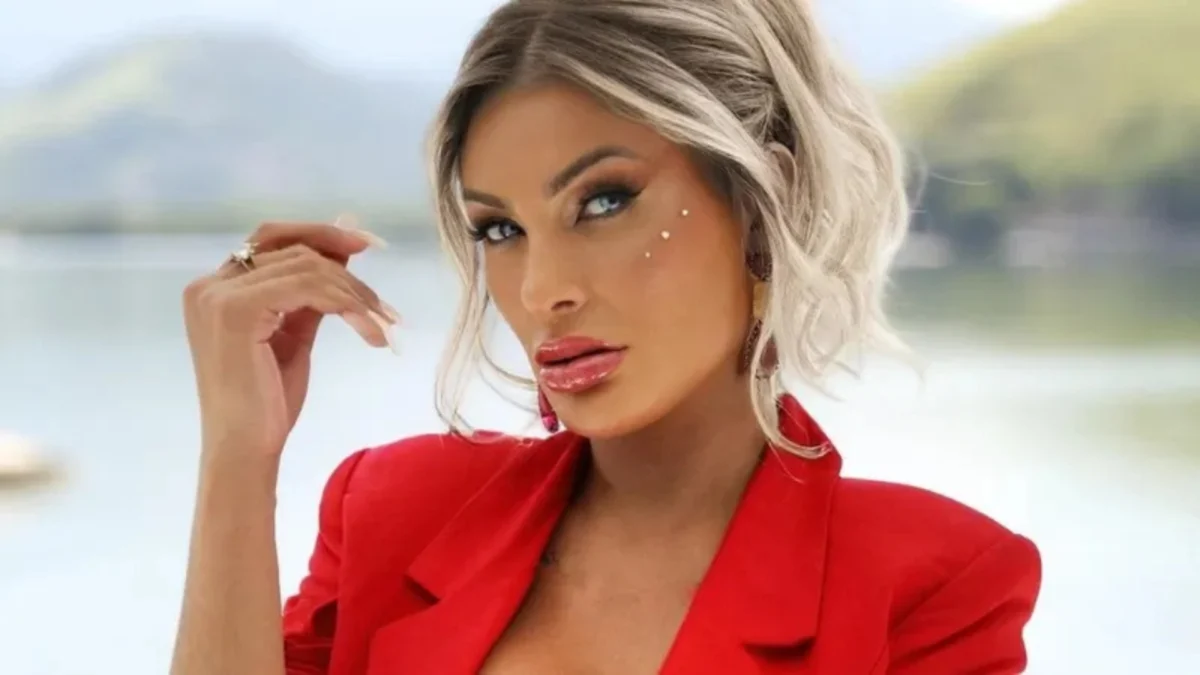
Brazilian digital influencer and adult content creator Andressa Urach sparked a significant controversy in 2024 with a provocative announcement made on her official Instagram Stories. Urach openly declared her intention to produce adult films featuring "seven men with dwarfism," specifically citing a desire to create a "Snow White and the Seven Dwarfs" themed production for adult content platforms. The revelation quickly disseminated across social media, drawing a wide spectrum of reactions ranging from shock and amusement to severe criticism and ethical concerns.
The Announcement Unveiled: A Controversial Vision
The controversial statement originated from Urach’s Instagram account, where she directly appealed to her followers for assistance in her casting search. Her exact words, translated from Portuguese, were: "Someone indicate some men with dwarfism. I want 7… I know 3." She further elaborated that her explicit goal was to "make Snow White and the Seven Dwarfs," indicating a specific thematic direction for the proposed adult content. In her initial post, Urach tagged three existing +18 content creators whom she already knew, suggesting that her search was actively underway to complete her desired ensemble. This candid call to action, broadcast to her millions of followers, immediately signaled her intent to push boundaries within the adult entertainment sphere, a realm she re-entered with considerable fanfare in recent years. The platforms she primarily uses for content distribution, such as OnlyFans and Privacy, are known for their creator-driven models, which allow for a wide range of niche and often provocative content.
Andressa Urach: A History of Provocation and Transformation
To fully grasp the context of this latest controversy, it is essential to understand Andressa Urach’s prominent and often tumultuous public history. Urach first rose to national fame in Brazil as a model and contestant in the Miss Bumbum pageant, where she was crowned runner-up in 2012. Her career was subsequently marked by a series of high-profile controversies, including a highly publicized affair and a near-fatal health crisis in 2014 due to complications from cosmetic procedures involving hydrogel and PMMA injections. This life-altering experience led to a profound spiritual conversion, during which she publicly renounced her past lifestyle, became a devout member of the Universal Church of the Kingdom of God, and authored a bestselling autobiography, "Morri Para Viver" (I Died to Live).
However, her period of religious devotion proved to be temporary. In 2021, Urach announced her departure from the church and her return to the adult entertainment industry, citing disillusionment and personal struggles. This pivot back to her previous career path was met with widespread public and media attention, solidifying her reputation as a figure unafraid of reinvention and controversy. Since her return, Urach has strategically utilized her social media presence and personal life details to maintain relevance and generate content for her adult platforms, often leveraging shock value to attract subscribers and media headlines. Her trajectory demonstrates a consistent pattern of public self-reinvention, with each phase marked by significant media engagement and often divisive public opinion.
Public Outcry and Social Media Storm

The announcement regarding the "Snow White and the Seven Dwarfs" project quickly cascaded across social media platforms, particularly X (formerly Twitter), where it ignited a fierce and multifaceted debate. Netizens reacted with a mix of disbelief, humor, moral indignation, and genuine concern for the ethical implications of such content. The immediate and visceral reactions underscore the power of social media to amplify controversial statements and shape public discourse.
Among the myriad comments, several sentiments emerged prominently. Some users expressed outright disgust, questioning the boundaries of Urach’s creative pursuits. One user opined, "Soon she’ll be having sex with corpses in the morgue," reflecting a sentiment of extreme shock and a perception that Urach continually seeks to escalate her content. Another comment, "Unless she shoves the entire dwarf inside her, nothing she does will shock me," highlighted a cynical exhaustion with her antics, suggesting that her attempts at provocation were becoming increasingly extreme to elicit a reaction. Others adopted a sarcastic tone, with one person quipping, "She really knows how to use her free will," a thinly veiled jab at the perceived excesses of her choices. Yet another found humor in the situation, remarking, "My God, she never, ever stops, hahahaha," indicating a mixture of amusement and bewilderment at Urach’s relentless pursuit of the spotlight through controversial means. These diverse reactions illustrate the polarized nature of public opinion regarding Urach’s actions and the broader discussions around ethical content creation in the digital age. The rapid dissemination of her statement and the subsequent public commentary serve as a stark reminder of social media’s role as both a forum for expression and a crucible for public judgment.
Ethical Dimensions: Representation, Consent, and Exploitation
Beyond the initial shock and social media banter, Urach’s proposal raises profound ethical questions concerning representation, consent, and the potential for exploitation, particularly when involving individuals from marginalized communities. The concept of "Snow White and the Seven Dwarfs" itself, when recontextualized for adult entertainment, carries significant baggage. Historically, people with dwarfism have often been subjected to misrepresentation, objectification, and exploitation in various forms of entertainment, from circus sideshows to comedic tropes in mainstream media. This history makes any content featuring individuals with dwarfism particularly sensitive and subject to intense scrutiny regarding ethical standards.
Disability advocacy groups consistently emphasize the importance of treating individuals with dwarfism, and indeed all people with disabilities, with dignity, respect, and full recognition of their autonomy. Such organizations actively work to combat stereotypes, objectification, and the reduction of individuals to their physical characteristics. While direct statements from specific disability advocacy groups regarding Urach’s proposal were not explicitly cited in the original report, it is highly probable that such a project would draw significant criticism from these communities. Their concerns would likely center on the potential for the content to perpetuate harmful stereotypes, to reduce performers to a novelty or fetish, and to undermine their agency and personhood. The ethical framework for adult content creation places a strong emphasis on informed consent, fair compensation, and ensuring that all participants are fully autonomous adults who are not coerced or exploited. For niche content involving specific physical characteristics, the bar for ethical production is often considered even higher, requiring careful consideration of power dynamics and the broader societal implications of the content. The discussion transcends individual choice, touching upon the collective responsibility to prevent the commodification of identity and the perpetuation of harmful narratives.
The Business of Shock: Niche Content in the Digital Age
Andressa Urach’s pursuit of a "Snow White and the Seven Dwarfs" adult film can also be viewed through the lens of the competitive and rapidly evolving digital adult entertainment landscape. Platforms like OnlyFans and Privacy have democratized content creation, allowing individuals to monetize their personal brand and directly engage with their audience. However, this accessibility has also led to a saturated market where creators are constantly seeking novel and often extreme ways to stand out, attract subscribers, and generate revenue. The "shock value" strategy, while controversial, is a proven method for generating media attention and increasing visibility in a crowded field.
Niche content, particularly that which caters to specific fetishes or explores unconventional themes, has a significant market within the adult industry. However, the pursuit of unique or extreme content walks a fine line between creative freedom and potential exploitation. Creators must navigate the ethical complexities of their chosen themes, ensuring that all participants are fully consensual adults who are not being exploited, coerced, or subjected to demeaning portrayals. The demand for increasingly provocative content can inadvertently incentivize creators to push boundaries that may cross ethical lines, particularly when involving marginalized groups or potentially vulnerable individuals. Urach’s proposal, therefore, becomes a case study in the broader discussion about the responsibilities of content creators and platforms in maintaining ethical standards while operating in a highly competitive and often unregulated digital environment.

Contrasting Narratives: Monogamy Amidst Controversy
Adding another layer of complexity to Urach’s public persona is her recent emphasis on her personal life and relationship status. Despite her highly controversial professional endeavors, Urach has openly spoken about being monogamous in her marriage to businessman Flávio Giglioli. She actively refutes the stereotype that individuals who create adult content cannot maintain traditional, monogamous relationships. "People are surprised when I say I’m monogamous," she stated. "Many people believe that because I create content, my affective life works differently."
Urach further elaborated on the societal assumptions she faces: "Many people still associate those who work with digital content with a more liberal or open love life. I’ve been asked several times if my relationship is open or if there’s some kind of different agreement because of my work." She firmly asserted the values within her marriage, stating, "In my marriage, there is partnership, respect, and fidelity." For Urach, monogamy is a deeply personal choice: "Being monogamous is a personal choice. In my case, it has always been very clear." This juxtaposition of her professional choices—which often challenge societal norms and push boundaries—with her adherence to a traditional relationship structure in her personal life creates a fascinating paradox. It highlights her desire to control the narrative around her personal integrity, even as her professional actions consistently generate public debate. This aspect of her public image underscores the complexity of her brand, demonstrating her ability to compartmentalize and present contrasting facets of her life to the public.
Broader Implications: Media Responsibility and Public Discourse
Andressa Urach’s "Snow White" proposal and the ensuing public reaction carry broader implications for media responsibility and the nature of public discourse in the digital age. The role of traditional media outlets in reporting on such sensational content is crucial. While informing the public about controversial figures and their actions, media platforms also bear the responsibility of framing these discussions ethically, providing context, and amplifying voices that advocate for dignity and responsible content creation. The rapid spread of such news through social media platforms also raises questions about content moderation, the spread of potentially harmful ideas, and the immediate impact on public perception.
The ongoing debate around freedom of expression versus social responsibility is perpetually reignited by cases like Urach’s. While individuals have the right to create and consume legal content, the societal impact of that content, particularly when it touches upon marginalized communities, cannot be ignored. The controversy serves as a reminder that the digital sphere, while offering unprecedented freedom, also demands a heightened awareness of ethical boundaries and the potential for harm. It compels a critical examination of how society values human dignity, especially for those who have historically been vulnerable to exploitation in entertainment. Ultimately, Andressa Urach’s latest controversy is not merely about one celebrity’s provocative choices; it is a microcosm of larger societal struggles with ethics in entertainment, disability representation, and the ever-evolving landscape of digital content creation. Her continued presence in the spotlight ensures that these complex discussions remain at the forefront of public consciousness.

 Eva Lovia
 Julia Chirkova
 Julia Prastini
 Nila Kartika Wati
 Jia Lissa
 admin
admin