
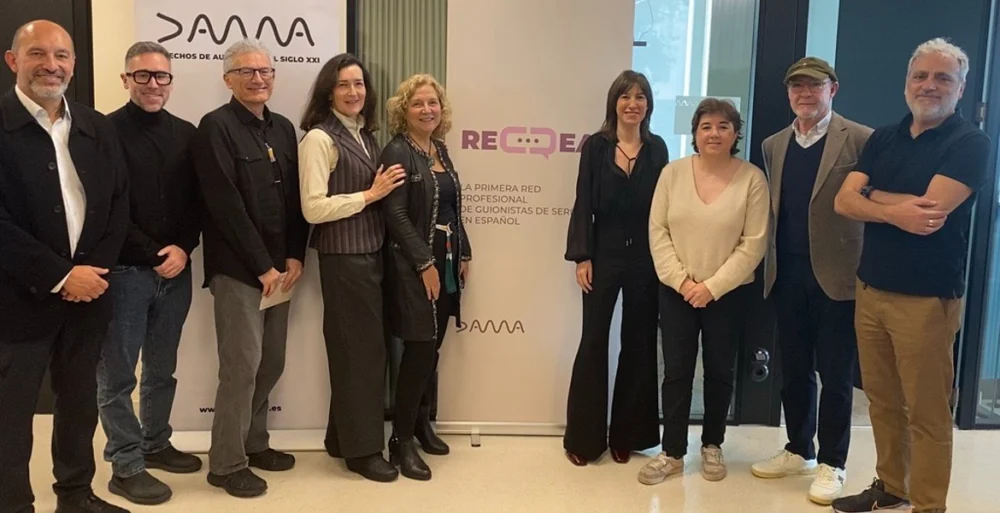
The Spanish audiovisual landscape marked a significant milestone on February 5 with the official presentation of RECREAS in Madrid, a collaborative professional network designed specifically for screenwriters working in the Spanish language. This initiative is spearheaded by DAMA (Derechos de Autor de Medios Audiovisuales), the prominent Spanish organization dedicated to the management of audiovisual author rights. The launch of RECREAS represents a strategic effort to consolidate the influence of Spanish-speaking creators across the globe, fostering a unified front to address the evolving challenges of the digital era, intellectual property protection, and labor equity.
According to the organization’s founding documents, the network was established with the explicit purpose of uniting the voices of audiovisual creators in Spanish, facilitating the exchange of specialized knowledge, defending both labor and authorial rights, and providing a high-visibility platform for the professional concerns that currently define the industry. The initiative arrives at a time when Spanish-language content is experiencing unprecedented global demand, yet the creators behind these narratives often face fragmented representation and inconsistent legal protections across different jurisdictions.
The Strategic Vision of RECREAS
The leadership of RECREAS emphasizes that the network is more than just a formal association; it is an integrated professional ecosystem. Joan Álvarez, the Academic Coordinator of RECREAS, and Natalia Armijos, the Technical Secretary of Production, explained that joining the network allows screenwriters to integrate into a structure that strengthens their position within the broader Spanish-language audiovisual market. By promoting transnational cooperation, the network aims to establish and defend common standards regarding rights, professional recognition, and best practices.
This collaborative model is particularly relevant given the centralized nature of global streaming platforms, which often negotiate contracts that span multiple territories. By creating a unified network, RECREAS seeks to provide screenwriters with the collective leverage necessary to ensure that their contributions are recognized not only creatively but also economically and legally. The initiative draws inspiration from the necessity of a "common language" in professional standards that matches the common language used in the scripts themselves.
The Manifesto: A Roadmap for Professional Reform
One of the inaugural actions of the network was the publication of a comprehensive manifesto, developed through an extensive survey involving approximately twenty high-profile industry professionals. This document serves as the foundational pillar for the network’s advocacy efforts. The participants in this initial consultation represent the geographical and creative diversity of the Spanish-speaking world, ensuring that the manifesto reflects a broad spectrum of market realities.
The contributors include notable figures such as Laura Barneix, Marta Betoldi, Esther Feldman, and Sabrina Farji from Argentina; Mauricio Leiva-Cock, Verónica Triana, and Tomás Niño from Colombia; and Julio Rojas and Paula del Fierro from Chile. The Mexican industry is represented by Jimena Gallardo, Itzel Lara, Ana Sofía Clerici, and Paula Rendón, while the perspective of the Spanish-speaking diaspora in the United States is provided by Guillermo Escalona. From Spain, the manifesto features input from established writers such as Curro Royo, Eduard Sola, Ramón Campos, Coral Cruz, and Amaya Muruzábal.
The manifesto outlines several critical demands that the network intends to pursue. Central to these is the formal recognition of the screenwriter as an author, a status that is sometimes undermined in work-for-hire arrangements common in high-volume production environments. Furthermore, the document calls for dignified and fair working conditions, reflecting a growing industry-wide movement toward sustainable career paths for creative professionals.
Addressing Artificial Intelligence and Gender Equity
A significant portion of the RECREAS manifesto is dedicated to modern technological and social challenges. As generative artificial intelligence (AI) begins to permeate the creative industries, RECREAS is advocating for ethical legal frameworks that protect human creators. The network emphasizes the need for regulations that ensure AI is used as a tool rather than a replacement for human authorship, and that the data used to train these systems respects existing copyright protections.
In addition to technological concerns, the network has prioritized real gender equality within the profession. While the industry has seen an increase in female participation, RECREAS argues that structural barriers remain in terms of pay equity and access to high-budget "showrunner" positions. The manifesto calls for concrete measures to ensure that the diversity of the Spanish-speaking world is reflected both on the screen and behind the scenes in the writing rooms.
To achieve these goals, RECREAS has proposed several actionable initiatives, including:
- The creation of an Ibero-American Charter of Screenwriter Rights.
- The reinforcement of continuous training and professional updates to keep pace with industry changes.
- The facilitation of intergenerational knowledge transmission, ensuring that veteran writers can mentor emerging talent.
- The promotion of an Ibero-American Federation of Screenwriter Associations to provide a permanent institutional structure for cross-border advocacy.
Global Outreach and Industry Integration
RECREAS is positioning itself as a dynamic entity that prioritizes dialogue with the global creative community. The leadership has stated that the network intends to be a "listening" organization, adapting its strategies based on the feedback of its members. To this end, RECREAS has confirmed its participation in a series of high-profile international film festivals and industry events throughout the coming year.
The confirmed itinerary includes the Panama International Film Festival, the "La Mujer y el Cine" Festival in Buenos Aires, and Iberseries, one of the most significant markets for Spanish-language content. Additionally, the network will be active in various creative laboratories and development hubs, such as "Historias que Viajan" in Brazil, "Algo en común" in Colombia, and "IsLABentura" in the Canary Islands. These engagements are designed to disseminate the manifesto’s principles and gather direct input from screenwriters across different regions.
Parallel to these live events, the network is launching a digital communication strategy centered around the newsletter "La sala del guion" (The Script Room). Four monographic issues have already been scheduled, each focusing on the core themes identified in the manifesto. This publication aims to provide a space for deep analysis and ongoing discussion regarding the professional status of screenwriters.
Context and Economic Implications
The emergence of RECREAS is situated within a broader shift in the global audiovisual economy. Spanish is the second most spoken native language in the world, and Spanish-language content has become a major driver of growth for international streaming services. However, the legal frameworks governing author rights vary significantly between Spain and various Latin American nations. DAMA’s involvement is crucial here, as the organization brings years of experience in navigating the complexities of European copyright law, which is often more protective of authors than the copyright systems found in other regions.
By bridging the gap between Spanish and Latin American professional standards, RECREAS could potentially influence future trade agreements and intellectual property legislation. For production companies and platforms, the existence of a unified network like RECREAS offers a clearer point of contact for understanding the collective needs and standards of the workforce. For the screenwriters themselves, it provides a sense of security and a professional identity that transcends national borders.
Membership and Collaborative Future
RECREAS has officially opened its doors to new members, inviting both individual professionals and collective entities (such as national screenwriting guilds and associations) to join the movement. The network plans to establish formal collaboration agreements through DAMA, which will allow for joint initiatives in advocacy, training, and professional development.
The leadership encourages interested parties to adhere to the manifesto through their official website, signaling a commitment to a set of shared values and professional goals. As the network grows, it aims to become the definitive voice for the Spanish-speaking screenwriter, ensuring that as the demand for "content" grows, the rights and dignity of the "creators" are never sidelined.
In an industry often characterized by its volatility and the individual nature of creative work, RECREAS represents a move toward institutional stability and collective empowerment. The success of this initiative will likely depend on its ability to maintain its transnational momentum and effectively lobby both governmental bodies and private industry players for the protections outlined in its manifesto. As the first issues of "La sala del guion" are released and the first festival appearances take place, the industry will be watching closely to see how this new network reshapes the future of Spanish-language storytelling.

0 Comments