
 Nila Kartika Wati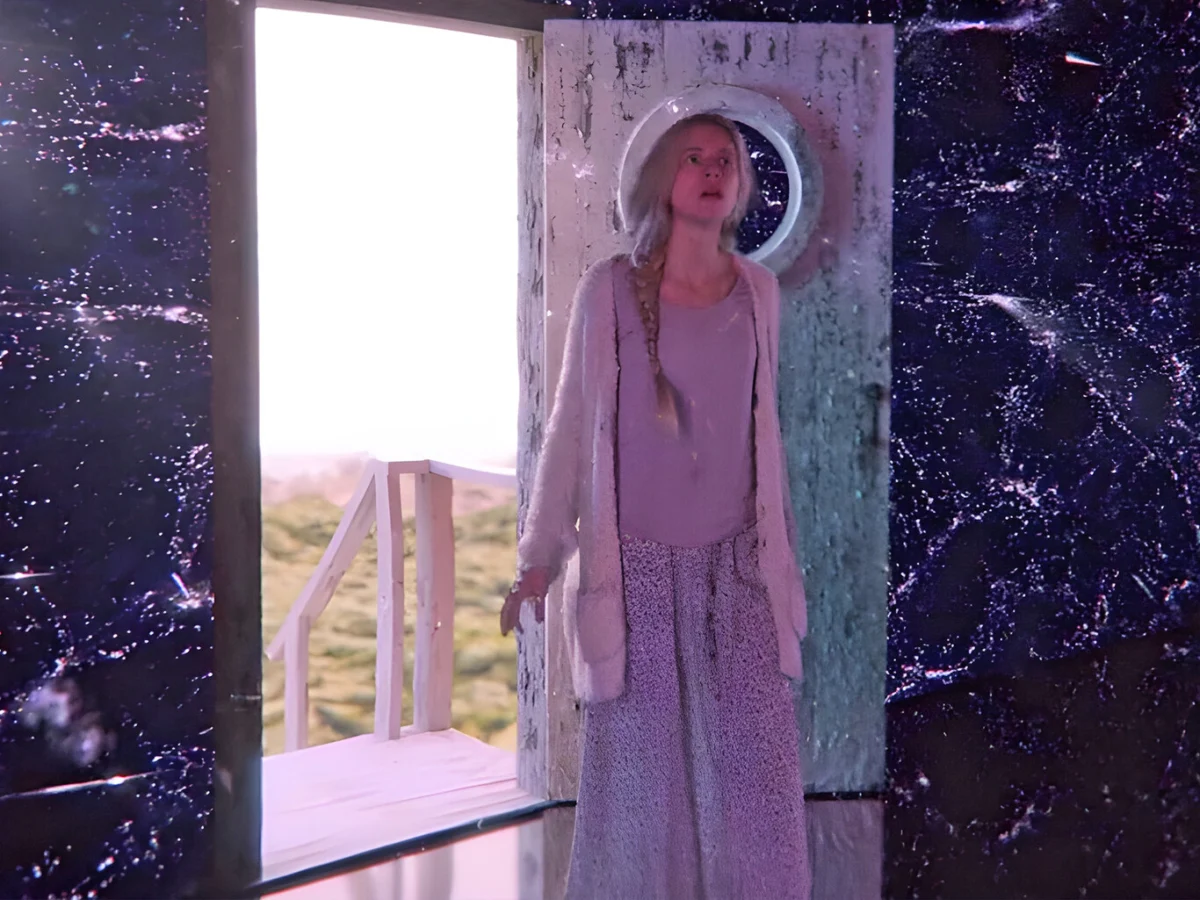
The television landscape of the mid-2010s was defined by a rapid expansion of original programming, yet few series managed to cultivate as profound and dedicated a following as The OA, a genre-bending science fiction odyssey that premiered on Netflix on December 16, 2016. Created by the collaborative duo of Brit Marling and Zal Batmanglij, the series arrived with minimal marketing, a "surprise drop" strategy that would eventually become a hallmark of the streaming giant’s prestige releases. Over the course of two seasons, The OA evolved from a grounded mystery about a missing girl into a sprawling, multi-dimensional epic that challenged the conventions of storytelling. However, its journey was cut short in August 2019, when Netflix officially canceled the series after its second season, sparking a global fan protest and a meta-textual conspiracy theory that persists in cultural discourse to this day.
The Genesis and Narrative Architecture of The OA
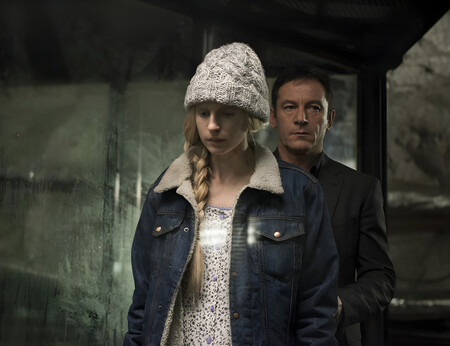
The OA centers on Prairie Johnson (Brit Marling), an adopted young woman who reappears after a seven-year disappearance. Having been blind when she vanished, she returns with her sight restored and referring to herself as "The OA" (the Original Angel). The narrative structure of the first season is split between Prairie’s present-day efforts to recruit a group of five locals—four high school students and a teacher—and her recounting of her captivity under Dr. Hunter Aloysius "Hap" Percy (Jason Isaacs). Hap, a scientist obsessed with the afterlife, held Prairie and four others captive in a basement laboratory, conducting lethal experiments to map the "Near-Death Experience" (NDE).
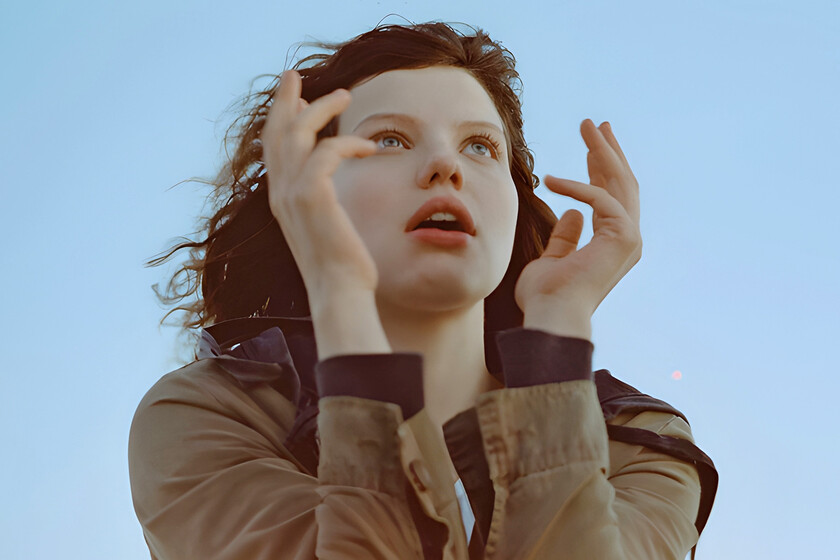
The series introduced the concept of "The Movements," a series of five interpretive dance sequences that, when performed with "perfect feeling" by five people, could heal the sick, resurrect the dead, or open portals to other dimensions. This element became the show’s most polarizing and iconic feature, blending high-concept physics with performance art. The thematic core of the series rested on the intersection of faith, trauma, and the scientific pursuit of the unknown, positioning it as a work of "existential sci-fi" that prioritized emotional resonance over hard-science tropes.
A Chronology of Critical Success and Strategic Growth
The production of The OA was a meticulous process. Marling and Batmanglij spent years developing the story, envisioning a five-season arc that would systematically peel back layers of reality. Following the success of the first season, which garnered a "Certified Fresh" rating on Rotten Tomatoes, Netflix renewed the show for a second part. However, the complexity of the production led to a nearly three-year hiatus between seasons.
Part II, released in March 2019, significantly expanded the show’s scope. It moved the setting to a noir-inspired San Francisco in a parallel dimension, where Prairie (now in the body of a wealthy heiress named Nina Azarova) continued her battle against Hap. The second season was a critical triumph, praised for its ambition and visual audacity, including a sequence involving a telepathic giant octopus and a house that functioned as a literal puzzle. According to industry analysts, the show’s sophisticated narrative and high production values were designed to attract "prestige" subscribers, positioning Netflix as a competitor to HBO in the realm of high-concept drama.
The Cancellation and the "Marketing Stunt" Phenomenon
On August 5, 2019, Netflix announced that it would not be proceeding with a third season of The OA. The decision was met with immediate shock from the television community, primarily because Part II had ended on one of the most daring cliffhangers in television history. In the final moments of the second season, the characters "jumped" into a third dimension (D3) that appeared to be our actual reality. In this dimension, Brit Marling (the actress) is injured on a film set while playing "The OA," and Jason Isaacs (the actor) identifies himself by his real name to paramedics.
This meta-narrative twist led a significant portion of the fanbase to believe that the cancellation was not a business decision, but a groundbreaking marketing maneuver. The theory suggested that because the characters had jumped into "our world" where the show was being filmed, the "cancellation" in the real world was actually a plot point for Part III. Fans pointed to the fact that the show’s internal logic had already broken the fourth wall, and they spent weeks scouring the social media accounts of Marling and Batmanglij for cryptic clues.
However, the reality was more pragmatic. Despite its critical acclaim, The OA failed to meet the specific internal metrics required by Netflix to justify its increasing budget. While Netflix does not publicly release granular viewership data, industry reports from the time suggested that the "completion rate"—the percentage of viewers who finish a season within the first month—is the primary driver for renewals. For a show as dense and demanding as The OA, the barrier to entry may have prevented the "mass phenomenon" numbers achieved by more accessible hits like Stranger Things.
Official Responses and the Fan-Led Resistance
The official response to the cancellation was one of mourning from both the creators and the executive suite. Cindy Holland, then-Vice President of Original Content at Netflix, stated, "We are incredibly proud of the 16 mesmerizing chapters of The OA, and are grateful to Brit and Zal for sharing their audacious vision and for realizing it through their incredible artistry."
Brit Marling released a lengthy statement on Instagram, expressing deep sadness over the inability to finish the five-season story. She noted that "science fiction is often about the ‘other,’ but The OA was about the ‘us,’" emphasizing the show’s focus on collective human connection.
The fan reaction was unprecedented in the streaming era. The #SaveTheOA campaign moved beyond digital petitions, manifesting in real-world activism. Fans purchased a prominent billboard in Times Square, organized flash mobs to perform "The Movements" in front of Netflix offices in Los Angeles and London, and one fan even went on a hunger strike outside the Netflix headquarters. This level of engagement highlighted a growing tension in the streaming industry: the conflict between algorithmic decision-making and the deep, emotional loyalty of niche audiences.
Data Analysis: The "Three-Season Rule" and Streaming Economics
The cancellation of The OA became a case study for what industry insiders call the "Netflix Three-Season Rule." During the late 2010s, a pattern emerged where Netflix frequently canceled well-regarded series after their second or third seasons. The economic rationale is tied to the "Cost-Plus" model. In this model, Netflix covers the full cost of production plus a premium (often 30% or more) to own the global rights in perpetuity.
As a series progresses into later seasons, the costs typically escalate due to talent raises and production complexities. For Netflix, a new show (Season 1) is more valuable for "subscriber acquisition," whereas a Season 3 or 4 show is primarily for "subscriber retention." If the data suggests that a show is not bringing in enough new subscribers to offset its rising production costs, it becomes a candidate for cancellation, regardless of its cultural impact or critical standing. For The OA, which required extensive visual effects and international filming locations, the "cost-per-viewer" ratio likely became unsustainable in the eyes of the Netflix algorithm.
Broader Implications for the Science Fiction Genre
The demise of The OA signaled a shift in how streaming platforms approach high-concept science fiction. In the years following its cancellation, there has been a noticeable trend toward "limited series" or adaptations of existing intellectual property (IP), which carry less financial risk than original, multi-season epics. The OA proved that there was a massive appetite for "intellectual" science fiction—a legacy that can be seen in the success of shows like Dark (Germany) and 1899, though the latter also suffered a premature cancellation.
Furthermore, the show’s exploration of the "meta-verse" and reality-blurring narratives predated the mainstreaming of these concepts in films like Everything Everywhere All At Once. The OA’s influence persists in the way modern television utilizes non-linear storytelling and philosophical inquiry.
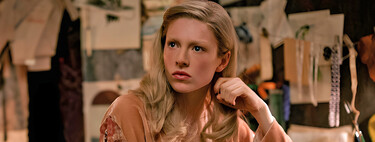
Conclusion: The Enduring Mystery of the "Original Angel"
While The OA remains an unfinished story, its two seasons are frequently cited as some of the best science fiction of the 21st century. It remains available on Netflix, serving as a testament to a specific moment in the "Golden Age of Streaming" when platforms were willing to take massive creative risks on unproven, original concepts.
The creators, Brit Marling and Zal Batmanglij, have since moved on to other projects, most notably the 2023 FX/Hulu series A Murder at the End of the World, which carries forward many of the thematic preoccupations found in The OA. Nevertheless, the "Original Angel" continues to haunt the cultural landscape. The series did more than just tell a story; it created a community and challenged the boundaries between the screen and the viewer. In a landscape now dominated by reboots and sequels, the singular, uncompromising vision of The OA stands as a reminder of the power of original storytelling—and the volatility of the industry that brings it to life.

 Eva Lovia
 Julia Chirkova
 Julia Prastini
 Lina Irawan
 Jia Lissa