
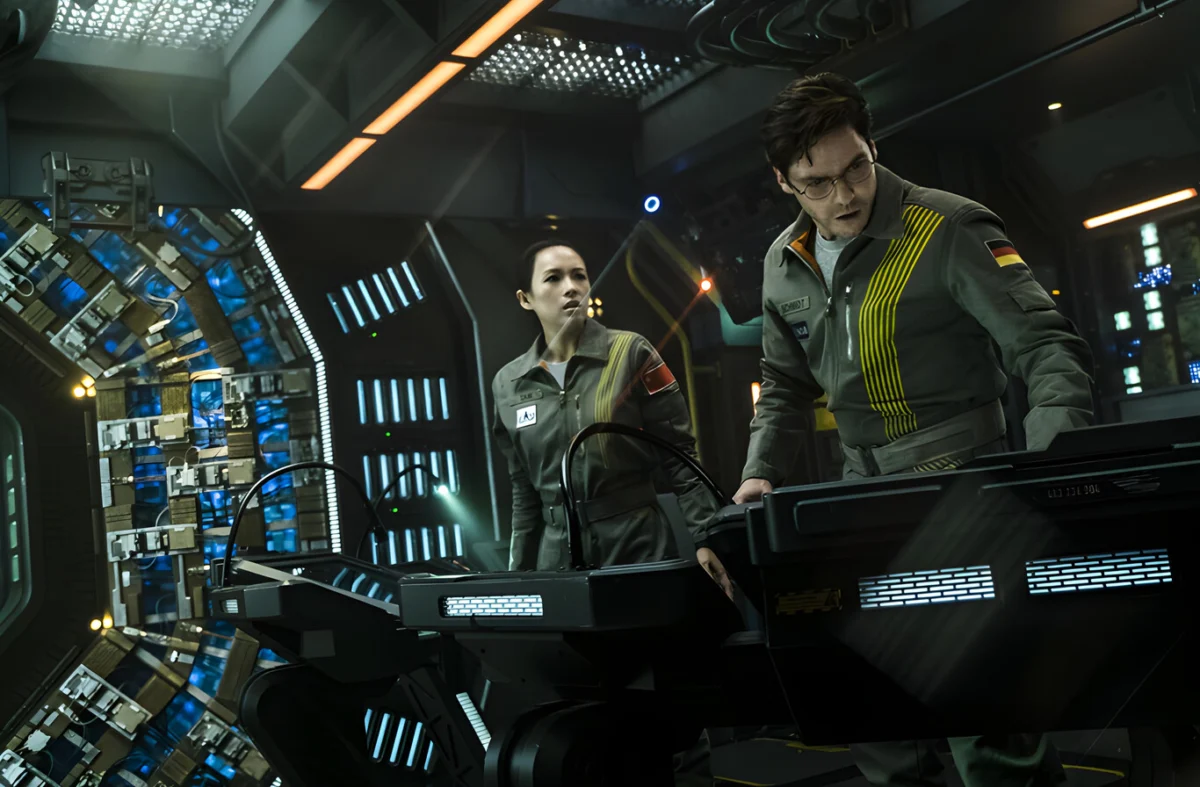
The Cloverfield Paradox remains one of the most polarizing entries in modern science fiction cinema, representing a pivotal moment in the evolution of direct-to-streaming distribution models. Released by Netflix in a surprise "drop" immediately following Super Bowl LII in February 2018, the film attempted to bridge the gap between high-concept cosmic horror and the established lore of the Cloverfield franchise. While the production was initially met with a wave of critical skepticism, a retrospective analysis reveals a work that, despite its narrative inconsistencies, pushed the boundaries of how multiversal physics and quantum mechanics are portrayed in mainstream media. Produced by J.J. Abrams’ Bad Robot Productions and directed by Julius Onah, the film serves as a prequel-of-sorts that explains the origins of the catastrophic events seen in the 2008 original Cloverfield and its 2016 successor, 10 Cloverfield Lane. However, its journey from a standalone script titled God Particle to a franchise installment provides a fascinating case study in studio risk management and the shifting landscape of theatrical versus digital releases.
The Genesis of the Paradox: From God Particle to Cloverfield
The production history of The Cloverfield Paradox is essential to understanding its final form. The project began as an original screenplay by Oren Uziel titled God Particle. The initial script focused on a group of astronauts on a space station who, after a particle accelerator accident, find that the Earth has seemingly vanished. For several years, the project existed as a standalone mid-budget sci-fi thriller. It was only during the post-production phase that Bad Robot and Paramount Pictures decided to integrate the story into the Cloverfield "anthology" universe.
This "Cloverfield-ization" involved adding subplots—specifically the scenes featuring the protagonist’s husband on Earth—to tie the cosmic events to the monster-infested reality of the first film. This decision was driven by a desire to provide a connective tissue for a franchise that had previously operated on loose thematic links rather than direct narrative continuity. By rebranding the film, the studios aimed to leverage an existing fan base for a story that might have struggled to find a theatrical audience as a standalone intellectual property.
Narrative Mechanics and Cosmic Horror Elements
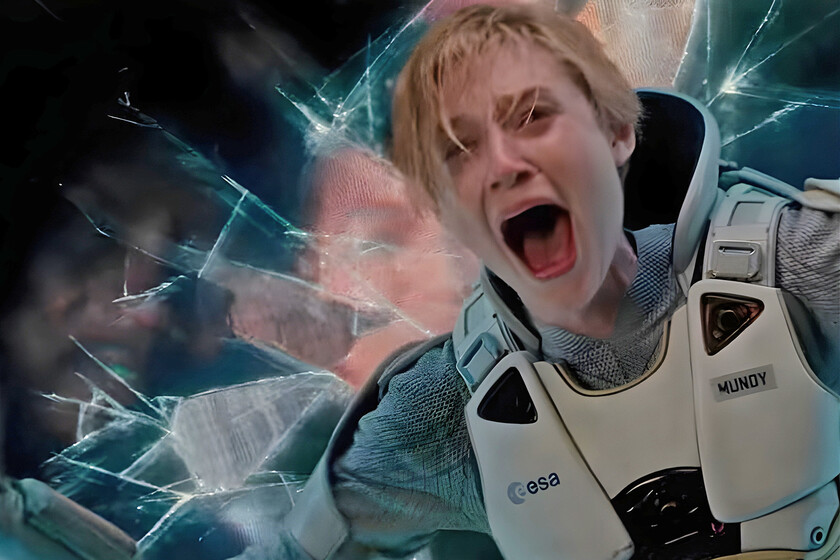
The plot of The Cloverfield Paradox centers on the crew of the Cloverfield Station in the year 2028. Earth is suffering from a global energy crisis, and the crew is tasked with testing the Shepard particle accelerator, a device capable of providing limitless energy. When the accelerator finally activates after years of failure, it triggers a "Cloverfield Paradox"—a rupture in the fabric of space-time.
The crew soon discovers that they have not only moved in physical space but have slipped into an alternate dimension. The film then pivots into a blend of psychological thriller and cosmic horror. Elements of the "weird" and the inexplicable begin to manifest: a crew member’s arm is severed by a bulkhead and begins to act independently; a woman from the alternate dimension is found fused inside the ship’s wiring; and the laws of physics appear to degrade. This shift into "body horror" and "spatial anomalies" draws heavy inspiration from genre classics such as Event Horizon and Alien, attempting to ground theoretical physics in visceral, terrifying imagery.
A Timeline of the Surprise Super Bowl Release
The release of The Cloverfield Paradox is noted in industry history as one of the most audacious marketing stunts of the digital era. The chronology of its release reflects a strategic pivot by Paramount Pictures:
- 2012–2016: The script for God Particle is developed and filmed under the direction of Julius Onah.
- Late 2017: Paramount, concerned about the film’s commercial viability in a crowded theatrical market, begins negotiations with Netflix.
- January 2018: Rumors circulate that Netflix has acquired the film for approximately $50 million, a move that allowed Paramount to see an immediate profit on the production.
- February 4, 2018: During Super Bowl LII, a 30-second teaser trailer airs, announcing that the film would be available to stream immediately after the game.
- Post-Super Bowl: Millions of viewers transitioned from the football game to Netflix, creating a massive "event" viewing experience that bypassed traditional months-long marketing cycles.
This strategy was highly successful in terms of visibility, though it set a high bar for the film’s content that many critics felt it failed to meet.

Statistical Reception and Critical Analysis
Despite the brilliance of the marketing campaign, the critical response was stark. On the review aggregator Rotten Tomatoes, the film currently holds a 22% approval rating from critics and a 41% rating from audiences. Metacritic assigned the film a weighted average score of 28 out of 100, indicating "generally unfavorable reviews."
The primary criticism leveled against the film was its disjointed nature. Critics argued that the "Cloverfield" elements felt tacked on, distracting from what could have been a tight, claustrophobic space thriller. The dialogue was often cited as overly expository, particularly when explaining the "Paradox" itself through a televised interview with a physicist played by Donal Logue.
However, from a technical standpoint, the film received praise. The CGI work, particularly the rendering of the Cloverfield Station and the final reveal of the "Clover" monster rising above the clouds, was considered top-tier for a streaming-first title. The ensemble cast, featuring Gugu Mbatha-Raw, David Oyelowo, Daniel Brühl, and Elizabeth Debicki, provided performances that many felt were superior to the script’s requirements. Mbatha-Raw’s portrayal of Hamilton, a woman forced to choose between a dying Earth and an alternate world where her children are still alive, gave the film an emotional core that resonated with many viewers.
The 18:20 Theory: A Happy Coincidence or Masterful Planning?
One of the most enduring legacies of The Cloverfield Paradox among the fan community is the "Sync Theory." Fans discovered that if a viewer starts both the 2008 Cloverfield and the 2018 Paradox at the exact same time, a startling coincidence occurs. At the 18-minute and 20-second mark in The Cloverfield Paradox, the Shepard accelerator explodes, triggering the rift. At that exact same second in the original Cloverfield, the lights go out in New York City and the first roar of the monster is heard.
While director Julius Onah has suggested in interviews that this may have been a "happy accident," the precision of the timing fueled intense speculation. It suggested that the explosion in the future (or in a parallel dimension) was the literal catalyst for the monster’s appearance in 2008. This meta-narrative connection provided the film with a level of "cult status" that helped it survive the initial wave of poor reviews, as fans spent hours dissecting the film for further hidden links.
Financial and Industry Implications
The $50 million deal between Paramount and Netflix was a watershed moment for the industry. It proved that streaming platforms were willing to pay a premium for "brand-name" content to bolster their catalogs, even if the films themselves were considered "risky" for theatrical release. For Paramount, the sale mitigated the risk of a box-office "bomb." For Netflix, the acquisition was a statement of intent: they were no longer just a repository for old TV shows; they were a destination for major blockbuster-adjacent cinema.
This transaction paved the way for other films to make similar jumps, such as Mowgli: Legend of the Jungle and The Irishman. It also highlighted a new reality for mid-budget science fiction: without a massive superhero tie-in, the theatrical window was becoming increasingly difficult to navigate.
Broader Impact on the Sci-Fi Genre and Shared Universes
The Cloverfield Paradox serves as a cautionary tale and an inspiration for the concept of "anthology universes." Unlike the Marvel Cinematic Universe, which relies on strict linear continuity, the Cloverfield franchise attempted to build a "vibe-based" universe. Paradox expanded this by introducing the idea that different films could take place in different dimensions, all linked by the same quantum event.

While the execution was flawed, the film’s willingness to engage with high-level concepts like the "many-worlds interpretation" of quantum mechanics without over-simplifying the tragedy of the situation was notable. It didn’t offer a happy ending; instead, it leaned into the nihilism of cosmic horror—the idea that humanity’s attempts to "fix" their world might only lead to its destruction across multiple realities.
Conclusion: Why the Paradox Deserves a Second Look
Six years after its debut, The Cloverfield Paradox is ripe for re-evaluation. When viewed outside the intense hype of its Super Bowl launch and the baggage of being a "sequel," it stands as a competent, visually striking, and often unsettling piece of science fiction. Its depiction of the "Shepard" mission remains one of the more creative attempts to visualize the consequences of tampering with the fundamental building blocks of the universe.
For fans of the genre, the film offers a unique blend of "hard" sci-fi concepts and "soft" horror tropes. While it may not have revolutionized the franchise in the way its predecessors did, its role in shifting the Hollywood distribution landscape and its contribution to the "mystery box" style of storytelling ensure its place in the annals of modern cinematic history. As Netflix continues to invest in science fiction, The Cloverfield Paradox remains a foundational, if controversial, pillar of their original content library—a reminder that in the multiverse of cinema, even a "failure" can be a fascinating success.

0 Comments