
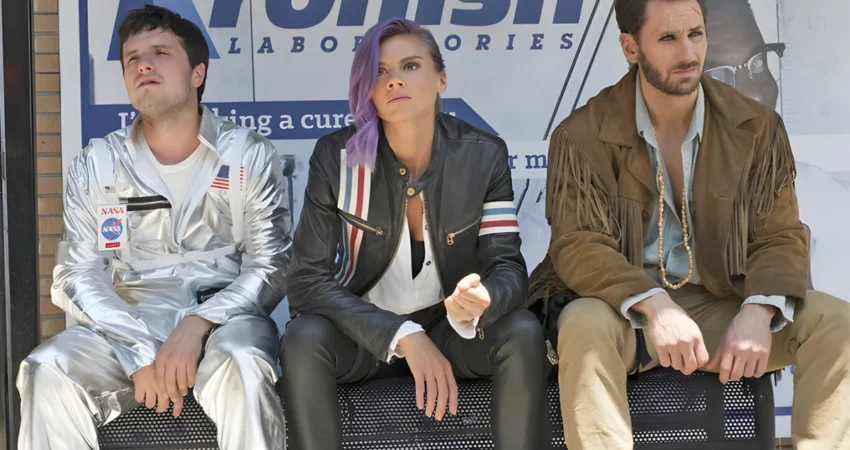
Future Man, the critically acclaimed science fiction comedy series produced by Seth Rogen and Evan Goldberg, is officially scheduled to depart the Netflix library in Latin America on November 13, 2026. This departure marks the end of a significant licensing window for a series that, despite being a Hulu original in the United States, found a substantial secondary audience through Netflix’s international distribution channels. With three complete seasons totaling 34 episodes, the show has maintained a high level of critical standing, currently holding a 91% approval rating from critics and an 82% audience score on the review aggregator Rotten Tomatoes. As the countdown to its removal begins, the series remains a notable example of how high-concept genre fiction can be successfully blended with irreverent, R-rated humor and complex temporal mechanics.
The Premise and Narrative Foundation of Future Man
The series follows Josh Futturman, portrayed by Josh Hutcherson, a young man with a stagnant life who works as a janitor at a high-end medical research facility specializing in sexual health. Futturman’s primary escape is "Biotic Wars," a video game widely considered to be unbeatable by the general public. The narrative catalyst occurs when Futturman becomes the first person in history to complete the final level of the game. This achievement triggers the arrival of two soldiers from the future, Tiger (Eliza Coupe) and Wolf (Derek Wilson), who reveal that the video game was actually a recruitment and training simulator sent back in time to identify a "Savior" capable of preventing a global apocalypse.

The core conflict involves the prevention of a future where humanity is divided between the "Biotics"—genetically enhanced, immortal humans—and the "Resistance," a dwindling group of survivors living in squalor. The source of this dystopia is traced back to the research facility where Josh works, specifically the work of Dr. Stu Camillo. The series utilizes this premise to explore the "Grandfather Paradox" and other staples of the time-travel genre, often subverting expectations by showing how the protagonists’ attempts to fix the timeline frequently result in even more catastrophic outcomes.
Production Background and Creative Direction
Future Man was developed by Kyle Hunter and Ariel Shaffir, long-time collaborators of executive producers Seth Rogen and Evan Goldberg. The series reflects the creative DNA of Rogen and Goldberg’s production company, Point Grey Pictures, which is known for projects that balance graphic violence and crude humor with genuine character development and philosophical inquiries. This is evident in the show’s visual style, which utilizes high-quality practical effects and digital work to render various historical periods and dystopian futures, often parodying the aesthetic of 1980s and 90s action cinema.
The show’s creative team intentionally leaned into the tropes of the science fiction genre to satirize them. This is most prominent in the series’ frequent references to iconic films such as The Terminator and Back to the Future. However, the satire extends beyond mere references; the show interrogates the "Chosen One" trope by placing a socially awkward, underqualified janitor at the center of a cosmic conflict, while his "mentors" from the future are battle-hardened warriors who have no understanding of 21st-century social norms or morality.

A Detailed Chronology of the Series
To understand the scope of the narrative, it is necessary to examine the progression of the three seasons, each of which adopts a distinct tone and setting:
- Season One (Released 2017): The inaugural season focuses on the trio’s attempts to infiltrate the 1960s, 70s, and 80s to prevent Dr. Elias Kronish from contracting a specific ailment that leads him to develop the "cure" for all human disease—the very cure that eventually creates the Biotics. This season is heavily rooted in 1980s nostalgia and features a standout episode set in the home of a fictionalized James Cameron, which serves as an extended parody of the director’s filmography and ego.
- Season Two (Released 2019): Following the events of the first season finale, the characters find themselves in a redirected timeline. Josh is captured by a version of the resistance in the year 2148, while Tiger and Wolf discover that their actions have created a world where humanity is preparing to migrate to Mars under the leadership of a digital version of Stu Camillo. This season shifts the focus toward dystopian satire and the consequences of meddling with the space-time continuum.
- Season Three (Released 2020): The final season takes a more experimental approach, following the protagonists as they become fugitives through time, hopping across various historical eras—including the prehistoric age and the American frontier—while being hunted for "crimes against time." The series concludes with a definitive ending that addresses the ultimate fate of the characters and the timeline itself, avoiding the common pitfall of unresolved cliffhangers.
The Significance of the Cast and Character Development
While Josh Hutcherson serves as the recognizable lead, critics have frequently noted that the performances of Eliza Coupe and Derek Wilson provide the show’s emotional and comedic backbone. Eliza Coupe’s Tiger begins as a hyper-violent, single-minded soldier but gradually develops a complex identity as she discovers her own origins.
Derek Wilson’s portrayal of Wolf is often cited as the series’ breakout performance. Initially presented as a stereotypical "tough guy" from a post-apocalyptic wasteland, Wolf undergoes a radical transformation when he discovers a passion for 1980s culture, gourmet cooking, and domestic life. This subversion of the masculine action hero trope became one of the show’s most praised elements. The chemistry between the three leads allowed the series to maintain its grounded stakes even when the plot became increasingly absurd.

Distribution Context and the Streaming Landscape
The removal of Future Man from Netflix Latin America is a consequence of the shifting landscape of global media rights. As a production of Sony Pictures Television in association with Point Grey Pictures and Hulu, the international distribution rights were licensed to various platforms before the consolidation of streaming services became the industry standard.
In the United States, Future Man remains a staple of the Hulu library, which is now majority-owned by Disney. In international markets like Mexico and Latin America, where Hulu does not operate as a standalone service, Disney has been gradually migrating such content to the "Star" section of Disney+. The 2026 expiration date on Netflix suggests that the licensing agreement between Sony/Hulu and Netflix was a long-term deal that is finally reaching its conclusion. This follows a broader trend where "legacy" licensing deals for high-profile originals are expiring, allowing the parent companies to reclaim the content for their own proprietary platforms.
Critical Reception and Industry Impact
At the time of its release, Future Man was praised for its "fearless" approach to comedy. Reviewers noted that the show was not afraid to be "gross, weird, and incredibly smart all at once." The series was nominated for several genre-specific awards, including the Saturn Awards, and has built a dedicated cult following in the years since its conclusion.

Analysis of the show’s impact suggests it paved the way for other genre-bending comedies that treat their science fiction elements with sincerity while maintaining a comedic tone. Shows like The Boys (also executive produced by Rogen and Goldberg) share a similar DNA in how they deconstruct hero tropes and utilize graphic content to heighten the stakes.
Implications for Viewers and Final Analysis
For subscribers of Netflix in Latin America, the departure of Future Man represents the loss of one of the platform’s most highly-rated genre offerings. With 34 episodes and a total runtime of approximately 17 hours, the series is a manageable "binge-watch" for those looking to complete it before the November 2026 deadline.
The move highlights the temporary nature of content availability in the digital age. While "Netflix Originals" that are produced in-house typically remain on the platform indefinitely, licensed "Originals"—those branded as such because Netflix holds exclusive regional distribution rights—are subject to the same expiration risks as any other licensed movie or TV show.

As the industry moves toward further consolidation, it is expected that Future Man will eventually find a new home on Disney+ or a related subsidiary in the Latin American region. However, until an official announcement is made regarding its next streaming destination, the remaining window on Netflix provides the final guaranteed opportunity for audiences to experience the "Biotic Wars" and Josh Futturman’s chaotic journey through time. The series remains a testament to the idea that science fiction can be profoundly ridiculous while still offering a compelling, high-stakes narrative about human agency and the unintended consequences of trying to save the world.

0 Comments