
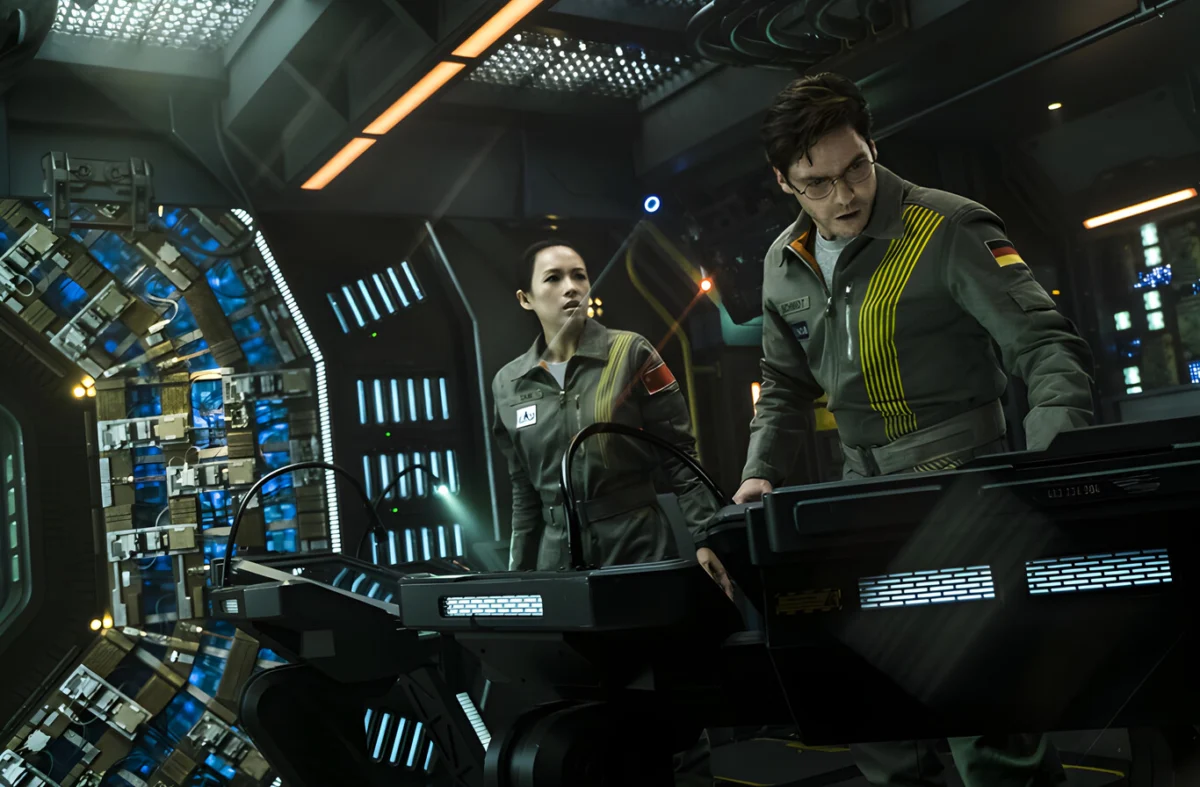
The Cloverfield Paradox stands as one of the most ambitious and polarizing entries in modern science fiction, representing a pivotal moment in the shift between traditional theatrical distribution and the rise of global streaming platforms. Released in 2018, the film attempted to bridge the gap between high-concept cosmic horror and the established lore of the Cloverfield franchise, a series known for its secretive marketing and disparate storytelling. While the film initially struggled to find footing with critics, its legacy has grown as a case study in studio maneuvering, experimental marketing, and the complexities of building a cinematic multiverse.
The Genesis of a Space Odyssey: From God Particle to Cloverfield
To understand the current standing of The Cloverfield Paradox, one must examine its unconventional production history. The film did not begin as a sequel or a spin-off. Originally titled God Particle, the script was written by Oren Uziel and developed by J.J. Abrams’ production company, Bad Robot. In its earliest iterations, it was a standalone, low-budget thriller centered on a group of astronauts on a space station who believe they have accidentally destroyed the Earth after a particle accelerator experiment goes wrong.
The decision to fold God Particle into the Cloverfield universe followed a precedent set by 10 Cloverfield Lane (2016), which had successfully adapted an unrelated script titled The Cellar into a franchise hit. However, where 10 Cloverfield Lane used the Cloverfield brand as a thematic "flavor," The Cloverfield Paradox attempted to use its narrative to provide an origin story for the entire franchise. This transition required significant reshoots and script adjustments to insert references to the 2008 original film, a move that many analysts believe created the tonal inconsistencies that would later draw critical fire.
The Super Bowl LII Marketing Gambit
The release of The Cloverfield Paradox remains one of the most significant events in digital marketing history. On February 4, 2018, during Super Bowl LII, Netflix aired a surprise trailer for the film. In a move that shocked the industry, the advertisement concluded with the announcement that the film would be available to stream immediately following the conclusion of the game.
This "drop" strategy bypassed the traditional months-long "panning" period where critics and audiences build expectations. For Netflix, it was a display of dominance, proving they could turn a global sporting event into a premiere night for a blockbuster-tier production. For Paramount Pictures, the original distributor, the deal was equally strategic. Fearing that the film’s niche appeal and troubled production might lead to a box-office failure, Paramount sold the rights to Netflix for approximately $50 million. This deal ensured the studio recouped its production costs and secured an immediate profit, effectively offloading the financial risk of a theatrical release onto a platform hungry for exclusive content.
Plot Mechanics: Quantum Physics and Parallel Dimensions
The narrative of The Cloverfield Paradox follows the crew of the Cloverfield Station in the year 2028. Earth is suffering from a global energy crisis, and the crew is tasked with testing the Shepard particle accelerator, a device intended to provide limitless energy. After two years of failed attempts, the crew finally achieves a successful firing, but the result is catastrophic. The station suffers a power surge, and upon recovery, the crew discovers that the Earth has seemingly vanished from their sensors.
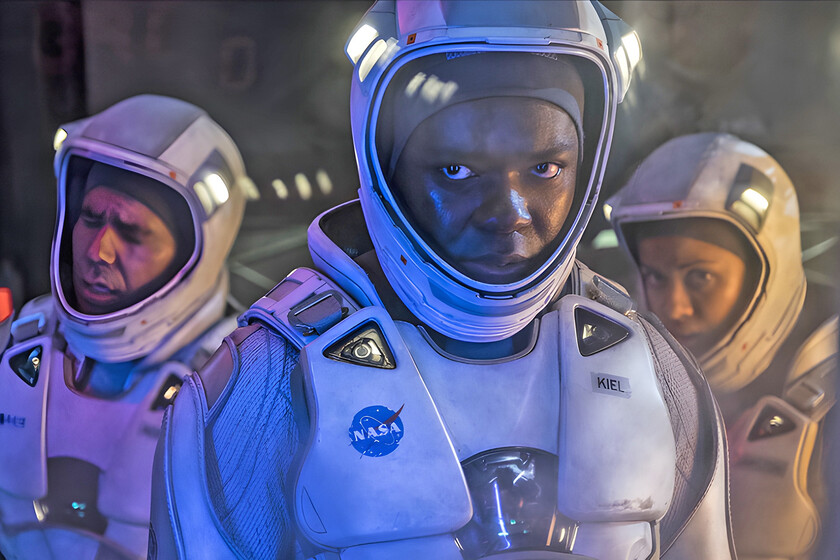
As the crew—led by Ava Hamilton (Gugu Mbatha-Raw) and Commander Kiel (David Oyelowo)—attempts to diagnose the situation, they encounter increasingly bizarre and horrific phenomena. They find a woman, Jensen (Elizabeth Debicki), fused into the wiring of the station’s walls; she claims to know Hamilton and insists she belongs on the crew. It eventually becomes clear that the Shepard accelerator has "torn the fabric of spacetime," causing two parallel realities to collide.

The film utilizes "horror cosmic" tropes, where the characters are subjected to the whims of a universe that no longer follows the laws of physics. From a crew member’s severed arm acting with its own intelligence to the sudden appearance of deadly organisms, the film leans heavily into the "body horror" and "psychological dread" seen in classics like Event Horizon (1997) and Alien (1979).
The 18:20 Synchronization: A Fan-Discovered Connection
One of the most enduring pieces of trivia regarding the film is the "synchronization theory." Fans of the franchise discovered that if a viewer starts Cloverfield (2008) and The Cloverfield Paradox at the exact same moment, a significant event occurs at the 18-minute and 20-second mark.
In The Cloverfield Paradox, this is the precise second the Shepard accelerator is activated, causing the dimensional rift. Simultaneously, in the 2008 film, this is the exact moment the lights go out in New York City and the first roar of the "Clovie" monster is heard. While director Julius Onah has characterized some of these connections as "happy accidents," the precision of the timing suggests a deliberate attempt by the editorial team at Bad Robot to reward long-time fans of the series’ Alternate Reality Games (ARGs). This connection serves to explain that the events of the 2018 film did not just happen in the future, but across multiple timelines, effectively retroactively causing the monster attacks in the previous films.
Critical Reception and Statistical Data
Despite the high-profile launch, the film faced a difficult reception from the professional critical community. On the review aggregator Rotten Tomatoes, the film holds a 22% approval rating based on 157 reviews. The consensus among critics was that while the acting and production values were high, the "Cloverfield" connections felt forced and unnecessary, distracting from what could have been a solid standalone sci-fi thriller.
Audience scores were slightly more favorable but remained divided, sitting at 41%. The primary criticism centered on the film’s "kitchen sink" approach to science fiction, blending multiverse theory, slasher elements, and political drama on Earth (seen through subplots involving Hamilton’s husband). However, in terms of viewership, the film was an undeniable success for Netflix. Nielsen data estimated that 5 million viewers watched the film within its first three days of release, a number that would have been difficult to achieve in a traditional theatrical setting for a mid-budget sci-fi horror film.
A High-Caliber Ensemble Cast
One aspect of the film that has received consistent praise is its international ensemble cast. The production featured several actors who were either established stars or on the verge of major breakthroughs:
- Gugu Mbatha-Raw (Ava Hamilton): Provided the emotional core of the film, portraying a mother grieving the loss of her children in a different reality.
- David Oyelowo (Commander Kiel): Brought a grounded, authoritative presence to the chaotic environment of the station.
- Daniel Brühl (Schmidt): Portrayed the German physicist whose loyalties are constantly questioned.
- Elizabeth Debicki (Mina Jensen): Served as the catalyst for the crew’s realization that they were in a parallel dimension.
- Chris O’Dowd (Mundy): Provided dark comic relief, which became a point of contention for some viewers who felt the humor clashed with the cosmic horror.
The presence of such talent elevated the material, ensuring that even when the plot became convoluted, the character interactions remained compelling and professionally executed.
Broader Impact on the Industry and the Multiverse Trend
The Cloverfield Paradox was ahead of its time in its exploration of the "multiverse" concept, a theme that would become the dominant narrative device in Hollywood over the following five years through the Marvel Cinematic Universe and films like Everything Everywhere All At Once. By establishing that the Shepard accelerator could cause ripples across time and space, the film gave the franchise the freedom to tell any story, in any genre, under the Cloverfield banner.

Furthermore, the film’s move to Netflix signaled a change in how "mid-budget" movies were viewed by major studios. It proved that streaming platforms could serve as a "safety net" for experimental or troubled productions, allowing them to reach a global audience without the pressure of opening-weekend box office numbers. This paved the way for other films like Annihilation (which was distributed by Netflix internationally) and Greyhound to seek homes on digital platforms.
The Legacy of the Paradox
Today, The Cloverfield Paradox is viewed by many sci-fi enthusiasts as an "underrated" entry that suffered more from its branding than its content. If viewed as a standalone piece of space horror, it offers inventive visuals, a haunting score by Bear McCreary, and a claustrophobic atmosphere that rivals many of its peers.
The film’s final shot—a massive creature emerging from the clouds on Earth—remains one of the most iconic images in the franchise, providing a visceral link to the 2008 original while signaling the scale of the disaster the crew accidentally unleashed. While a direct sequel has yet to be produced, the "Paradox" established a sandbox where future filmmakers can explore the consequences of a fractured reality. For viewers looking for a blend of high-concept physics and old-school monster horror, the film remains a significant, if imperfect, milestone in the Netflix library. It stands as a testament to a time when streaming was just beginning to flex its muscles as a legitimate home for the "blockbuster" experience.

0 Comments