
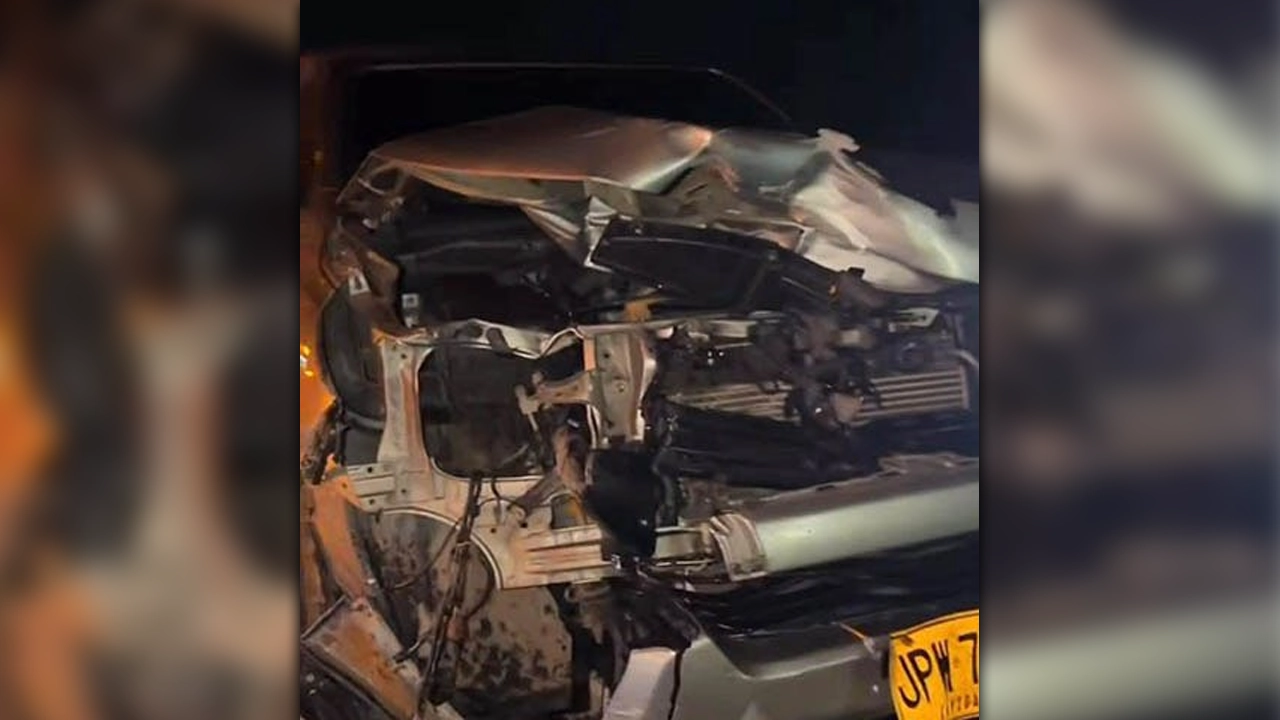
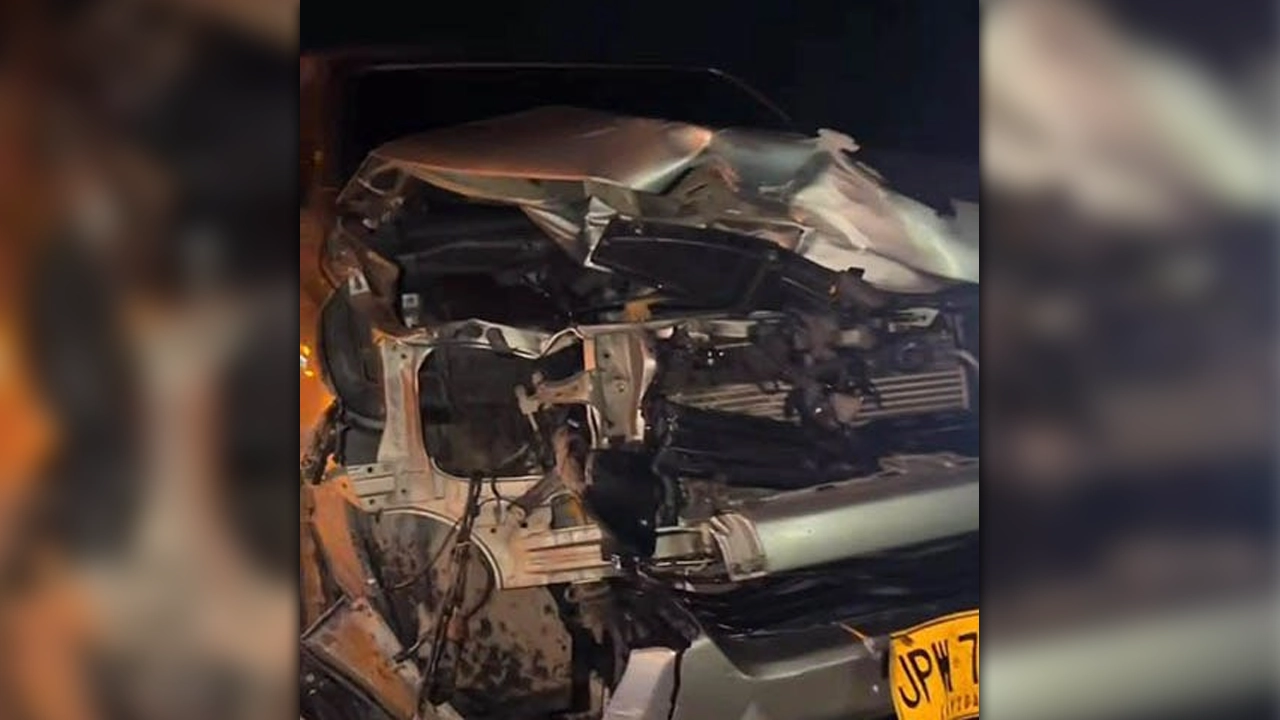
A significant road safety incident involving popular Colombian vallenato artist Natalia Curvelo has highlighted the persistent dangers posed by free-roaming livestock on national highways. The singer and her team were involved in a severe collision in the early hours of Sunday, March 1, 2026, on the road connecting Bosconia to Cuatro Vientos in the department of Cesar. Fortunately, all individuals aboard the vehicle emerged unharmed, though their high-end SUV sustained extensive damage, underscoring the potential for catastrophic outcomes in such encounters.
The incident occurred around 3:00 AM, a time when visibility is often reduced and drivers may be fatigued. Curvelo and her entourage were returning to their origin point following a scheduled musical performance in the municipality of El Banco. According to initial reports, the sudden appearance of a cow on the roadway, coupled with the prevailing darkness and the speed of the vehicle, left the driver with insufficient time to react. The resulting impact was forceful, leading to the near-total destruction of the vehicle’s front end.
This near-tragedy brings to the forefront a long-standing and often-underestimated hazard in Colombia’s rural and semi-rural road networks. The presence of domestic animals, particularly cattle, on highways is a recurring issue that has been linked to numerous accidents, some of which have resulted in fatalities and severe injuries. While Curvelo’s experience concluded without physical harm, it serves as a stark reminder of the vulnerability of motorists to such unpredictable obstacles.
Chronology of the Incident
The sequence of events leading to the accident can be pieced together from the available information:
- Late Saturday, February 28, 2026: Natalia Curvelo and her team complete a musical performance in El Banco, Cesar.
- Early Sunday, March 1, 2026 (approximately 3:00 AM): While en route back from El Banco, the artist and her entourage are traveling on the highway connecting Bosconia to Cuatro Vientos.
- The Collision: A cow unexpectedly enters the highway. Due to low visibility and the speed of the vehicle, the driver is unable to avoid a direct impact with the animal.
- Immediate Aftermath: The vehicle, a high-end SUV, suffers significant damage to its front section. Safety features, such as airbags, deploy as designed.
- Outcome: Natalia Curvelo and all members of her team are confirmed to be unharmed. No medical attention is required at the scene.
- Public Reaction: Curvelo later expresses her gratitude for her safety on social media, simultaneously voicing strong criticism regarding the prevalence of loose animals on national roads.
Background and Broader Context of Highway Safety in Colombia
The Cesar department, like many other regions in Colombia, relies heavily on its road infrastructure for the transportation of goods, services, and people. The Bosconia-Cuatro Vientos route is a significant artery, facilitating travel and commerce. However, its effectiveness and safety are compromised by issues such as inadequate signage, poor lighting in certain sections, and, critically, the uncontrolled presence of livestock.
According to data from the National Road Safety Agency (Agencia Nacional de Seguridad Vial – ANSV), accidents involving animals on Colombian roads represent a considerable percentage of all traffic incidents. While precise figures for 2026 are still being compiled, previous years have shown a concerning trend. For instance, in 2023, the ANSV reported that animal collisions contributed to over 8% of all road fatalities, a statistic that belies the potential for much greater damage and injury given the speeds involved in inter-municipal travel. These incidents often result in significant economic losses due to vehicle damage and livestock casualties, alongside the incalculable cost of human injury or loss of life.
The responsibility for preventing such accidents typically falls on both the drivers, who are expected to exercise caution, and the animal owners, who are legally obligated to keep their livestock contained and prevent them from entering public roadways. However, enforcement of these regulations often proves challenging, particularly in vast rural areas where property boundaries may be unclear or inadequately secured.
Analysis of the Incident’s Implications
Natalia Curvelo’s platform as a prominent figure in Colombian culture lends significant weight to her post-accident statements. Her direct critique of the situation serves as a public appeal for greater accountability and immediate action.
- Public Awareness: The incident, amplified by Curvelo’s celebrity status, is likely to raise public awareness about the dangers of livestock on highways to a broader audience. This heightened visibility can pressure authorities and stakeholders to address the issue more urgently.
- Call for Stricter Enforcement: Curvelo’s strong condemnation of irresponsible animal ownership and the perceived lack of swift official response highlights a need for more robust enforcement mechanisms. This could include increased patrols, more stringent penalties for negligent owners, and improved infrastructure to deter animals from roadsides.
- Infrastructure Improvements: The accident also implicitly points to the need for better road infrastructure, particularly in areas prone to such hazards. This could involve enhanced lighting, better fencing along critical stretches of highway, and more visible warning signs.
- Economic and Social Impact: Beyond the immediate danger, uncontrolled livestock pose an ongoing economic threat to farmers and transport businesses. Accidents can lead to costly repairs, lost productivity, and insurance premium increases. Socially, it erodes confidence in the safety of national transportation networks.
Official Responses and Stakeholder Reactions (Inferred)
While no direct official statements from local authorities or the Ministry of Transport were immediately available at the time of reporting, it can be inferred that such an incident, especially involving a public figure, would typically trigger a review of existing protocols.
- Local Police and Traffic Authorities: It is expected that local traffic police would have attended the scene to document the accident and initiate any necessary investigations into the ownership of the animal. Their response, however, was described by Curvelo as "not as agile as expected," suggesting potential resource limitations or procedural delays.
- Ministry of Transport: The Ministry of Transport, responsible for national road safety policies, is likely to be alerted to this incident. They may consider reviewing existing regulations concerning livestock on highways and potentially implementing new awareness campaigns or enforcement strategies in conjunction with regional governments.
- Animal Owners and Agricultural Organizations: Representatives of agricultural communities and individual livestock owners are often called upon to address these issues. While many owners are diligent, a segment remains complacent. Public pressure and clear legal repercussions are often necessary to encourage widespread compliance. Industry groups may engage in discussions with authorities to find practical solutions that balance agricultural needs with public safety.
Natalia Curvelo’s Statement and Advocacy
Following the ordeal, Natalia Curvelo took to her social media platforms to share her experience and articulate her concerns. Her message, characterized by gratitude for her safety and strong criticism of the underlying cause, resonated with many of her followers.
"I thank God for allowing me and my team to be safe after this strong scare," Curvelo reportedly stated in a social media post, accompanied by images of the damaged vehicle. "It is unbelievable that we still have to face these situations on our roads. Animals loose on the highway are a death trap. I urge the authorities and farm owners to take urgent measures because what happened to us could have been a terrible tragedy."
Her public appeal is not merely a personal grievance but a call to action for systemic change. By highlighting the "irresponsibility of some farm owners" who allow their animals to roam unsupervised, especially at night, she directly addresses the human element behind these dangerous encounters. Her experience underscores the fact that even well-maintained vehicles and vigilant drivers can be rendered vulnerable by the unpredictable presence of livestock.
Future Outlook and Recommendations
The incident involving Natalia Curvelo serves as a critical juncture for re-evaluating and strengthening measures to combat the problem of livestock on Colombian highways. A multi-faceted approach is essential:
- Enhanced Enforcement and Penalties: Authorities must increase their presence on critical routes and rigorously enforce existing laws against negligent livestock owners. This could involve issuing significant fines, impounding animals found on roads, and pursuing legal action in cases of severe accidents.
- Infrastructure Investment: Targeted investments in fencing, adequate lighting, and clear, prominent signage in accident-prone areas are crucial. This proactive approach can significantly reduce the risk of encounters.
- Public Awareness Campaigns: Continuous and widespread campaigns are needed to educate both drivers about the risks and animal owners about their responsibilities. These campaigns should be sustained and utilize various media channels to reach a broad audience.
- Technological Solutions: Exploring the use of technologies such as GPS trackers for livestock or early warning systems for animal presence on roads could offer innovative solutions in the long term.
- Community Collaboration: Fostering better communication and collaboration between law enforcement, local government, and agricultural communities can lead to more effective and sustainable solutions.
While Natalia Curvelo and her team were fortunate to escape the incident unharmed, the damaged vehicle serves as a potent symbol of the risks inherent in current road safety conditions. Her experience is a powerful reminder that addressing the issue of livestock on highways is not just a matter of traffic management but a critical imperative for saving lives and ensuring the safety of all road users in Colombia. The artist’s resilience and commitment to speaking out are expected to fuel ongoing efforts to make Colombian roads safer for everyone.

0 Comments