

The global fragrance industry has entered a transformative era in 2026, marked by a decisive shift away from the heavy gourmands and traditional florals that dominated the previous decade. At the center of this olfactory revolution is an unexpected protagonist: the pear. Long relegated to the background or used as a fleeting top note in mass-market releases, pear has ascended to the pinnacle of luxury perfumery. When paired with the mineral sophistication of ambroxan, this fruit note is redefining the "clean" scent category, moving it away from the utilitarian associations of soap and laundry toward a more intimate, abstract, and skin-like sophistication.
For years, the fruit category in perfumery was dominated by the velvety sweetness of peach or the tart, dark profile of cherry. However, as consumer preferences lean toward transparency and "quiet luxury," the pear—with its unique balance of aqueous freshness and grainy sweetness—has become the preferred choice for master perfumers. Unlike many other ingredients, the scent of pear cannot be naturally extracted; it is a creative reconstruction. This technical challenge has allowed perfumers to experiment with molecular architecture, creating scents that range from the crisp, green snap of an unripe skin to the creamy, nectar-like depth of a fruit at its peak.
The Science of Reconstruction: Crafting the Pear Accord
In the world of high-end perfumery, the pear is what professionals call a "fantasy note." Because the fruit’s high water content prevents traditional steam distillation or cold-pressing, its scent must be built from scratch in a laboratory using a blend of synthetic and natural molecules. This process, known as creating an "accord," allows for a level of precision that natural extraction often lacks.

To capture the essence of a pear, chemists typically use esters such as hexyl acetate or ethyl decadienoate. These molecules provide the characteristic "green" and "fruity" facets. To achieve the specific "granulous" texture that one feels when biting into a pear, perfumers often add subtle touches of vanillin or specific musks that mimic the pulp’s density. In 2026, the trend has shifted toward "photorealistic" pears—scents that capture the cooling sensation of a fruit kept in a refrigerator, rather than the syrupy versions seen in the early 2000s.
This molecular flexibility means that the pear can act as a chameleon. When surrounded by white florals, it enhances their dewiness; when paired with dry woods like cedar or sandalwood, it provides a necessary moisture that prevents the fragrance from becoming too "dusty." This versatility is a primary reason for its sudden ubiquity in the collections of niche houses like Ex Nihilo and Matière Première.
The Role of Ambroxan: A Synthetic Masterpiece
If pear provides the "flesh" of the 2026 fragrance trend, ambroxan provides the "skeleton." Originally developed as a synthetic substitute for ambergris—a rare and expensive substance produced by sperm whales—ambroxan has become one of the most vital tools in modern perfumery.
Ambroxan is derived from sclareol, a compound found in clary sage. It is celebrated not just for its scent—which is often described as salty, woody, and reminiscent of warm skin—but for its physical properties. It is a powerful fixative, meaning it helps lighter notes (like pear) last significantly longer on the skin. Furthermore, it possesses an "expansive" quality, increasing the sillage (the trail left by a perfume) without making the scent feel heavy or cloying.

In the current market, the combination of pear and ambroxan represents a "mineral-fruity" hybrid. This pairing bridges the gap between the natural world and the laboratory, offering a scent profile that feels both organic and high-tech. It appeals to a demographic that values "skin scents"—fragrances that don’t smell like a traditional perfume, but rather like an idealized version of the wearer’s own scent.
A Chronology of Fruit in Fragrance: From Calone to the Modern Pear
To understand why pear and ambroxan are peaking in 2026, one must look at the historical trajectory of fruity notes:
- The 1990s (The Calone Era): Fragrances like L’Eau d’Issey introduced the "aqueous" trend, using the molecule Calone to mimic melon and sea breezes. It was the first step toward "clean" perfumery.
- The Early 2000s (The Fruity-Floral Boom): Mass-market hits began using heavy doses of synthetic berries and peaches, often leaning into a "candy-like" sweetness.
- 2010–2020 (The Gourmand Dominance): Led by notes of ethyl maltol (burnt sugar), fruits were often buried under layers of vanilla, chocolate, and coffee.
- 2021–2025 (The Niche Pivot): A reaction against "saccharine" scents led to an interest in botanical realism. Perfumers began exploring "bitter" fruits, vegetables, and eventually, the sophisticated pear.
- 2026 (The Molecular Intimacy Era): The current year marks the refinement of this journey, where the pear is stripped of its sugar and paired with mineral molecules like ambroxan to create "transparent" luxury.
Analyzing the Leaders: Three Essential Fragrances of 2026
The trend is best exemplified by three distinct releases that have captured the attention of critics and consumers alike. Each uses the pear-ambroxan duo to achieve a different emotional effect.
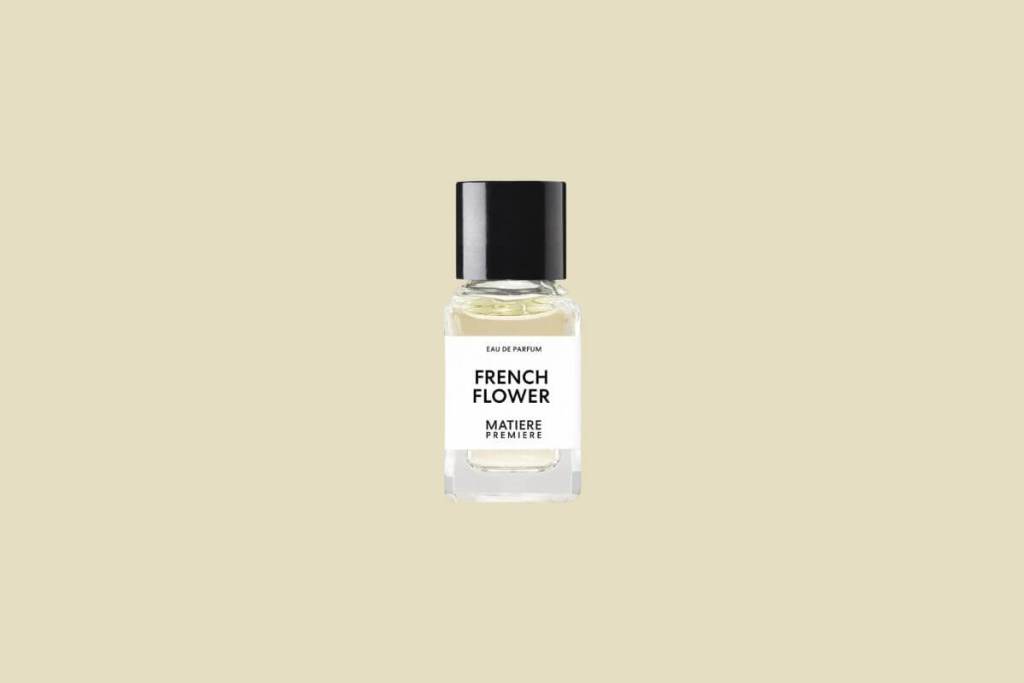
French Flower by Matière Première: The Floral Powerhouse
Created by master perfumer Aurélien Guichard, French Flower is perhaps the most robust interpretation of the trend. Guichard uses pear as a bright, luminous entry point to a heart of tuberose. The addition of Nigerian ginger provides a spicy, sharp contrast that prevents the pear from becoming too sweet. The ambroxan here acts as a veil, smoothing out the often-indolic (heavy) nature of tuberose and turning it into something mineral and sophisticated. Priced at €250 for 100ml, it represents the high-end, "maximalist" side of the clean movement.

Studied by Liis: The Intellectual Skin Scent
Liis, a brand known for its minimalist aesthetic, offers Studied, a fragrance that targets the "intimacy" aspect of the trend. Here, the pear is paired with ambrette (a natural plant-based musk) and carrot seed. The result is a scent that feels "powdery" and "vegetal." The iris note adds a layer of fine dust, while the ambroxan ensures the fragrance clings to the body like a light cashmere sweater. At €165 for 50ml, it is a favorite among those who prefer "quiet" fragrances that are only detectable within one’s personal space.
Pear Inc. by Juliette Has a Gun: The Minimalist Manifesto
Juliette Has a Gun has long been a proponent of molecular perfumery (notably with their Not a Perfume line). Pear Inc. is a distillation of the trend to its barest essentials. It features a "frozen" pear accord that feels crisp and aqueous, followed immediately by a heavy dose of ambroxan and ambrettolide. It is the most linear of the three, meaning it stays relatively consistent from the first spray to the final dry-down. Currently retailing at approximately €130.50 for 100ml at major outlets like El Corte Inglés, it is the most accessible entry point into this olfactory category.
Market Implications and Consumer Behavior
The rise of pear and ambroxan is not merely a matter of aesthetic preference; it reflects broader economic and social shifts. Data from the first half of 2026 suggests that "clean" and "molecular" fragrances now account for nearly 35% of the niche market share, a 12% increase from 2024.
Industry analysts suggest that in an era of heightened environmental awareness, consumers are gravitating toward scents that feel "breathable" and "natural," even if they are achieved through advanced chemistry. Furthermore, the "genderless" appeal of the pear-ambroxan accord has allowed brands to market these scents to a broader audience, moving away from the traditional "feminine fruity" or "masculine woody" silos.
The Broader Impact: Sustainability and Innovation
The shift toward ingredients like ambroxan also highlights the industry’s move toward sustainability. Because ambroxan is synthesized from clary sage, it is a renewable alternative to the endangered and ethically problematic ambergris. Similarly, the use of lab-created accords like pear reduces the pressure on agricultural land that would otherwise be required for massive-scale botanical extraction.
As we look toward the latter half of the decade, the success of the pear-ambroxan pairing is expected to pave the way for other "mineral-fruit" experiments. We are already seeing the emergence of quince and ambroxan, as well as rhubarb and cetalox (a cousin of ambroxan).
In conclusion, the 2026 obsession with pear and ambroxan represents a maturation of the fragrance industry. It is a celebration of technical skill, a nod to the "clean" aesthetic, and a reminder that in the world of scent, the most memorable experiences are often those that feel the most intimate and refined. Whether it is the creamy intensity of French Flower or the transparent simplicity of Pear Inc., the message is clear: the future of fragrance is crisp, mineral, and unmistakably pear-shaped.

0 Comments