
The 23rd edition of CPH:DOX, the Copenhagen International Documentary Film Festival, is set to showcase a robust selection of Latin American talent, highlighting the region’s growing influence in the global non-fiction film landscape. Running from March 11 to 22 in the Danish capital, the festival will feature half a dozen films with Latin American participation, ranging from high-stakes environmental chronicles to intimate explorations of exile and human rights. This significant presence in Copenhagen is mirrored in the French capital, where the 13th edition of ParisDOC Work-in-Progress at Cinéma du Réel has also selected prominent Mexican projects for its industry showcase. These selections underscore a period of creative fertility for Latin American filmmakers, who are increasingly utilizing international co-productions to bring urgent regional stories to a global audience.
Global Premieres and the Pursuit of the Dox Award
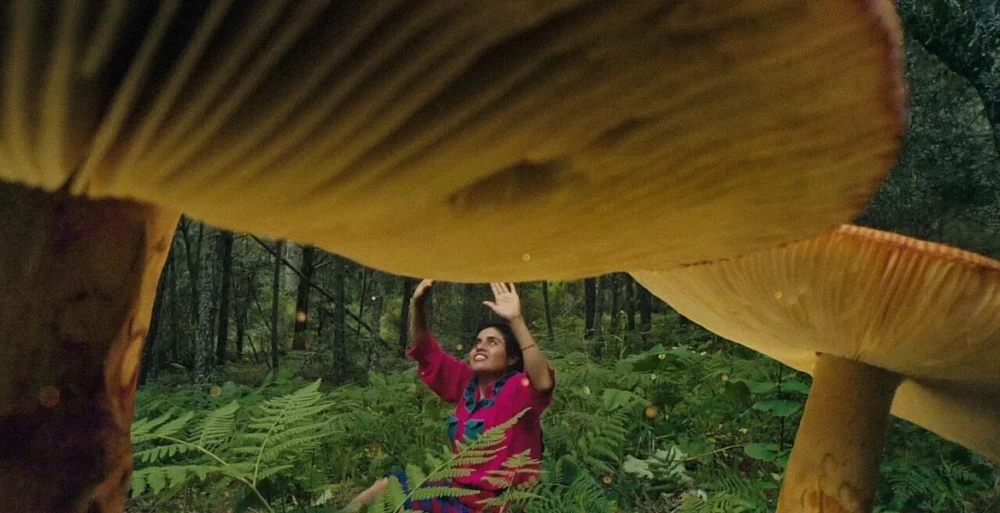
At the heart of the festival lies the Dox:Award, the main competition category which this year features 12 world premieres from across the globe. Among these elite selections is the Mexican documentary "Hijas del bosque: crónicas del micelio" (Daughters of the Forest: Chronicles of the Mycelium), directed by Otilia Portillo Padua. Portillo Padua, known for her previous works such as "Pajareros" (Birders) and "Diario a tres voces," ventures into a narrative that blends traditional documentary observation with flashes of science fiction. The film follows two indigenous mycologists as they navigate the intricate fungal networks of the forest, weaving a story that is as much about biological science as it is about ancestral knowledge and environmental stewardship.
Produced by Paula Arroio and Elena Fortes through Oscura Producciones and Sandbox Films, "Hijas del bosque" arrives in Copenhagen with significant institutional backing, including support from Mexico’s EFICINE (Fiscal Stimulus for Projects in National Film Production and Distribution). The film’s trajectory is particularly noteworthy due to its near-simultaneous premiere at the SXSW Film & TV Festival in Austin, Texas, scheduled for March 12-18. This double-billing at two of the world’s most influential festivals suggests a high level of international confidence in the film’s unique aesthetic and thematic approach.
Human Rights and Social Justice Narratives
The Human Rights Award section at CPH:DOX serves as a platform for films that challenge political status quos and advocate for social change. This year, the Dominican Republic makes a powerful entry with the world premiere of "Niñas escarlata" (Scarlet Girls). This feature-length debut by Paula Cury Melo is a co-production between the Dominican Republic’s Cristal Cine, Germany’s Parabellum Film, and Mexico’s Disruptiva Films.
The documentary tackles the harrowing realities of forced motherhood and clandestine abortion in the Dominican Republic, a nation where the procedure remains entirely criminalized without exceptions. By centering the voices of those affected by these restrictive laws, Cury Melo provides a stark look at the intersection of gender, poverty, and state policy. The film’s inclusion in the Human Rights category reflects a broader trend in Latin American cinema: the use of documentary film as a tool for legislative and social advocacy in regions where reproductive rights are under intense scrutiny.
Emerging Talents and the Next Wave of Cinema
The Next:Wave category at CPH:DOX is specifically curated to highlight the work of emerging filmmakers who are pushing the boundaries of the documentary form. In this section, the festival presents the world premiere of "Aquí se escucha el silencio" (Here One Hears the Silence), a co-production between Chile and Spain. Directed by the duo Gabriela Pena and Picho García, and produced by Grieta Cine in collaboration with Cine Matriz and Gris Medio, the film offers a meditative look at the long-term psychological effects of political exile.
The narrative follows a granddaughter as she returns to a house abandoned during a period of forced migration, attempting to reconstruct the fragmented memories of three generations. This "post-memory" approach—where the younger generation seeks to understand a trauma they did not personally experience but which shaped their family’s identity—is a recurring theme in Southern Cone cinema. By focusing on the silence and the physical spaces left behind, Pena and García contribute a fresh perspective to the extensive body of work documenting the Chilean diaspora.
Experimental Visions and Global Collaborations
CPH:DOX’s New Vision section, dedicated to experimental and boundary-pushing cinema, features two significant Colombian co-productions. The first is "Jirapo," a short film directed by María Rojas Arias and produced by Andrés Jurado. This Colombian-Portuguese collaboration draws complex parallels between the life cycles of bees, the legacies of the colonial past, and the personal family history of a biologist. It represents a growing interest in "eco-critical" filmmaking, where the natural world serves as a mirror for human political and historical structures.
Also in the New Vision section is the world premiere of "Pacífico," a Franco-Colombian short directed and produced by Daniel Duque. Meanwhile, the Fact Award section, which focuses on investigative and journalistic filmmaking, includes "The Great Experiment." This US-Mexican production, directed by Stephen Maing and Eric Daniel Metzgar and produced by Farihah Zaman, continues the festival’s tradition of highlighting complex cross-border issues through a rigorous factual lens.
Non-Competitive Highlights and Established Auteurs
Beyond the competitive categories, the festival includes high-profile works from established Latin American voices. Among these is "Un hijo propio" (A Son of One’s Own), directed by the acclaimed Chilean filmmaker Maite Alberdi. Although Alberdi is Chilean, the film is categorized as a Mexican production, further demonstrating the fluid nature of regional collaborations. Alberdi, who gained international fame with her Oscar-nominated films "The Mole Agent" and "The Eternal Memory," is known for her ability to find universal emotional truths in highly specific, intimate settings.
Additionally, the Colombia-US co-production "Barrio Triste," directed by the artist known as STILLZ, will be featured in the non-competitive program. These selections ensure that while new voices are being discovered in the competition slots, the established mastery of the region’s veteran filmmakers continues to have a platform in Northern Europe.
Industry Focus: ParisDOC and the Future of Mexican Documentary
The momentum for Latin American documentary film extends beyond Copenhagen to Paris, where the 13th edition of ParisDOC Work-in-Progress is taking place. This event, held during the Cinéma du Réel festival, is a crucial industry hub for films in the final stages of production, allowing directors to present their work to distributors, festival programmers, and sales agents.
Selected for this prestigious showcase is "Plaza Giordano Bruno," the latest project from Mexican director Juan Manuel Sepúlveda. Produced by Fragua Cinematografía in co-production with France’s Sophie Salbot (Athenaïse), the film documents a pressing contemporary crisis: the resistance of approximately one hundred Haitian migrants who have established a camp in Mexico City’s Giordano Bruno Square. Sepúlveda, a filmmaker known for his rigorous observational style, captures the tension between the migrants’ search for a dignified life and the state’s attempts to clear public spaces. The inclusion of this project in ParisDOC highlights the international interest in how Mexican filmmakers are documenting the unprecedented migration shifts currently reshaping North and Central America.
Chronology of Events and Industry Impact
The timing of these festivals marks a critical period in the annual film circuit:
- March 11-22: 23rd Edition of CPH:DOX in Copenhagen.
- March 12-18: SXSW Film & TV Festival in Austin, featuring the North American premiere of "Hijas del bosque."
- March (Concurrent): ParisDOC Work-in-Progress at Cinéma du Réel, focusing on post-production and distribution.
The significant presence of Latin American films at these venues is not accidental but the result of a deliberate push toward international co-production. Countries like Mexico and Chile have established robust public funding models (such as EFICINE) that encourage partnerships with European producers. This strategy not only provides the necessary capital for high-quality production but also ensures that the films have built-in distribution pathways into European markets.
Broader Implications for the Documentary Genre
The 2024 selection at CPH:DOX and ParisDOC reveals a shift in the thematic concerns of Latin American documentarians. While the "political documentary" remains a staple, there is a visible move toward hybrid forms—blending science fiction, experimental visuals, and deeply personal essays with traditional reporting.
The focus on environmental themes (as seen in "Hijas del bosque" and "Jirapo") suggests that Latin American filmmakers are positioning themselves as central voices in the global climate conversation, utilizing their unique regional biodiversity and indigenous perspectives as a narrative foundation. Simultaneously, the focus on migration ("Plaza Giordano Bruno") and reproductive rights ("Niñas escarlata") ensures that the documentary remains a vital tool for witnessing and questioning the social upheavals of the 21st century.
As CPH:DOX kicks off, the eyes of the international film community will be on these Latin American titles, not just as regional representatives, but as innovators in a genre that is increasingly becoming the most dynamic sector of global cinema. The success of these films in Copenhagen and Paris will likely dictate their path through the rest of the festival year, potentially leading to wider theatrical releases and a greater understanding of the complex realities currently defining the Latin American experience.

0 Comments